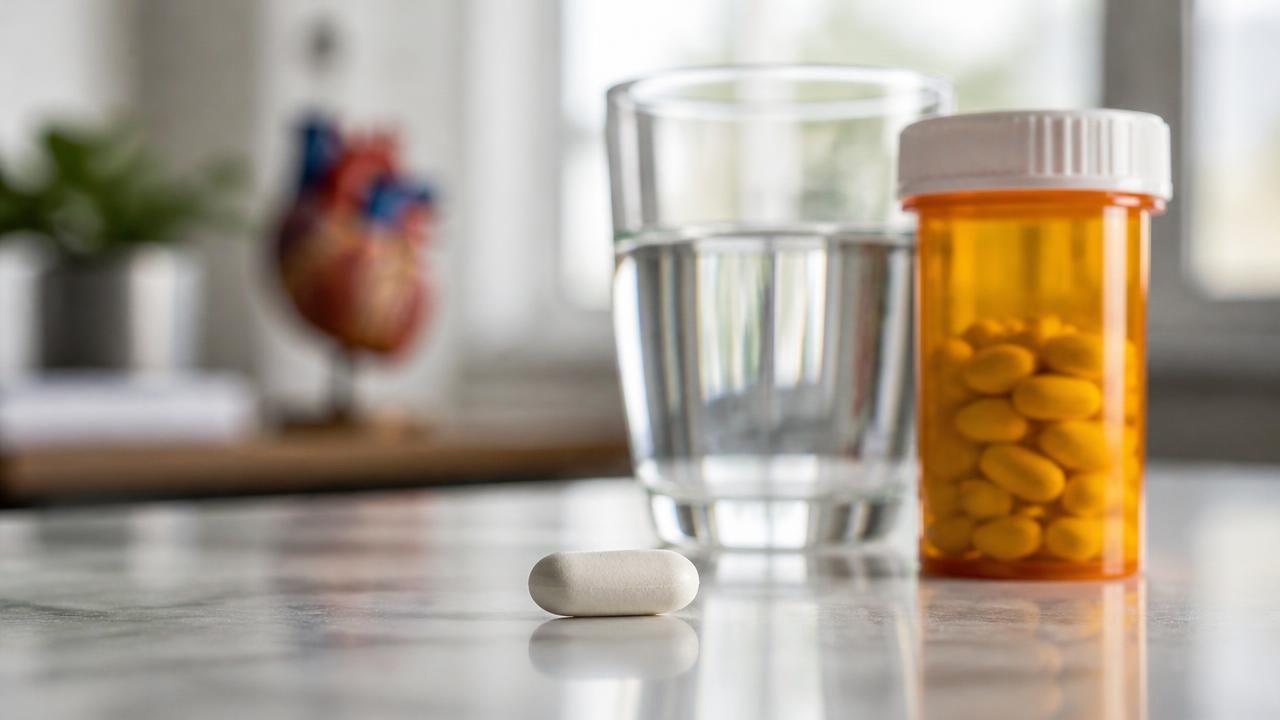
A newly approved once-daily tablet can lower "bad" cholesterol by as much as 65%, according to reports on the drug's clinical results — a magnitude of effect previously achievable only through regular injections. The pill, enlicitide, is being described as the first oral member of a drug class that has until now required patients to give themselves shots every few weeks.
The results have been covered across health and science outlets with subtly different emphases. Science Daily led on convenience, framing the drug as delivering "the benefits of powerful injectable cholesterol-lowering drugs without the needles," and noting that it appears to carry relatively few side effects. SciTechDaily foregrounded the clinical-trial numbers, reporting that the once-daily pill slashed LDL cholesterol by nearly 65%. MSN, meanwhile, framed the story through patient consequences, telling readers that a single pill could slash the risk of stroke and heart attack.
What the drug does — and how
Enlicitide belongs to a family of medicines known as PCSK9 inhibitors. The body uses PCSK9, a protein produced in the liver, to regulate the number of LDL receptors on the surface of liver cells; those receptors are the machinery that clears LDL cholesterol from the bloodstream. Blocking PCSK9 leaves more receptors available, and LDL levels fall sharply.
The two best-known injectable PCSK9 inhibitors, evolocumab and alirocumab, typically reduce LDL cholesterol by roughly 50% to 60% on top of statin therapy. They are potent and well tolerated, but they have been hampered by two persistent problems: they must be injected, and they have historically carried high list prices that prompted insurers and pharmacy benefit managers to impose prior-authorization hurdles.
Enlicitide's advance is pharmaceutical rather than biological. Making an oral version of a large-molecule drug that would otherwise be digested in the stomach required years of medicinal-chemistry work. The payoff, if the pill performs in the real world as it did in trials, is a treatment that fits into the same daily routine as a statin.
"With relatively few side effects, enlicitide could open up new treatment possibilities for people struggling to control their cholesterol."
Why the 'up to 65%' headline matters — and where it doesn't
The figure drawing headlines is a best-case result. Cholesterol-lowering trials typically report average reductions across a treated population alongside the upper end of the range, and "up to" language reflects that a subset of patients saw the largest drops. Readers should not assume every person who takes the tablet will see a 65% fall.
The framing also matters because the two headline claims in circulation are not the same thing. A 65% reduction in LDL cholesterol is a surrogate endpoint — a biomarker strongly associated with cardiovascular risk. A reduction in strokes and heart attacks is a clinical endpoint, and proving it requires large, long, expensive outcome trials that follow thousands of patients for years. Statins have that evidence; injectable PCSK9 inhibitors earned it too, in trials such as FOURIER and ODYSSEY OUTCOMES. Whether the oral version confers the same protection is a question that outcome data must answer, and MSN's risk-focused headline runs ahead of that evidence.
The access question
Cardiologists have long argued that the biggest barrier to PCSK9 inhibitors is not skepticism but paperwork and cost. A pill could change that arithmetic in two directions: tablets are typically cheaper to manufacture and distribute than biologic injectables, but the history of the drug industry suggests launch prices for a first-in-class oral product may still be high.
There is also the question of who the drug is for. Statins remain cheap, well studied and effective for most patients, and they will stay the first-line treatment. The clearest candidate populations are people with familial hypercholesterolemia, a genetic condition that leaves LDL dangerously high from birth; patients who cannot tolerate statins because of muscle pain; and people whose LDL remains above target despite maximum statin therapy.
What to watch next
- Outcome trials. The data that will ultimately determine enlicitide's place in guidelines are cardiovascular event results, not lipid percentages.
- Long-term safety. A "relatively few side effects" profile in a trial population must be confirmed in broader, longer use, including in older patients and those on multiple medications.
- Price and reimbursement. Formulary decisions will determine whether the convenience of a pill translates into actual uptake.
- Adherence research. If a daily tablet keeps more patients on treatment than biweekly injections, the population-level benefit could exceed what the trial numbers alone suggest.
The arrival of an oral PCSK9 inhibitor is a genuine milestone: it moves a category of powerful but inconvenient medicine closer to the routine of primary care. But the story so far is a story about a biomarker. The claim that a single pill will cut heart attacks and strokes is plausible, well grounded in biology and highly likely to be tested — and it is not yet proven.