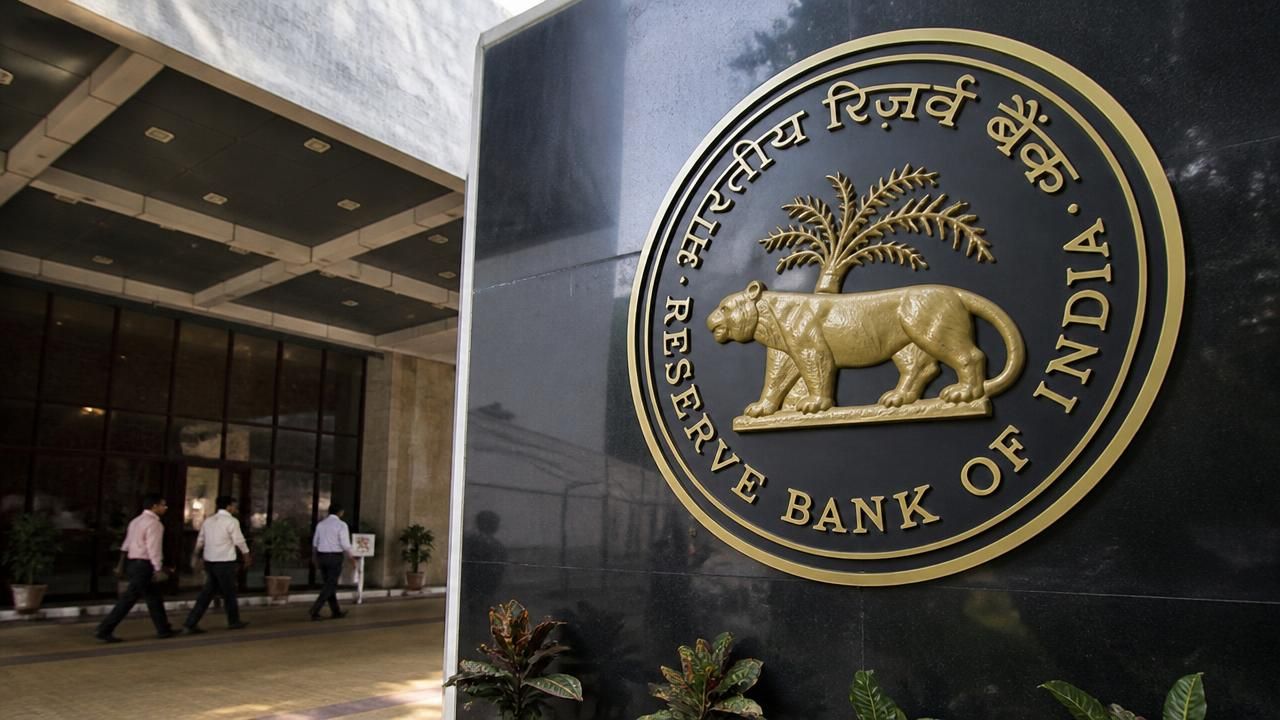
India's central bank is intensifying scrutiny of the country's roughly $247 billion gold-loan industry, according to people familiar with the matter, as a sharp slide in bullion prices eats into the collateral that underpins one of the fastest-growing corners of the country's retail credit market. The Reserve Bank of India's stepped-up monitoring marks a shift in tone for a segment that lenders have spent years touting as the safest form of secured lending — one backed by an asset that, in the Indian popular imagination at least, only ever goes up.
"India's banking regulator is stepping up scrutiny of the nation's $247 billion gold-loan sector as a sharp drop in bullion prices erodes the collateral that lenders demand from borrowers."
The reporting, first carried by Bloomberg and syndicated across outlets including MSN, lands alongside a second, more granular signal of stress: gold loan defaults have nearly doubled, according to coverage that frames the segment bluntly as "India's fastest-growing secured lending segment" now facing a test of whether that growth was underwritten on durable foundations or on a one-way bet on the gold price.
Why a bullion rout matters to a lender
Gold loans are deceptively simple. A borrower pledges jewellery or coins; the lender advances cash against a valuation, subject to a regulatory loan-to-value cap of 75% of the metal's assessed worth. In a rising market, that buffer widens over time, giving both sides room to breathe. In a falling market, it compresses — or vanishes.
When the value of the pledged metal dips below the agreed threshold, lenders are required to seek top-up collateral or margin payments. Borrowers who cannot or will not comply face the prospect of their gold being auctioned. That mechanism, routine in normal conditions, becomes a source of consumer distress and political sensitivity when it runs at scale — particularly since much of the pledged gold is family jewellery rather than investment-grade bullion.
The sector has expanded rapidly on the back of a multi-year bullion rally that pushed gold to successive record highs, allowing lenders to grow books while keeping LTV ratios comfortably inside regulatory limits. A sharp reversal removes that tailwind at precisely the moment when competition had already pushed lenders to compete on turnaround times, doorstep disbursement and pricing.
Defaults: the borrower-level view
Where the wire-service framing emphasises systemic and regulatory risk, Indian financial coverage has focused on borrower-level deterioration — the near-doubling of defaults that suggests stress is already visible in repayment behaviour rather than merely latent in collateral values. Gold loans are typically short-tenure, often written for 12 months or less, which means the impact of a price shock transmits through the book faster than in mortgage or auto lending. Loans originated near the top of the market are the most exposed.
- Collateral risk: LTV buffers thin as assessed gold values fall, triggering top-up and margin calls.
- Repayment stress: Defaults reported to have nearly doubled, concentrated in loans written at peak valuations.
- Operational risk: Higher auction volumes raise questions over valuation practices, notice periods and borrower grievance handling.
- Funding risk: Banks and non-bank lenders may face higher borrowing costs and more conservative treatment from creditors if asset quality slips.
The regulatory backdrop
The RBI has form here. It tightened supervision of gold lending in 2024, when it barred IIFL Finance from sanctioning or disbursing new gold loans over regulatory violations — a decision later reviewed after remediation — and has repeatedly pushed lenders to standardise valuation, use certified assayers and ensure that loan-to-value calculations are applied to the metal's true purity and weight rather than a lender's own estimate.
Larger non-bank players such as Muthoot Finance and Manappuram Finance, which together dominate the organised gold-loan market, have historically argued that their books are conservatively underwritten, short-tenured and quick to auction, making them resilient to price swings. The current episode tests that thesis in public. Banks, too, have expanded their gold loan books — often through co-lending or portfolio purchases from NBFCs — meaning the exposure is not confined to specialist lenders.
What happens next
The immediate questions for the regulator are practical. How quickly are valuations being marked to market? Are lenders re-valuing at reasonable intervals, or relying on the appraisal done at origination? Are top-up demands being communicated fairly, and are auction processes defensible? And does the growth in gold loans reflect genuine credit demand from small businesses and households seeking short-term liquidity, or a more troubling substitution — borrowers using family gold to roll over existing debt?
For borrowers, the arithmetic is unforgiving: the asset they pledged has fallen in value exactly when their ability to service the loan may also be under pressure, since gold loans skew toward small traders, agriculturists and micro-enterprises for whom bullion is the most accessible form of collateral. For lenders, the risk is reputational as much as financial — a wave of auctions in a culturally freighted asset class invites political attention, and with it the possibility of tighter rules on notice periods, valuation methodology or LTV ceilings.
The sector's defenders will point out that gold lending remains, on most measures, among the best-secured credit in India, and that a correction in bullion prices is not a collapse. The regulator's posture suggests a different reading: that when a market grows this fast, on collateral this volatile, the burden of proof shifts to the lender. The coming quarters will show whether India's gold loan boom was a durable financial innovation or a trade that depended on the price of gold never falling.