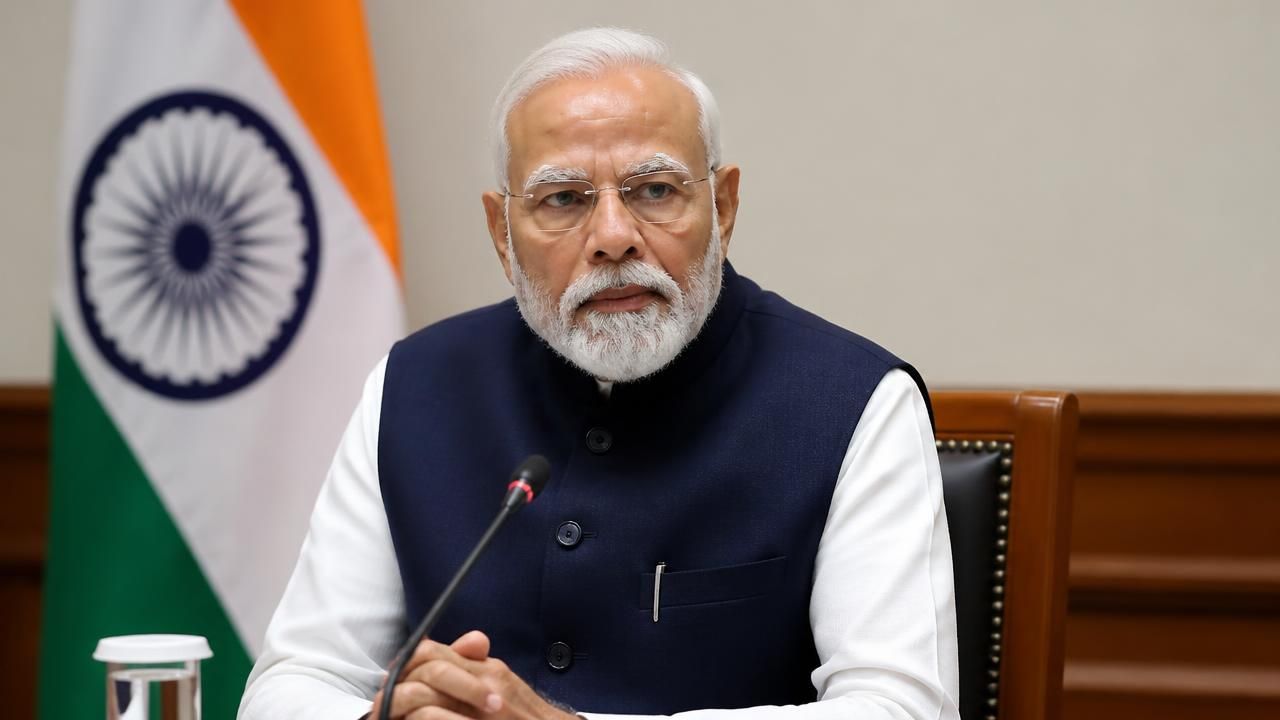
Prime Minister Narendra Modi's government has moved closer to clearing one of the most politically fraught pieces of unfinished business in Indian politics: legislation to expand the size of Parliament and to redraw constituency boundaries ahead of the implementation of a one-third reservation of seats for women.
The shift follows a decision by a regional opposition party to back the legislation, according to Bloomberg, giving the Bharatiya Janata Party-led administration the numbers it needs to advance a bill that has sat dormant for years. Reports from Indian outlets indicate the government is now weighing possible amendments to broaden support before formally reviving the measure, which is formally tied to the women's quota law passed in 2023.
Why the bill matters
India's Lok Sabha, the lower house, has been capped at 543 elected seats since the 42nd Constitutional Amendment in 1976, a freeze later extended through 2026 by the 84th Amendment. The provision was intended to protect states that had curbed population growth — largely in the south — from seeing their share of national representation diluted, while northern states continued to grow.
The restriction has also been one of the main obstacles holding up the parliamentary seat reservation for women, known formally as the Nari Shakti Vandan Adhiniyam. That law, passed as the 106th Constitutional Amendment in September 2023, reserves one-third of seats in the Lok Sabha, state assemblies and the Delhi assembly for women — but only takes effect after a national census and the delimitation, or redrawing, of constituency boundaries.
With the census now slated for 2027 after delays dating to the pandemic, the legislative calendar has become pressing. Decoupling the two questions — whether to add seats and how to allocate them — has proved difficult, and the government's renewed push appears designed to resolve both at once.
A regional arithmetic problem
The political difficulty is that an expansion or a redraw changes the balance of power between states. Leaders in Tamil Nadu, Kerala, Karnataka, Telangana and Andhra Pradesh have warned that their slower population growth would translate into a smaller share of seats — and therefore less influence over federal budgets and policy — even as their economies contribute more than their population share.
That is the terrain on which the support of a regional opposition party becomes consequential. Bloomberg reported that the unnamed party's backing narrows the gap between the government's coalition and the threshold needed to carry a constitutional amendment, which requires a special majority in both houses: two-thirds of members present and voting, plus ratification by half the states in defined cases.
Coverage of the development has diverged by outlet. Bloomberg framed the story primarily as a governance and institutional milestone, emphasizing the vote arithmetic and the long-stalled nature of the bill. Indian outlets such as The Hawk, meanwhile, led on the machinery of compromise — noting that amendments are on the table and linking the legislation directly to the women's quota and delimitation debate, where federal and regional sensitivities are sharpest.
The business and fiscal lens
The financial stakes are substantial. India's constituencies are among the world's largest by population, with roughly one MP for every 2.5 million citizens — a ratio that has worsened with every census since the cap took effect. A larger house would mean smaller constituencies, more constituency service, and a heavier legislative load, but also a substantial long-term fiscal cost in salaries, office budgets, and expanded infrastructure for the chambers.
For investors, the question is less about the size of Parliament than about what the debate signals. Delimitation touches centre-state revenue distribution, the terms of the Finance Commission's award, and the political weight of states that host major industrial and technology hubs. Any sign that the government might move without a credible deal among the states would raise the risk of prolonged political confrontation.
A measure that appeared moribund for more than two decades is now the vehicle through which India will decide how its federal power is distributed for the next generation.
What to watch
- Amendments. Reports suggest the government may adjust the bill's language to address state concerns and the sequencing of delimitation relative to the census.
- The women's quota timeline. Reservation cannot be operationalised before the census is conducted and boundaries redrawn, which pushes implementation toward the late 2020s at the earliest.
- Southern resistance. Opposition from better-performing, slower-growing states remains the single biggest procedural hurdle, particularly if any expansion is deemed to reduce their relative share.
- State ratifications. If the bill alters representation under Article 82 or the composition of the states' share, half the state legislatures would need to approve it.
Neither the government nor the identified regional party detailed the terms of the support, and it remains unclear whether other opposition blocs will follow. But the arithmetic has changed enough that a law that once seemed indefinitely deferred is now on a legislative path — and with it, a broader settlement over how Asia's third-largest economy apportions political power among its states.