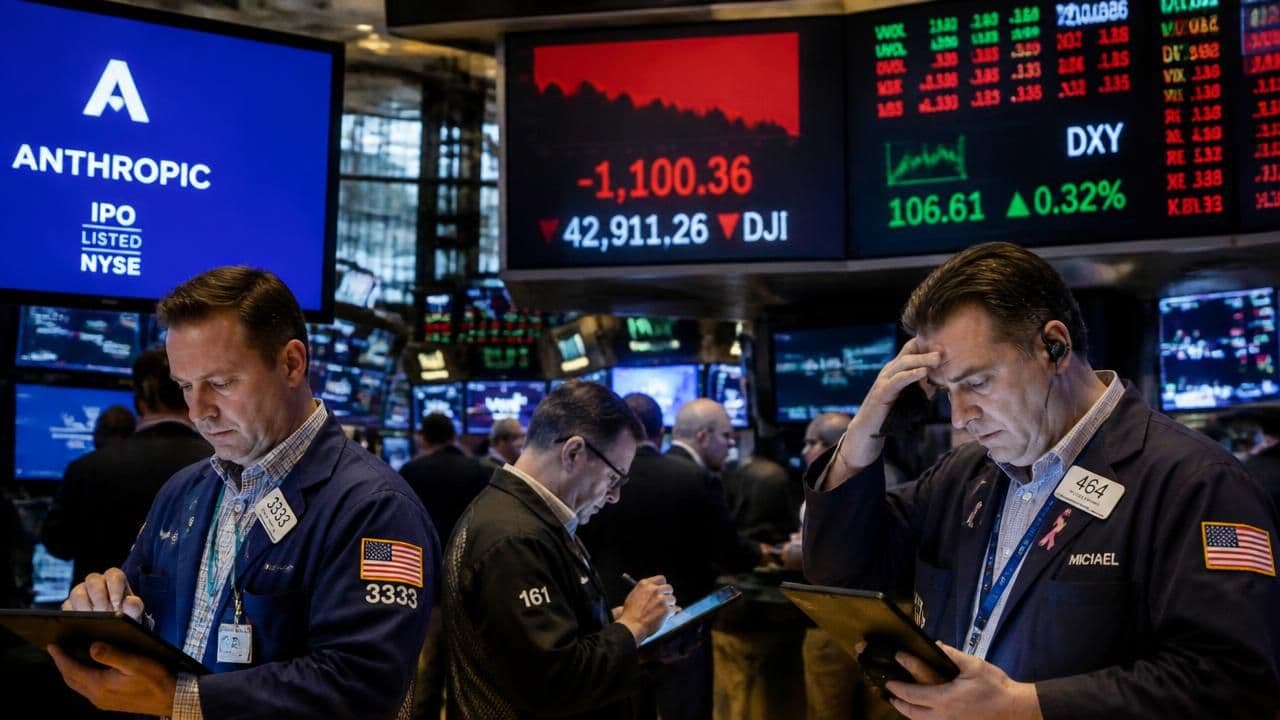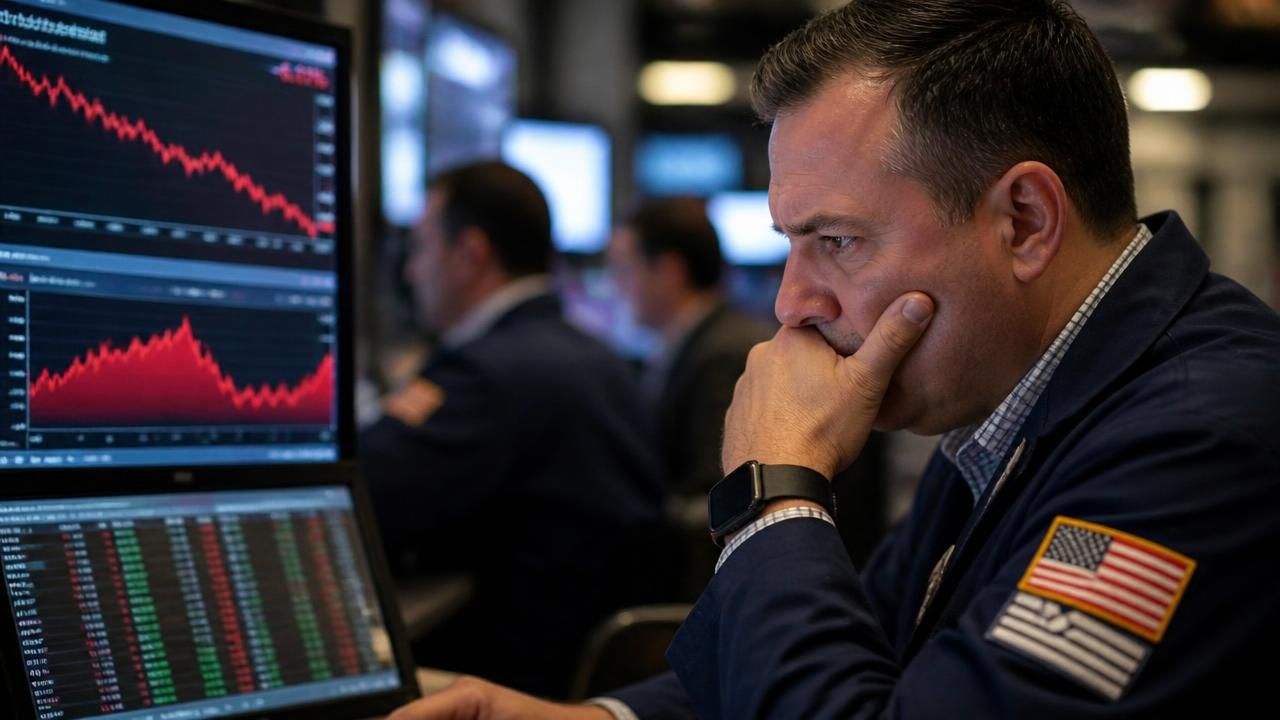
The most anticipated technology listing in years was supposed to be the moment that steadied the market's nerves over artificial intelligence. Instead, it appears to have done the opposite.
Anthropic PBC, the maker of the Claude chatbot, saw its shares fall more than 6% in early trading on Friday, partly reversing a first-day gain of more than 17% that had closed its debut at $97. US equity futures extended their losses through the session, and the weakness rippled outward: Asian equities fell, European markets opened lower, and the global narrative around the AI trade curdled from enthusiasm into anxiety.
A debut that dazzled, then dimmed
By any conventional measure, Anthropic's first day as a public company was a triumph. The stock's 17%-plus pop made it one of the strongest openings of the year and briefly appeared to offer investors a reason to re-enter a sector that had spent weeks in retreat. Live coverage of the listing celebrated the close at $97 and the scale of demand behind it.
The mood did not survive the night. Friday's pullback of more than 6% put the shares on course to surrender a substantial share of their opening-day premium, and the reflexive buying that bull markets need never materialised.
"A soaring debut for Anthropic's stock is not enough to carry Wall Street, and indexes drop."
That framing — the market's own summary of the day — captured the central puzzle of the week: even a landmark issuance from one of the world's most closely watched AI developers could not generate enough momentum to lift the broader tape.
Wall Street extends the slide
Bloomberg Markets reported that US equity futures extended losses on Friday after Anthropic's debut failed to stem concerns around the AI trade, describing the stock's early decline as partly reversing the prior day's surge. Bloomberg's separate market wrap was blunter still, casting the listing as a failed catalyst: "Anthropic IPO Fails to Revive AI Trade as Global Stocks Fall."
Yahoo Finance and Seeking Alpha both ran near-identical headlines — Wall Street futures falling as the Anthropic debut failed to revive the AI trade — a sign of how uniformly the sell-side read the session. MSN's homepage coverage pushed the framing further, declaring that US stocks were sliding as the "AI bust" continued despite the IPO, language that would have been unthinkable a year ago when AI-linked names were the market's unquestioned engine.
Not every outlet read the day the same way
The convergence was not total. One MSN headline described US futures as mixed after the AI sell-off, with investors focused less on Anthropic than on the looming US jobs report. Another framed the week's calendar — the Anthropic IPO filing, Boeing earnings and an upcoming Federal Reserve meeting — as the real drivers of positioning. That distinction matters: for some desks, Anthropic is a symptom; for others, it is merely background noise ahead of macro data that will determine the path of interest rates.
Asia finds no lift
If the hope was that a successful US listing would export optimism eastward, it did not travel. Asian stocks failed to get any lift from Anthropic's IPO pricing, and regional benchmarks fell as the AI-related selling resumed. The pattern echoed previous sessions in which weakness in US AI names — chipmakers, server suppliers, and the sprawling ecosystem of companies that have re-rated on AI exposure — transmitted directly into Asian trading hours, where many of those suppliers are listed.
"Asian Equities Fall as Anthropic's IPO Fails to Staunch AI Stock Selloff."
The word "staunch" is telling. Investors were not looking to Anthropic for growth exposure so much as for a tourniquet — a signal that institutional appetite for AI risk remained intact after weeks of drawdowns. They did not get one.
Why the AI trade is wobbling
The mechanics behind the reversal are familiar to anyone who has watched this cycle. Valuation multiples across AI-linked equities have expanded far faster than near-term revenue, leaving the group acutely sensitive to any disappointment in earnings or macro conditions. Meanwhile, the cash demands of frontier model development are enormous, and public-market investors now apply a discipline that private backers did not.
- Concentration risk: a narrow group of AI bellwethers has driven index returns, so weakness in a handful of names reads as weakness everywhere.
- Rate sensitivity: long-duration growth stories are the most exposed to any sign that the Federal Reserve will hold policy tighter for longer.
- Supply glut: a busy IPO calendar — with Anthropic as its marquee name — tests how much AI paper the market can absorb.
- Macro overhang: Friday's jobs report and Boeing's results added to a news flow that competed directly with the listing for investor attention.
The result was a listing that, on paper, was a resounding success and, in practice, functioned as a stress test the market failed. A 17% first-day gain followed immediately by a 6% slide is not a disaster for Anthropic itself — it remains a company with extraordinary strategic importance and deep demand for its models. But as a market signal, the episode suggests that the easy money in the AI trade has already been made, and that investors are now sorting winners from losers with far greater care.
What comes next
Attention now turns to the macro calendar. The US jobs report will shape expectations for the Fed's next move, and Boeing's earnings offer a read on industrial health that has little to do with AI but plenty to do with index-level direction. Anthropic's shares will be watched as a proxy for institutional conviction in the AI thesis — a bellwether in the literal sense, whose post-IPO trading range will be scrutinised for signs of where the sector's next leg leads.
For now, the lesson of the week is an uncomfortable one for anyone who expected a single marquee listing to reverse a broad de-risking. Markets rarely hand out that kind of absolution. The AI story is not over — but it now has to compete for capital on the same terms as everything else, and the first few days of Anthropic's public life suggest that competition will be harder than the private markets ever demanded.