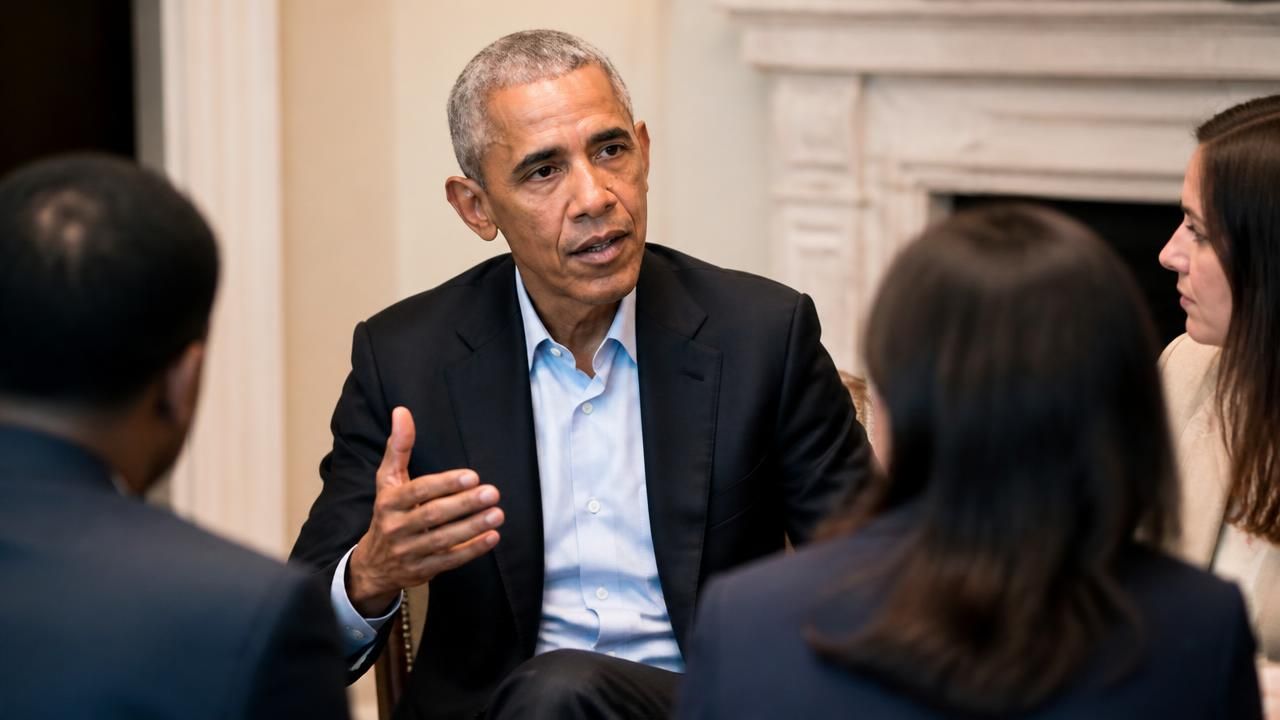
Former President Barack Obama met with newly elected House Democrats in recent days and delivered a message that was part congratulation, part warning: the party's freshmen should not retreat to safe ideological ground. According to The New York Times, Obama urged the incoming lawmakers to keep up their outreach in red areas — the conservative-leaning districts and states that many of them just won — and described the political moment as one of “generational change.”
The remarks, first reported by the Times and amplified by MSN and other outlets, amount to an early attempt by the party's most prominent elder statesman to shape how a new class of Democrats governs before it has even been sworn in.
A Message of 'Ideological Diversity'
MSN's summary of the remarks emphasized Obama's call for newly elected Democrats to value “ideological diversity” within their own ranks — a phrase that, in practice, translates into a warning against litmus tests and purity politics. For a party that spent much of the past decade arguing over its ideological center of gravity, the advice is familiar Obama doctrine: compete everywhere, recruit candidates who fit their districts, and don't demand that a Democrat from a swing seat sound like one from a safely blue city.
“Generational change” was how Obama described the current political moment, according to The New York Times.
The framing is deliberate. Obama, who rose to national prominence on a similar message of bridge-building, has long argued that Democrats lose when they treat large swaths of the country as unwinnable. His counsel to the freshmen — that outreach in red areas should continue after Election Day, not just during the campaign — suggests he sees the midterm results as a mandate for that approach rather than a vindication of any single faction.
Praise for Jeffries
Obama also praised Representative Hakeem Jeffries, the New York Democrat widely expected to become the next speaker, according to the Times account. The endorsement is significant given the speculation that has swirled around Jeffries' leadership style and his relationship with the party's progressive wing. By elevating Jeffries publicly, Obama is lending his credibility to a leadership transition that will define the party's direction heading into the next presidential cycle.
The optics matter, too: a former president whose own career was built on coalition politics anointing a successor generation — Jeffries is a generation younger than the party's current senior leadership — reinforces the “generational change” theme running through the meeting.
Black Victories in Red States
The meeting comes amid a broader pattern that outlets including USA Today have highlighted: a wave of Black candidates winning in red states and conservative-leaning districts. One such figure is Scott Colom, whose victory has been held up as emblematic of a new era of Black political leadership in places Democrats have struggled to contest. (The full text of that report was not accessible at the time of publication, but its headline captures the theme: “Black victories, Red States.”)
That storyline and Obama's advice are two sides of the same coin. Candidates like Colom win precisely by doing what Obama reportedly asked of the freshmen class — showing up in places the national party has written off, and building coalitions that don't depend on national ideological branding.
A Messier Backdrop
The uplifting message from Obama stands in sharp contrast to the post-election turbulence documented elsewhere. According to a Yahoo News midterm live blog, the results have not fully settled: Senate races in Mississippi and Alaska remained too close to call, while President Trump questioned the election results and Representative Thomas Massie introduced articles of impeachment — developments that suggest the political environment remains volatile well after voting ended.
That backdrop complicates the Democratic story. A party celebrating generational renewal and fresh faces must also navigate a contested results environment, questions about the legitimacy of the outcome from the sitting president, and the disruptive spectacle of impeachment filings. For the new members Obama addressed, the challenge will be keeping the focus on the districts they won and the voters they courted, even as Washington pulls them toward national fights.
Why It Matters
Obama's intervention is an early signal about how the incoming Democratic majority intends to define itself. Three takeaways stand out:
- Competitive-district pragmatism: By urging continued outreach in red areas, Obama is effectively endorsing the swing-seat wing of the party as its strategic center.
- A leadership bet: The praise for Jeffries signals establishment support for a smooth transition at the top of the House Democratic caucus.
- A contrast in tone: Against a national backdrop of contested results and impeachment filings, Obama's message is one of consolidation rather than confrontation.
Whether the freshmen heed it is another matter. New members arrive with their own mandates, their own constituencies, and increasing pressure from activists on both flanks. But the former president's message — that diversity of thought is a strength rather than an embarrassment, and that the party's future depends on continuing to compete in places it has lost — will shape the debate over what Democrats do with the power they have just won.