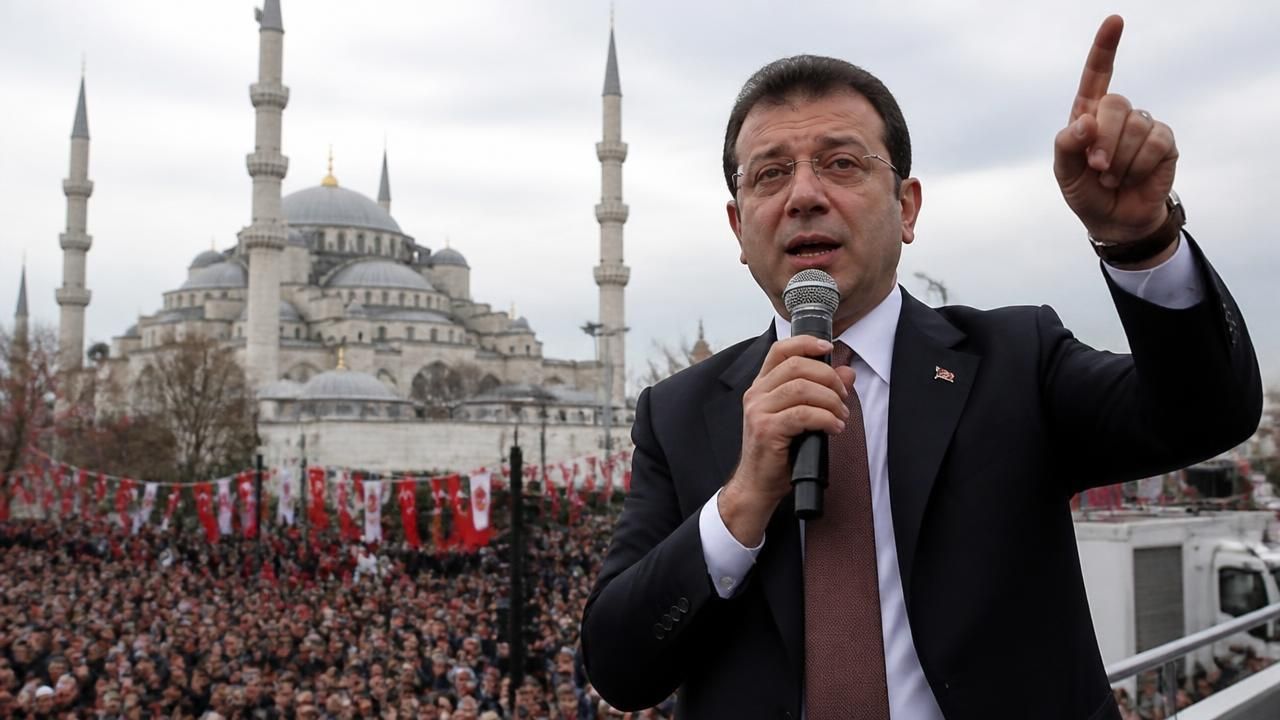
A Turkish court has ordered a political ban on Ekrem Imamoglu, the imprisoned mayor of Istanbul and President Recep Tayyip Erdogan's most formidable rival, a decision that Bloomberg Markets described as "paving the way for the ruling party to take control of Turkey's largest city." The ruling lands at the intersection of law, electoral strategy and financial risk — a combination that has repeatedly roiled Turkish markets over the past year.
The order does not merely remove a potential presidential candidate from the field. It opens a governance question in Istanbul, a city of roughly 16 million people whose municipal budget, infrastructure contracts and public-private partnerships make it one of the most consequential pieces of political real estate in the country. MSN's coverage framed the development bluntly, reporting that "Erdogan's men" were on the cusp of a move to take control of Istanbul City Hall.
How the story is being framed
The four outlets covering the decision approach it from markedly different vantage points. Bloomberg emphasizes the electoral and market mechanics: a rival neutralized, a megacity in play, and investors weighing what a further consolidation of power means for Turkish assets, the lira and the central bank's credibility.
Other coverage centers on the political turbulence itself. One headline reported that the jailed mayor had joined a new opposition party amid the upheaval — a striking development for a figure long associated with the Republican People's Party (CHP), and one that, if confirmed, would reshuffle the parliamentary opposition just as the electoral calendar tightens.
Separately, a Turkish court ordered the platform X to block an account tied to Imamoglu's candidacy, per MSN — an intervention that pushes the story into the realm of digital speech and platform compliance, where Ankara has built a substantial track record in recent years.
Background: a rivalry built on repeat elections
Imamoglu's political ascent was itself a product of institutional confrontation. In March 2019 he narrowly won the Istanbul mayoralty, ending a quarter-century of AKP control of the city. Turkey's High Election Board annulled the result after weeks of recounts and challenges; Imamoglu won the June 2019 rerun by a far larger margin, a humiliation for the ruling party that turned him into a national figure.
He repeated the feat in March 2024, retaining Istanbul despite a nationwide swing toward the AKP's allies, and the CHP's success in major cities that night was widely read as a signal that urban Turkey had shifted. That result, more than any single poll, explains why the legal pressure on him has intensified rather than eased.
The current proceedings follow a pattern Turkish opposition figures know well: successive prosecutions, a university diploma dispute affecting eligibility, and detention that kept Imamoglu in Silivri prison while his party staged a mass primary that drew enormous turnout. His defenders call the cases politically motivated; officials insist the judiciary is independent and that the prosecutions follow evidence.
What a ban would mean
A formal political ban disqualifies a politician from standing for office for a defined period, and its practical effect depends on timing and appeal. Three consequences stand out:
- Presidential arithmetic: Removing the opposition's most competitive potential candidate narrows the field before any vote, forcing the CHP and its allies to consider alternatives whose name recognition and cross-party appeal are untested.
- Istanbul's machinery: If the mayoralty changes hands — through a court-appointed trustee, a suspension, or a subsequent election — control over municipal contracts, zoning and one of Turkey's largest public employment bases shifts with it.
- Investor sentiment: Turkish assets have repeatedly sold off on perceived institutional rupture. A ban imposed on the country's most prominent opposition figure is the kind of headline that widens the risk premium, particularly if it is paired with social media restrictions.
"The court ordered a political ban for Istanbul Mayor Ekrem Imamoglu, President Recep Tayyip Erdogan's main opponent, paving the way for the ruling party to take control of Turkey's largest city." — Bloomberg Markets
The speech dimension
The order directing X to block an account linked to Imamoglu's candidacy illustrates how electoral litigation and content moderation increasingly converge in Turkey. Platforms have faced repeated Turkish court orders to restrict accounts and content; compliance is uneven, and each case becomes a test of how far Ankara can extend a legal ruling into the digital sphere. For the opposition, blocking a candidacy account removes a channel of mobilization precisely when traditional media coverage is constrained.
What to watch next
Appeals will determine whether the ban holds and how quickly it takes effect. Watch the CHP's internal response — whether it consolidates behind a single alternative or fragments — and whether the new party referenced in the reports draws sitting legislators or merely a label. Watch the Istanbul municipality's operations for signs of administrative intervention. And watch the lira, the main stock index and Turkish dollar-bond spreads in the sessions following the ruling: markets have learned to price political risk in Turkey, but rarely without volatility.
For now, the essential facts are these: a court has moved to end Imamoglu's political career, his party is recalibrating, a megacity's administration hangs in the balance, and a social media platform has been ordered to silence one of his campaign's accounts.