Sam Altman spent the past month learning that few topics rouse the internet quite like the memory inside its computers. On Monday, the OpenAI chief executive attempted to close the loop on a controversy he ignited weeks earlier when he suggested it was wasteful for ordinary people to have RAM in their personal machines while AI data centers face a global shortage.
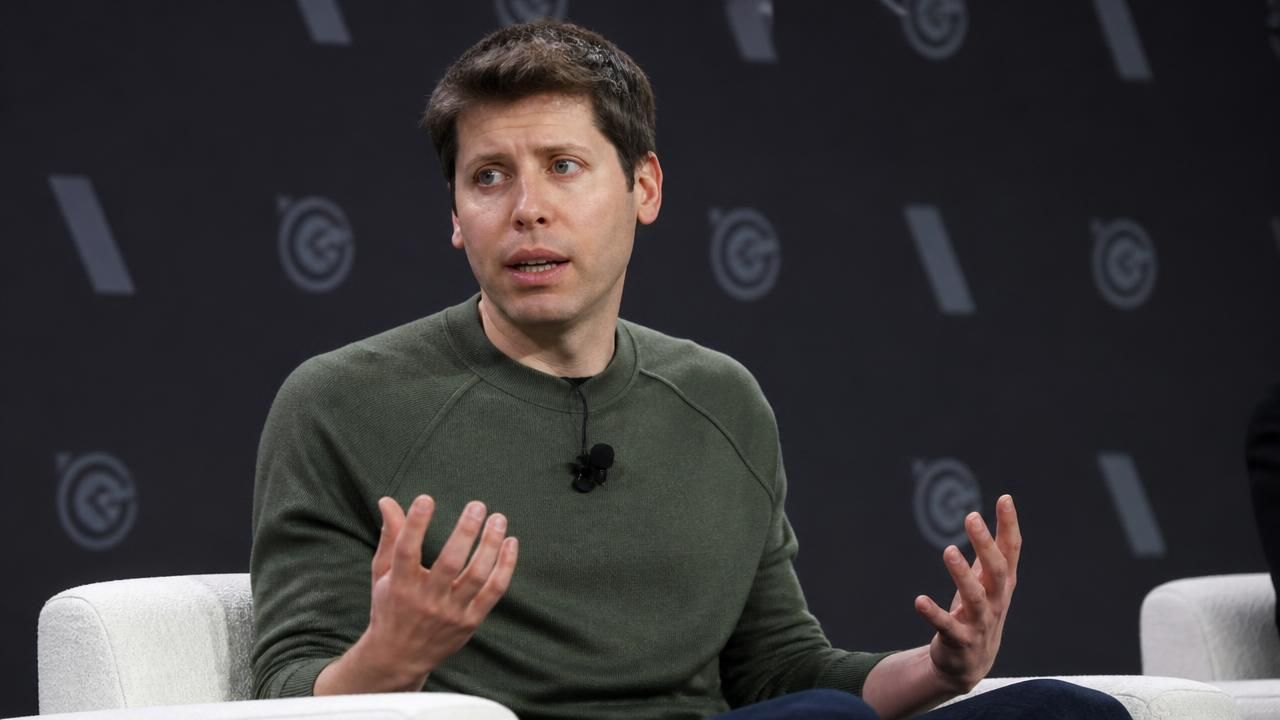
Speaking on stage at Semafor's Silicon Valley & The World summit, Altman sought to reframe his position entirely. "I want to be clear, I want people to have a lot of RAM, I think everybody should be able to buy a lot of RAM for their own computer," he said, according to The Verge. "I think the home tinkering is great."
What Altman Actually Said
The trouble began during an appearance on the Cheeky Pint podcast, when Altman argued that it is "quite terrible" for individuals to hold RAM in personal computers rather than in data centers, where he suggested the scarce resource would be better deployed for AI workloads. The remark, clipped and circulated widely, was interpreted as an argument that consumers should have less memory so that AI companies could have more.
Altman subsequently took to posts on X to clarify, and by this week had changed his display name on the platform to "Ram Altman" — a self-aware nod at the nickname the episode had earned him. Outlets from The Next Web to Android Headlines gleefully adopted the moniker, with the former declaring that Altman had become "Ram Altman" and insisted his memory remark was simply misread.
"I want to be clear, I want people to have a lot of RAM, I think everybody should be able to buy a lot of RAM for their own computer. I think the home tinkering is great." — Sam Altman, at Semafor's Silicon Valley & The World summit
The Backlash, the Memes, and Musk
Coverage of the episode split sharply along framing lines. The Verge and Neowin emphasized Altman's claim that his original statement had been "taken out of context," while Kotaku — blunt as ever — described the walk-back as a "spectacular 180" and reported that Altman found the whole affair exasperating in the extreme. TechJuice and Crypto Briefing focused on the rebrand and the X posts, treating the saga as a case study in how a founder's casual podcast aside can become a week-long news cycle.
Mashable catalogued the meme wave that followed, in which users joked that Altman wanted all the world's RAM for himself. Ars Technica noted that a Sam Altman parody account had offered "an amusing lesson in memory management," a sign that the story had crossed from tech-industry grievance into mainstream satire.
More consequential was the intervention from Elon Musk, who criticized Altman publicly for saying it was "quite terrible" to keep RAM in personal computers. The jab lands in an already charged rivalry: Musk runs xAI, a direct competitor to OpenAI, and the two men have spent years trading barbs over AI safety, governance, and resources.
Why RAM Suddenly Matters So Much
The kerfuffle is funny, but the underlying economics are not. The AI buildout has collided with a genuine global memory crunch. Training and serving large models requires staggering quantities of high-bandwidth memory and conventional DRAM, and suppliers have been reallocating capacity toward data-center customers willing to pay premium prices. The result has been rising memory costs and tightening availability for consumer hardware.
In that light, Altman's original comment read less like a lifestyle preference and more like a public acknowledgment of an uncomfortable trade-off: the more memory goes into data centers, the less is available — and the more expensive it becomes — for laptops and desktops.
Reports on the shortage have cited figures suggesting OpenAI's infrastructure ambitions could soak up as much as 40% of certain memory supply, a statistic that reframed the entire argument. India Today and other outlets covered the story squarely through that lens, emphasizing a widening gap between consumer device demand and AI data-center consumption. Shacknews and Computerworld took a similar angle, with Computerworld folding the episode into a broader examination of who actually benefits from Big Tech's resource allocation — a question that resonates well beyond the RAM market.
The Skeptics' Reading
Not everyone accepted the clarification at face value. Critics argued that Altman's initial framing reflected a corporate instinct to treat scarce hardware as a resource best concentrated in the hands of a few well-capitalized firms. For hobbyists, self-builders, and gamers, the idea that personal memory is somehow a misallocation strikes at something close to a cultural nerve — the personal computer as a space for tinkering and ownership.
Altman's new emphasis on "home tinkering" appears designed precisely to address that concern. Yet the episode leaves a lingering question: if memory demand from AI data centers continues to climb, the reassurance that consumers should be able to buy "a lot of RAM" may depend less on the CEO's stated intentions than on supply chains and pricing.
The Takeaway
The sequence is by now a familiar one in the AI era — an off-the-cuff comment, a viral clip, a backlash, a rebrand, and a clarification. What makes this instance instructive is that the joke is sitting on top of a real and growing scarcity. As memory becomes a strategic resource in the AI race, the line between what consumers get and what data centers consume will keep producing uncomfortable statements — and, inevitably, memes.