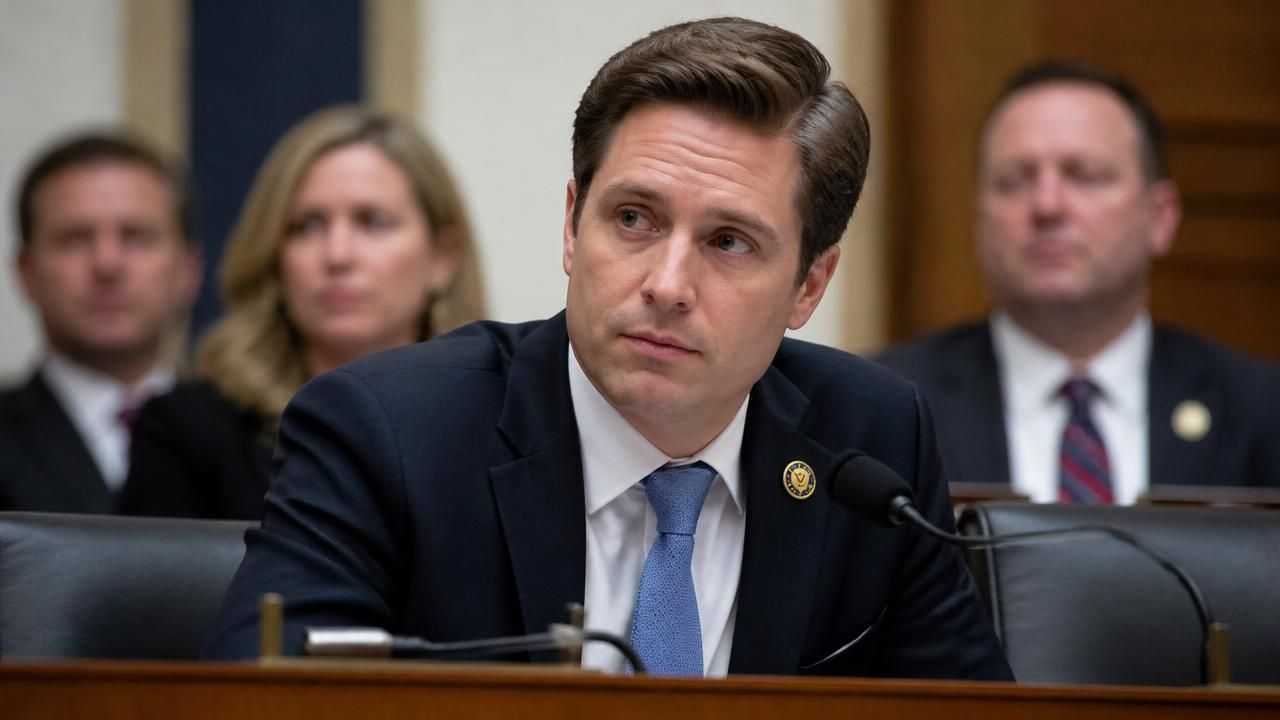
The House Democratic campaign arm has opened an inquiry into a sexual harassment allegation against Representative-elect Brian Poindexter of Ohio, according to reporting by The New York Times, thrusting a newly elected member into scrutiny before he has even been sworn in.
Poindexter's campaign pushed back swiftly, characterizing the episode as a misunderstanding. In a statement, the campaign said the congressman-elect “gave what he thought was an innocuous compliment to a volunteer.” It did not elaborate on the nature of the remark, the identity of the volunteer, or when the alleged incident occurred.
What We Know — and What We Don't
The story surfaced in fragments across multiple outlets, a pattern increasingly common in the first hours of a political controversy. Aggregators carried a flurry of headlines describing an incoming House Democrat “subject of a sexual harassment investigation,” while the underlying reporting offered little beyond the basic outlines: an allegation, a campaign denial, and a party committee now formally looking into it.
Key facts as they stand:
- Who: Representative-elect Brian Poindexter, an Ohio Democrat elected in November but not yet seated.
- What: A sexual harassment allegation, now under review by the House Democratic campaign arm.
- The defense: Poindexter's campaign describes the conduct as a compliment he believed was harmless.
- Status: An inquiry — not, at this stage, a formal disciplinary proceeding.
Notably absent from the public record so far: the specific allegation, the complainant's account, any timeline, and whether House Democratic leadership has been briefed. Those gaps matter, because the difference between an “inquiry” and an “investigation” can determine whether the matter is resolved privately or becomes a public hearing.
Why the Timing Is Awkward for Democrats
The Poindexter disclosure arrives as Democrats are positioning themselves as the party of accountability heading into the new Congress. According to reporting aggregated from multiple outlets, Democrats are planning a slate of investigations touching President Trump's business empire, the Epstein files, and Immigration and Customs Enforcement.
That agenda makes the party's handling of an allegation inside its own ranks an early test of credibility. Critics on the right are already likely to frame the inquiry as either too slow or too soft; allies on the left will want evidence that the process is independent of the campaign arm that helped elect him.
“He gave what he thought was an innocuous compliment to a volunteer.” — Poindexter campaign statement
The phrase “what he thought” is doing considerable work in that sentence. Intent is central to how harassment claims are adjudicated, but it is not dispositive — workplace standards generally turn on how conduct was received, not solely on how it was meant.
A Wider Reckoning Over Epstein — and Over Process
The Poindexter news broke against a backdrop of renewed institutional focus on sexual misconduct allegations. Bloomberg reported that the Epstein panel is calling for a new Justice Department probe of sex assault allegations. Separately, an outgoing Republican committee chairman is leaving the DOJ a 137-page Epstein “to-do list,” urging both the department and Democrats to keep investigating Jeffrey Epstein — a notable bipartisan pressure campaign on an issue that has repeatedly defied closure.
The through-line is procedural: who investigates, how seriously, and with what follow-through. That theme appears closer to the ground as well. NBC Bay Area reported that a sexual assault complaint filed by Brad Chapin against Manny Yekutiel went unanswered for months because it landed in an unmonitored inbox at the San Francisco Democratic Party. The story is a reminder that complaints can stall not from deliberate cover-up but from institutional neglect — a failure mode that oversight bodies are increasingly being asked to account for.
Leadership Churn and the Long Shadow of 2026
Meanwhile, the Democratic Party's internal leadership picture continues to shift. Illinois House Speaker Chris Welch has said he will not seek another term as speaker in 2027, a decision that reshapes Springfield's power map and signals the broader generational turnover underway in Democratic institutions.
Taken together, these stories sketch a party managing transition on multiple fronts: new members arriving under scrutiny, veteran leaders stepping back, and a base demanding that the accountability rhetoric applied to opponents be applied inward.
What to Watch Next
The immediate questions are procedural. Will the campaign arm's inquiry produce a public report? Will the House Ethics Committee, which has jurisdiction over members-elect in some circumstances, take up the matter independently? Has the volunteer who made the allegation been offered counsel or a formal process?
For Poindexter, the political risk is asymmetric. A swift, transparent resolution could deflate the story; a slow or opaque one could define his first term before it begins. For Democrats, the stakes are structural: every investigation they launch into the Epstein files or the former president's businesses will now be measured against how they handle the case in their own freshman class.
This article synthesizes reporting from The New York Times, Bloomberg, NBC Bay Area, the Chicago Tribune and aggregated wire coverage. Allegations described have not been independently adjudicated.