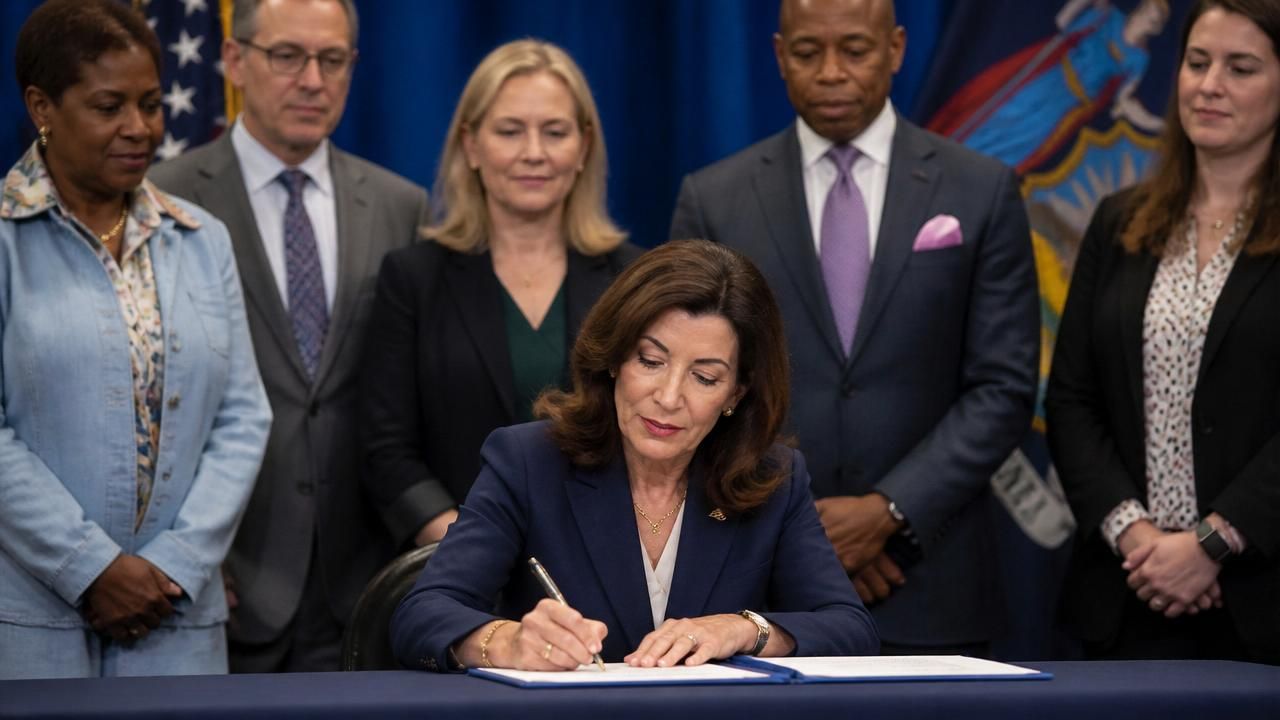
New York has become the first state in the nation to enact a statewide moratorium on new data centers, as Governor Kathy Hochul signed an executive order blocking environmental permits for facilities over 50 megawatts for up to one year. The move, which takes effect immediately, aims to give state regulators time to develop rules addressing rising energy prices, environmental impacts, and grid strain caused by the explosive growth of data centers, particularly those powering artificial intelligence.
A Landmark Decision
The moratorium, signed on [date], halts permits for new hyperscale data centers while allowing smaller facilities under 50 MW to proceed. This threshold is higher than the 20 MW limit originally approved by the state legislature, a compromise that drew mixed reactions. The governor's office stated that the pause is necessary to study the effects of data centers on electricity rates and the environment, citing concerns from residents and local governments.
“We should not have to sacrifice our environment or our wallets for the sake of technological progress,” Governor Hochul said in a statement. “This moratorium gives us the time we need to get the regulations right.”
The legislation, passed by the state legislature earlier this year, awaits the governor's signature to become permanent law. Meanwhile, the executive order provides immediate relief for communities worried about skyrocketing energy costs and overburdened infrastructure.
Growing National Trend
New York's move is part of a broader backlash against data centers across the United States. According to reports, at least 14 states and dozens of localities are considering similar bans or restrictions. Maine's legislature passed a ban on large data centers, though it was later vetoed by the governor. Seattle has enacted a local moratorium, and St. Charles, Missouri, became the first city to impose a citywide ban. The Rockefeller Institute of Government noted that these measures reflect rising public concern over the environmental and economic costs of data centers.
Why the Backlash?
Data centers consume enormous amounts of electricity—a single hyperscale facility can use as much power as a small town. With the rise of AI, demand for computing power has surged, leading to a boom in data center construction. Critics argue that these facilities drive up electricity prices for residents, strain aging grids, and contribute to carbon emissions, even as tech companies tout their renewable energy purchases.
- Energy costs: A poll by WAMC found that voters in New York prioritize affordability, with many citing data centers as a key factor in rising utility bills.
- Environmental impact: Data centers require massive amounts of water for cooling and generate significant heat, leading to local environmental concerns.
- Job creation vs. strain: While data centers create some construction and maintenance jobs, they are often highly automated and do not provide the employment levels promised by developers.
Differing Perspectives
The moratorium has sparked debate among stakeholders. Tech industry groups argue that data centers are essential for economic growth and innovation, particularly in AI. They warn that restrictions could drive investment to other states or countries. “New York is sending a message that it is not open for business in the digital age,” said a spokesperson for the Data Center Coalition.
Conversely, environmental activists and community groups praise the move. “This is a victory for everyday New Yorkers who have been footing the bill for corporate profits,” said a representative from the group Food & Water Watch. “We need a just transition that prioritizes people over machines.”
Some analysts see the moratorium as a necessary pause. “The data center industry has grown faster than regulators can keep up,” said energy policy expert Dr. Emily Carter. “A temporary halt allows for thoughtful planning that balances economic benefits with public interest.”
Historical Context
New York's action follows a local ban in Dryden, New York, which became a model for other communities. The town's moratorium on data centers was upheld in court, setting a precedent for local control. Similar measures have been considered in Virginia, Oregon, and other states where data center development has boomed.
The moratorium also comes amid a national conversation about AI regulation. As AI models require ever more computing power, the energy demands of data centers are expected to grow exponentially. The International Energy Agency projects that data centers could consume up to 8% of global electricity by 2030, up from 1% today.
What’s Next?
The New York State Department of Environmental Conservation will now lead a study to develop new regulations, with input from stakeholders. The governor's office has not specified what the final rules might look like, but options include stricter energy efficiency standards, requirements for renewable energy use, and mandates for community benefits agreements.
For now, the moratorium sends a clear signal: the era of unchecked data center expansion may be coming to an end. As other states watch New York's experiment, the outcome could shape the future of the digital economy.