Google has begun rolling out its November Pixel Drop, the quarterly feature update that, unlike the company's routine monthly security patches, bundles the more substantial changes to its phone lineup. This month's release is unusually consequential: it pushes a suite of AI capabilities that debuted on Google's newest flagship hardware down to the Pixel 10 series, delivering what Android Authority described as more than 12 new features and declaring Pixel 10 owners "the big winners" of the update.
What's in the drop
The update touches nearly every layer of the Pixel experience, from home-screen aesthetics to the way the assistant interacts with third-party apps. Among the headline additions:
- Gemini Intelligence expansion: A raft of AI features previously reserved for Google's latest Pixel hardware — and in some cases Samsung's flagship devices — will now run on the Pixel 10 series.
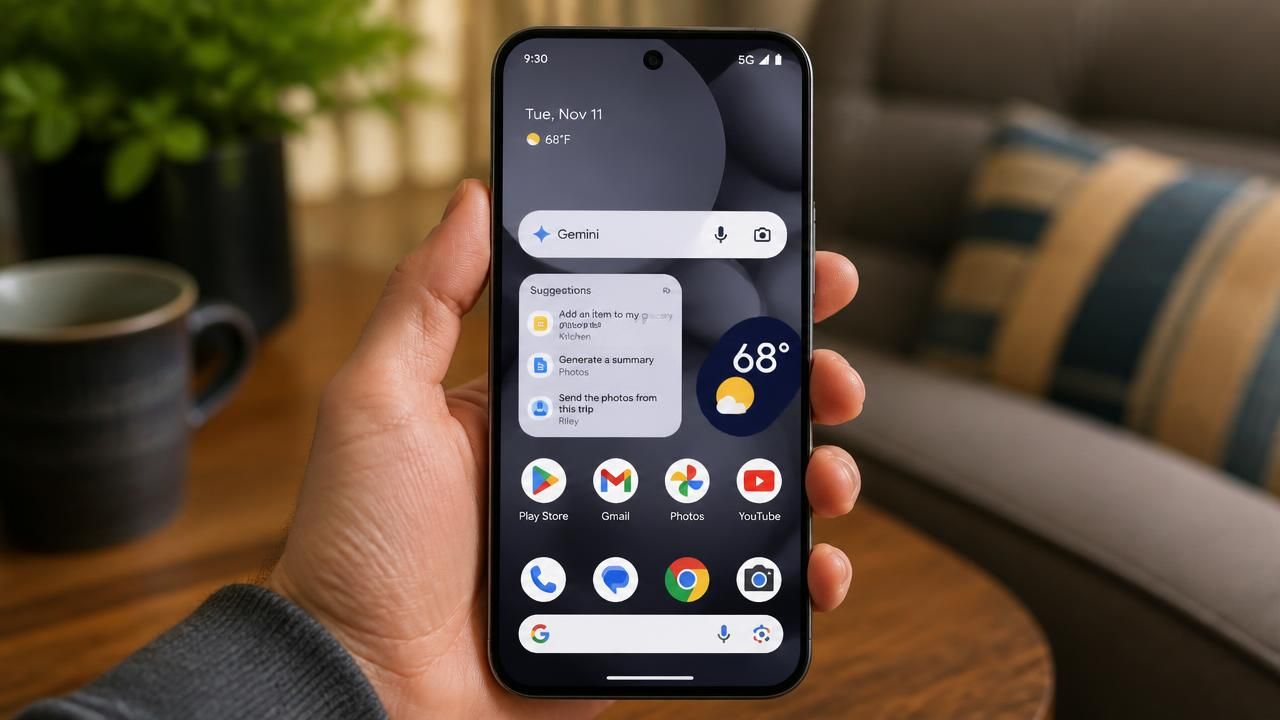
- Personalized suggestions: The feature formerly known as Magic Cue, which anticipates what a user might need based on on-screen context. Practical examples include sending a grocery list from another app directly into Google Keep, or generating a summary from the context menu.
- Rambler: Google's AI-assisted voice input system, arriving on the 2025-generation phones.
- Gemini app automation: The most ambitious addition, allowing the assistant to complete tasks across select third-party apps in rideshare, food delivery, travel and a handful of other categories.
- Create My Widget: A tool for building custom, AI-generated widgets.
- Ten new custom icon styles: Expanded home-screen personalization, alongside a slate of other visual tweaks.
- HiLight upgrade and Pixel Watch tools: Refinements to existing features plus new functionality for Google's wearable, according to AndroidGuys.
- Pixel Tag: The tracking accessory also goes on sale alongside the drop, per MSN's coverage.
The agentic shift: Gemini as errand-runner
The most strategically significant piece of the update is Gemini's ability to act on a user's behalf rather than simply answer questions. As Digital Trends framed it, the Pixel 10 update lets Gemini "order groceries, book cabs, and make calls on your behalf." HotHardware put it more bluntly, saying the drop gives Gemini "new superpowers to run your errands."
That is a meaningful step in the industry's broader pivot toward agentic AI — systems that don't just generate text but execute multi-step tasks inside other companies' software. Google is being deliberately cautious: automation remains limited to "select apps" in a defined set of categories. That restraint reflects both technical reality and business reality, since task automation depends on app-by-app integrations, and each new partner introduces reliability and liability questions.
"Google's November Pixel Drop brings over 12 new features, and Pixel 10 owners are the big winners." — Android Authority
The fine print: who gets left out
For all the enthusiasm, the update draws a sharp line between tiers. Ars Technica reported that while the Gemini Intelligence features reach the Pixel 10 lineup, the budget-oriented Pixel 10a is excluded. It is a familiar pattern in Android's fragmented update culture: software value increasingly becomes a function of how much a customer spent, and the gap between flagship and mid-range widens not through hardware alone but through AI capability.
Coverage also diverges on how to characterize the branding timeline. Ars Technica describes Gemini Intelligence as having debuted on the newest Pixel hardware — the Pixel 11 — with this drop extending those features down the stack, while AndroidGuys dates this release to November 2026. The substance across outlets is consistent: Google is using its quarterly drop cadence to make AI the primary reason to buy its hardware, and to reward recent buyers first.
Why the Pixel Drop matters
Google's move mirrors a broader industry reordering. Once, smartphone upgrades were sold on screens, cameras and battery life. Now, the pitch is increasingly about what the software can do autonomously. Apple has been rolling out its own assistant overhaul in stages, Samsung has leaned heavily on its Galaxy AI branding, and every major vendor is racing to ship agentic features while managing the reputational risk of an assistant that books the wrong flight or messages the wrong contact.
There is also a competitive dimension beyond phones. Google's willingness to move Gemini Intelligence onto a year-old device — and its decision to withhold it from the cheapest model — suggests the company is testing two things at once: how much AI horsepower its older hardware can sustain, and how effectively AI features can be used to steer buyers toward pricier tiers.
The practical effect for Pixel 10 owners is immediate: personalized suggestions, Rambler voice input, Gemini automation, custom widgets and a fresh set of icon styles will arrive over the air, no new hardware required. For everyone else, the November Pixel Drop is a clear statement of Google's strategy — the assistant is the product now, and the phone is the delivery vehicle.
Users can expect the update to arrive in staggered waves, as is typical for Pixel Drops. Those with eligible devices should check for the over-the-air package in system settings; owners of the Pixel 10a, however, will have to wait for a separate announcement that may not come.