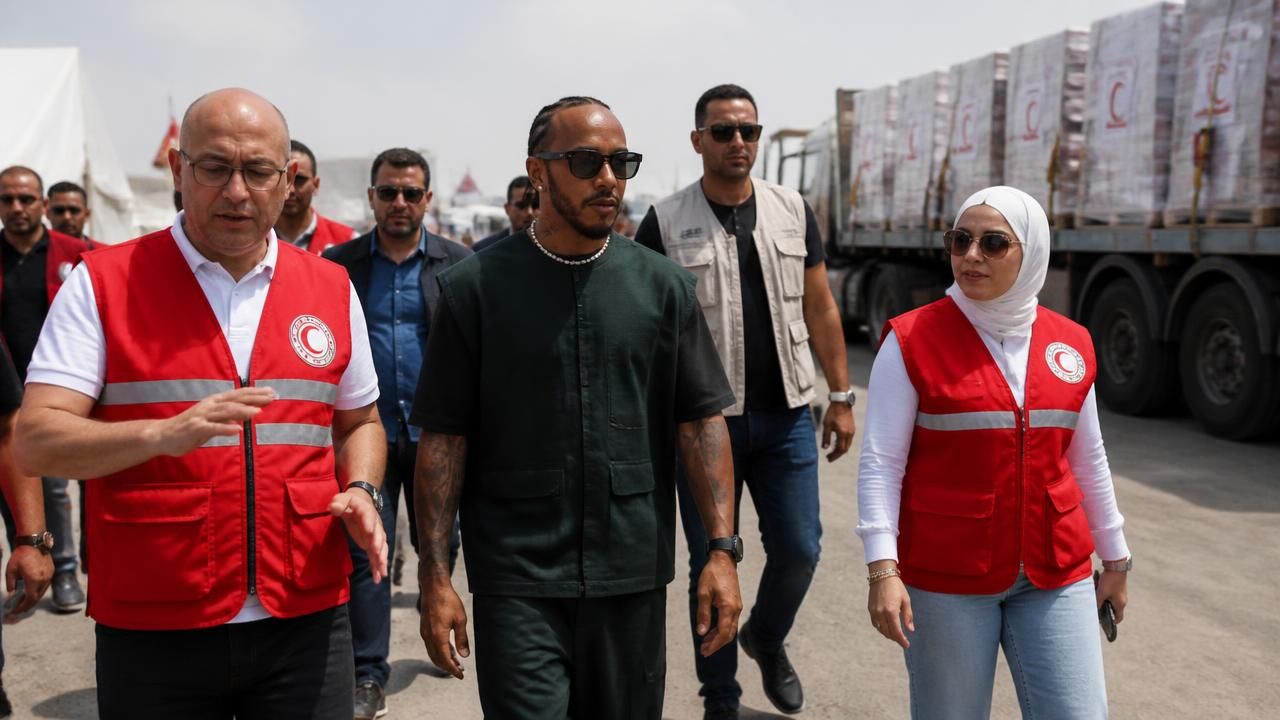
Lewis Hamilton has visited Egypt's Rafah border crossing with the Gaza Strip, touring the frontier area and the logistics warehouses used to move humanitarian aid into the besieged territory. The seven-time Formula One world champion arrived in North Sinai to review the aid effort, meeting organisations involved in sending supplies through the crossing and inspecting facilities operated by the Egyptian Red Crescent.
The visit, reported by the Guardian, Reuters, Al Jazeera and Egyptian state-linked outlets, marks one of the most prominent interventions yet by a global sports figure in the humanitarian crisis that has unfolded since the war in Gaza began. It also drew attention to the crossing itself — for years the principal gateway for people and goods in and out of the enclave, and a chokepoint that aid agencies say has been chronically underused.
'A show of solidarity'
Hamilton's itinerary took him first to Al Arish, the North Sinai provincial capital that has become the staging ground for international relief, before continuing to the Rafah crossing itself. Egyptian outlets, including Ahram and See News, framed the trip as a review of Gaza aid efforts and a show of solidarity with the Palestinian territory, while the Guardian emphasised the 40-year-old's long record of speaking out on the conflict, noting that he has repeatedly posted on social media about children killed in Israeli airstrikes and has called for a ceasefire.
The Guardian reported that Hamilton met organisations sending humanitarian aid to Gaza and visited logistics warehouses run by the Egyptian Red Crescent. As the paper put it:
Hamilton has spoken out about conflict and humanitarian crises in the region, and has called for peace. He has frequently posted on social media about children killed in Israeli airstrikes in Gaza and called for a ceasefire.
The trip came weeks after Hamilton publicly called for a "free Palestine" — a phrase that drew both praise and criticism, and one that the Daily Mail foregrounded in its coverage of the visit, framing the tour through the lens of that earlier post. Sports outlets such as Sportstar and the Hindu group's titles stressed the sporting significance: a driver at the peak of a record-breaking career using his platform to witness the aid operation first-hand.
From the paddock to the border
Hamilton is not a newcomer to political advocacy. In 2020 he took a knee before races in support of the Black Lives Matter movement and wore a T-shirt calling for justice for Breonna Taylor; he has used his helmet designs and race suits to highlight human rights concerns in host countries, including LGBT+ rights legislation in Hungary and the treatment of migrant workers in the Gulf. He has also campaigned on environmental issues, animal welfare and diversity in motorsport.
That history helps explain why his arrival in North Sinai was treated as news well beyond the sports pages. Few active athletes carry Hamilton's global reach: seven drivers' championships, more than 100 grand prix victories, and a social media following in the tens of millions. In a season in which he is racing for Ferrari for the first time, the visit also underlined how the sport's biggest star continues to operate outside the traditional boundaries of the paddock.
The crossing at the centre of the story
Rafah sits on the border between Egypt and southern Gaza and has been the focus of intense diplomatic wrangling over the volume and conditions of aid deliveries. The Egyptian Red Crescent has served as the principal local partner for relief convoys, coordinating warehousing and onward distribution from North Sinai. Aid agencies have long argued that the needs in Gaza vastly exceed what has been allowed through, and that access constraints — rather than supply shortages — remain the central obstacle.
By touring the warehouses rather than simply issuing a statement, Hamilton gave the aid infrastructure a level of visibility it rarely receives. His presence also implicitly spotlighted Egypt's role as both gatekeeper and logistics hub, a position that has made Cairo a target of criticism from rights groups and a key interlocutor for mediators.
Why it matters
- Celebrity diplomacy: Hamilton's visit adds a high-profile voice to calls for expanded humanitarian access at a moment when diplomatic momentum has repeatedly stalled.
- Competing framings: Egyptian outlets emphasised solidarity and the review of aid operations; British tabloids emphasised his earlier "free Palestine" remarks; sports media emphasised the athlete's off-track advocacy.
- Pressure and scrutiny: Formula One races in countries with contested human rights records, making a driver's political statements both personally significant and commercially sensitive for the sport.
- Attention as leverage: Aid organisations argue that visibility translates into donations and political pressure, even when a visit produces no immediate policy change.
Hamilton has not indicated whether he plans further visits to the region. But the trip fits a pattern: a sportsman who, having achieved essentially everything available to him on the track, has chosen to spend some of his remaining public capital on causes far from the circuit — and in this case, at a border crossing where the gap between global attention and humanitarian need has rarely been wider.