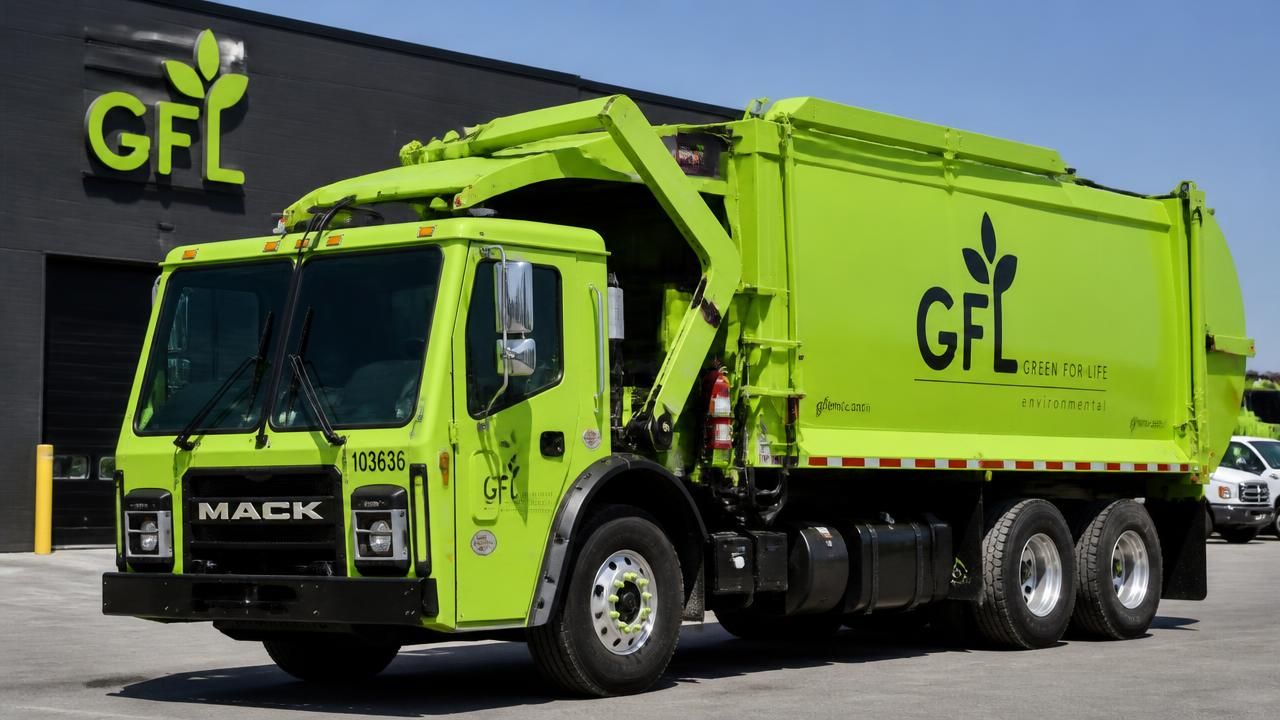
GFL Environmental Inc. has rejected takeover proposals and will remain a publicly traded company, ending a months-long strategic review that had attracted interest from major private-capital firms and briefly raised the prospect of one of Canada’s larger waste-management companies going private.
The decision, reported by Bloomberg Markets, closes a process in which GFL fielded interest from Blackstone Inc. and Brookfield Asset Management Ltd. Seeking Alpha, citing the Globe and Mail, said GFL rejected a $52-a-share offer from a private-equity consortium and ended its review. MarketWatch and MarketScreener both framed the outcome as a reaffirmation of GFL’s public-company strategy. Full text from some of those outlets was not immediately accessible because of paywall or access restrictions, but their headlines pointed to the same core disclosure: the take-private talks are over.
What GFL decided
GFL Environmental is a Canadian environmental-services company whose shares trade on the New York Stock Exchange under the ticker GFL. The company did not announce a sale, merger or other change of control. Instead, it opted to continue as a standalone public company after reviewing alternatives. That means shareholders will keep their exposure to GFL’s waste-management and environmental-services operations rather than receive a buyout premium, while management retains the public-market pressure that comes with quarterly reporting and investor scrutiny.
The reversal is notable because strategic reviews often end in a sale, especially when private-equity firms are involved. GFL’s review had reportedly drawn interest from Blackstone and Brookfield, two large alternative-asset managers with experience in infrastructure, real assets and industrial services. Their involvement signaled that financial buyers saw value in GFL’s recurring revenue and essential-service profile. GFL’s decision to reject those approaches suggests the company believes its standalone plan—or a higher price—is more attractive than the offers on the table.
The reported $52-a-share bid
Seeking Alpha’s headline, attributing the report to the Globe and Mail, put a specific number on the process: a $52-a-share offer from a private-equity consortium. The $52 figure is the only specific price disclosed in the source material. It is not clear from the available reports whether that proposal was the final bid, how the consortium was constituted, or whether other offers were made at different prices. Bloomberg’s account does not include a per-share figure but confirms that multiple buyout proposals were rejected and that Blackstone and Brookfield were among the investors that showed interest.
The difference matters for readers. A headline focused on “rejects take-private offers” emphasizes the strategic decision; a headline focused on “$52/share” emphasizes valuation. Both are accurate, but they answer different questions. One asks whether GFL will remain independent. The other asks what buyers thought the company was worth.
Why private equity was interested
Waste and environmental-services companies have long appealed to private-equity buyers because they tend to generate recurring revenue, operate under long-term contracts and provide services that remain necessary through economic cycles. Those characteristics can support stable cash flows and make the companies suitable for leveraged ownership. In GFL’s case, the interest from Blackstone and Brookfield underscored how large private-capital firms have moved deeper into infrastructure-like assets. A take-private transaction would have allowed a buyer group to own GFL outside public markets, potentially reshaping its capital structure and growth strategy.
But public ownership has advantages too. GFL can raise equity and debt, use its shares as acquisition currency and retain a broad investor base. Remaining public also avoids the execution risk and financing complexity of a large leveraged buyout. For shareholders, the trade-off is clear: no immediate takeover premium, but continued participation in any upside from GFL’s business plan.
How the coverage differed
Bloomberg Markets led with the outcome and the identity of the interested investors, emphasizing that GFL rejected buyout proposals and would stay public after a monthslong process. Seeking Alpha, citing the Globe and Mail, led with the price and the private-equity consortium, giving the story a sharper valuation angle. MarketWatch and MarketScreener emphasized continuity, framing the news as GFL reaffirming its public strategy after a review. Those are not competing versions of the facts; they are different entry points into the same corporate decision.
“GFL Environmental Inc. said it rejected buyout proposals and will stay public, ending a monthslong process that attracted interest from investors including Blackstone Inc. and Brookfield Asset Management Ltd.” — Bloomberg Markets
Why it matters
For GFL, the end of the review removes a cloud of uncertainty. Strategic reviews can distract management and invite speculation about leadership, financing and strategy. By closing the process, GFL can present a clearer story to investors. The company will still face questions about growth, leverage and capital allocation, but it will answer them as an independent public company rather than as a takeover target.
For the private-equity firms, the outcome is a missed opportunity, though not necessarily a final one. Large alternative managers often stay in dialogue with companies after a rejected approach. If GFL’s shares weaken or its strategy stumbles, interest could return. For the broader market, the decision is a reminder that not every strategic review ends in a sale, and that boards and managers may prefer public-market optionality to a buyout.
- GFL rejected takeover proposals and will remain public.
- Bloomberg named Blackstone and Brookfield as interested investors.
- Seeking Alpha, citing the Globe and Mail, reported a $52-a-share private-equity consortium offer.
- MarketWatch and MarketScreener framed the move as a reaffirmation of GFL’s public strategy.
What comes next
GFL now must prove that independence is worth more than the rejected bids. Investors will watch whether the company can sustain cash-flow growth, manage debt and pursue acquisitions without the pressure of a sale process. The reported $52-a-share offer will likely become a reference point in those discussions: if GFL’s valuation moves toward that level, the decision to stay public will look vindicated; if it falls short, shareholders may ask why the company did not engage further.
For now, the message from GFL is unambiguous. After months of review and interest from some of the largest names in private capital, Canada’s waste-management specialist has chosen the public markets.