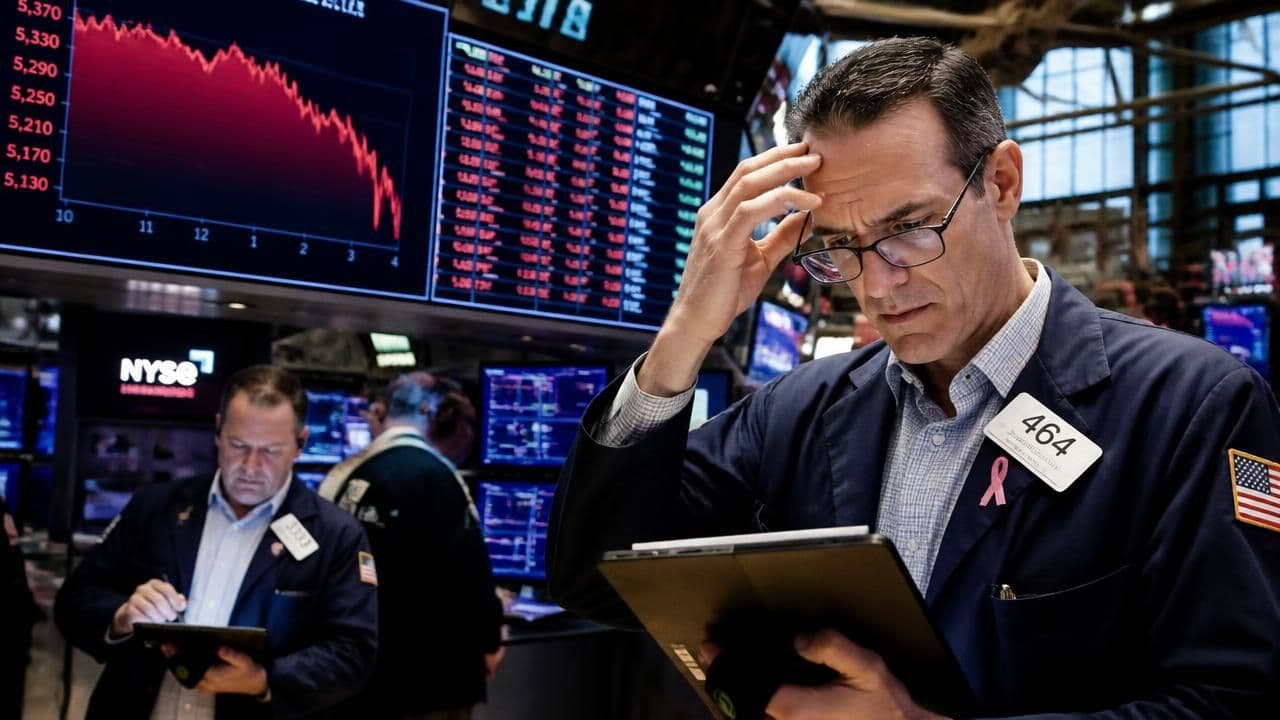
Prospective investors in Anthropic PBC's initial public offering entered the weekend facing fresh uncertainty just days before the company is expected to kick off formal marketing for what would be the largest listing on record, according to Bloomberg Markets. A punishing post-election selloff in artificial-intelligence stocks has forced both the company and its bankers to rethink the valuation they intend to bring to market.
The offering, which multiple outlets have pegged at an eye-watering $1.5 trillion target valuation, had been billed as the defining capital-markets event of the AI era. Instead, it is becoming a stress test of whether public investors are willing to pay private-market prices for a company whose revenue growth is reported to be decelerating and whose spending on compute remains enormous.
A record listing on shifting ground
Anthropic's IPO filing has put three questions at the center of the debate: how much the company spends, how quickly it can become profitable, and what that combination is worth, as Invezz framed it in its coverage of the S-1. Forbes, analyzing the same filing, argued the document amounts to a window into the broader economics of the AI boom — a rare public accounting of the capital intensity behind the sector's most valuable private companies.
The timing has been complicated by the calendar as much as by the market. Anthropic's November IPO plans, reported by Unite.AI, now face a push from major investors for better terms — a signal that the balance of negotiating power has shifted since the offering was first contemplated.
"Prospective investors in Anthropic PBC's initial public offering are facing a weekend of uncertainty ahead of the kickoff of formal marketing, after a punishing post-election selloff in AI stocks prompted a rethink of the company's expected valuation."
The AI backlash
The proximate cause of the rethink is a historic rout in technology shares that has hit AI-linked names hardest. Reporting from MSN's aggregation of exclusive coverage described an "AI backlash" that could threaten the IPO's timing altogether — a souring of sentiment that has gathered pace since the election and spread from speculative small caps to the sector's largest listed bellwethers.
Yahoo Finance reported that valuation expectations are cooling in tandem with a slowdown in revenue growth, a combination that strikes at the core of the bull case. The $1.5 trillion figure was always a private-market artifact, built on the assumption of hyper-growth extending years into the future. In a public offering, that assumption gets priced daily.
Seeking Alpha, citing The Wall Street Journal, reported that major investors have signaled skepticism about the headline valuation, adding to evidence that the deal may need to be repriced, restructured, or delayed.
What exactly would shareholders own?
Forbes raised a question that has received less attention than the valuation itself: what will investors actually own? The structure of the offering, the share class attached to it, and the governance rights that come with it will determine whether public shareholders have any meaningful influence over a company whose direction has so far been set by a small group of founders and backers.
Those details matter more than usual in a deal of this size. Investors who accept a lower headline valuation often extract other concessions — board seats, lock-up relief, or ratchets tied to future performance. The push for "better terms" reported by Unite.AI likely encompasses precisely these points.
- Valuation: A $1.5 trillion target that investors now describe as under pressure.
- Timing: November marketing plans that could slip if the tech rout deepens.
- Fundamentals: Heavy spending, decelerating revenue growth, and an unresolved path to profitability.
- Structure: Governance and share-class questions that will shape what public holders control.
OpenAI moves first
Complicating Anthropic's calculus is its closest rival. Reuters reported that OpenAI is seeking to accelerate its own fundraising ahead of Anthropic's IPO, a move that could drain available capital from the same pool of institutional investors and undercut Anthropic's negotiating position.
The two companies have become the twin poles of the frontier-model race, and their financing strategies are now intertwined. If OpenAI locks in commitments first, Anthropic's bankers will be marketing into a market where the largest, most committed AI allocators have already written their checks.
Why it matters beyond one deal
The stakes extend well beyond Anthropic's own balance sheet. A successful listing at or near the target valuation would validate the private-market marks that have underpinned a generation of AI startups and their venture backers. A discounted or postponed offering would do the opposite, forcing a repricing across the sector and potentially closing the IPO window for years.
There is precedent for both outcomes. The 2022 technology rout shuttered the IPO market for nearly two years, and deals that insisted on pre-rout valuations were quietly withdrawn rather than repriced. More recently, listings that accepted haircuts at the open have outperformed, suggesting investors reward realism.
For now, the message from the buy side is unambiguous: the appetite for AI is not in question, but the price is. Anthropic's answer — whether it holds the $1.5 trillion line, trims it, or waits — will be read as a verdict on the entire boom.