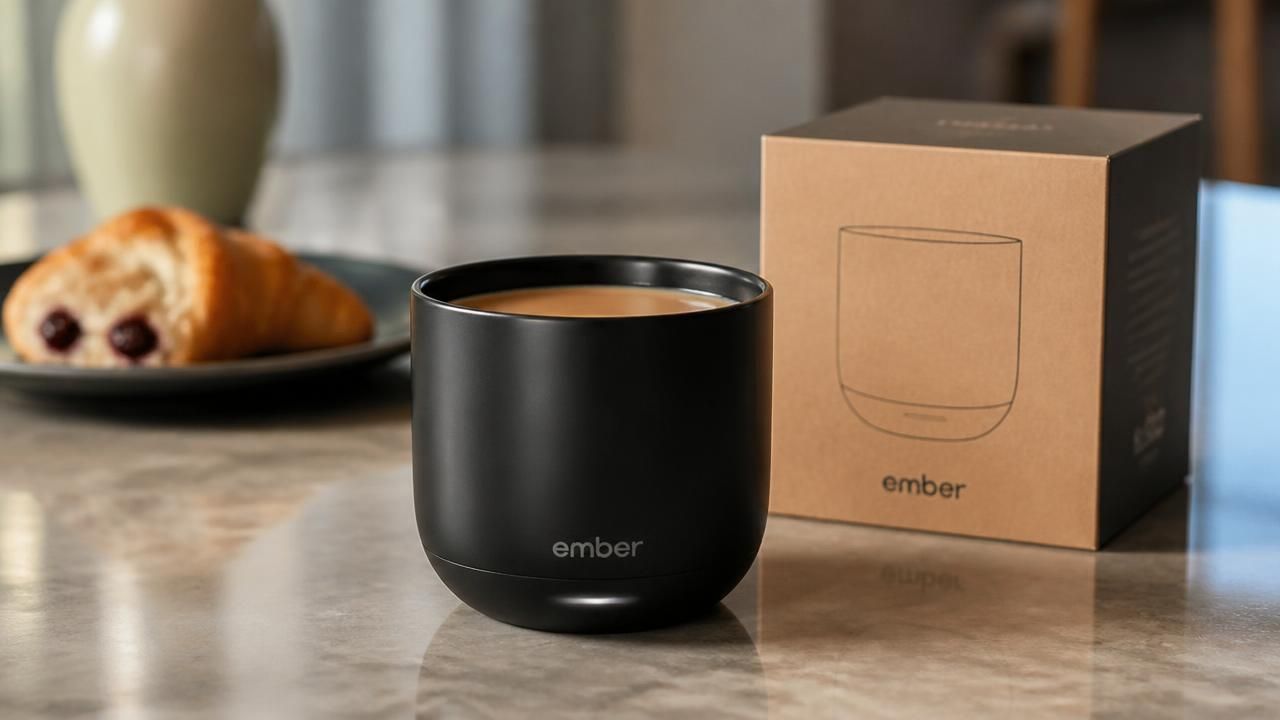
Ember's temperature-controlled drinkware has long occupied an awkward spot in the smart-home aisle: genuinely useful, quietly delightful, and expensive enough that most shoppers admire it from a distance. That calculus shifted this week, as several retailers rolled out discounts that bring the company's self-heating mugs closer to impulse-buy territory — including one deal that undercuts Ember's list price by roughly two-thirds.
The headline offer comes from Woot, the Amazon-owned clearance marketplace, which is selling the six-ounce Ember Cup in black for $32.99 — down from a $99.99 list price, a savings of about $67. The deal includes a 90-day warranty and runs through November 7th, according to The Verge, which first flagged the promotion. Shoppers can potentially stack additional savings through Woot's broader Home and Kitchen Sale, which knocks $20 off orders of $100 or more with the code COOK at checkout.
The broader discount picture
The Woot clearance is the steepest cut, but it isn't the only one. Other outlets reported that Ember's full lineup is currently discounted by about 20 percent, and that the Ember Mug 2 — the company's flagship model — is sitting at a price lower than deals seen just a few weeks earlier. Wired framed the moment around gifting, noting the smart mug is "back to its lowest price" and pitching it as a Mother's Day-adjacent present, while Yahoo's shopping vertical highlighted the rarity of the markdowns, urging coffee lovers to act because Ember products "rarely" go on sale.
The recurring theme across coverage is scarcity: Ember does not discount often, and when it does, the windows tend to be short and retailer-specific. That framing — part product journalism, part urgency marketing — is standard for the deals ecosystem, but it also reflects the reality of a premium hardware brand that has built its identity around price discipline rather than volume discounting.
What you actually get
The Ember Cup is the smallest and most niche product in the lineup. At six ounces, it is handle-free and sized for espresso-based drinks — cappuccinos, cortados, flat whites — rather than the 12-ounce mug of drip coffee many drinkers default to. The Verge's reviewer was candid about the tradeoff, writing that the small capacity is "well-suited for cappuccinos, cortados, flat whites, and other espresso-based drinks" but conceding that it works best "if you don't mind refilling your cup of coffee, cocoa, or tea throughout the day."
Functionally, the Cup mirrors Ember's larger mugs. Users pair a companion app to set a drinking temperature between 120 and 145 degrees Fahrenheit, and the device remembers that setting for subsequent drinks. Battery life runs up to 95 minutes on a charge, extends to roughly four hours with a lid attached, and can last all day if the cup stays on its included charging dock. It also enters sleep mode after two hours of inactivity and carries an IPX7 water-resistance rating.
"Granted, six ounces isn't much, but the smaller, handle-free cup is well-suited for cappuccinos, cortados, flat whites, and other espresso-based drinks." — The Verge
Why a heated mug matters more than it sounds
The appeal is easy to dismiss until you've used one. Coffee drinkers lose a surprising amount of their beverage to cooling — a standard ceramic mug drops below pleasant drinking temperature within 15 to 20 minutes — and reheating in a microwave degrades flavor. Ember's pitch is that holding a drink at a precise temperature preserves the experience the roaster intended, particularly for light-roast specialty coffee where delicate aromatics are most vulnerable to heat loss.
Long-term users tend to be the most persuasive advocates. Bustle's reviewer, who tested the Ember mug for two years, wrote that it had fundamentally changed her coffee-drinking routine — a common refrain among owners who describe sipping at leisure rather than gulping before the drink goes cold. That kind of longitudinal testimony carries more weight than a spec sheet, and it explains why Ember has maintained a loyal following despite a price structure that has kept its products firmly in the "luxury purchase" category.
The caveats worth weighing
Deal coverage across outlets converged on several cautions. The Ember Cup's six-ounce capacity is a genuine limitation rather than a marketing quirk. Warranty terms differ by seller — Woot's 90-day coverage is shorter than the standard manufacturer warranty a buyer would get direct from Ember or a mainstream retailer, which matters for a battery-powered device. And the full discount stack at Woot requires hitting a $100 cart minimum to trigger the coupon.
Buyers should also note that the Ember Cup occupies a different niche than the Ember Mug 2, which comes in larger sizes and is the model most reviewers recommend for everyday use. For anyone who primarily drinks standard drip coffee or tea by the pint, the 20-percent-off Ember Mug 2 deals are likely the better entry point; the $33 Cup is best understood as a targeted accessory for espresso drinkers or a low-cost way to test whether the category is for you.
The bigger picture
The flurry of coverage — The Verge, Wired, Yahoo's commerce desk and Bustle's long-term review all converging in the same window — illustrates how modern product journalism works: a single retail promotion becomes a multi-angle story, with each outlet accenting a different reader need, whether price, gifting, or lived experience. It also reveals something about Ember's market position. A decade ago the company was a Kickstarter-adjacent curiosity; today it anchors a small but durable category of temperature-controlled drinkware, with competitors emerging at lower price points.
For consumers, the practical takeaway is narrow but useful: if a self-heating mug has been on your list, this is one of the more favorable windows in recent memory. And if it hasn't been, $33 is a low enough bar to find out whether warm coffee for the length of a slow morning is a gimmick — or, as longtime owners tend to insist, a small but lasting upgrade to a daily ritual.