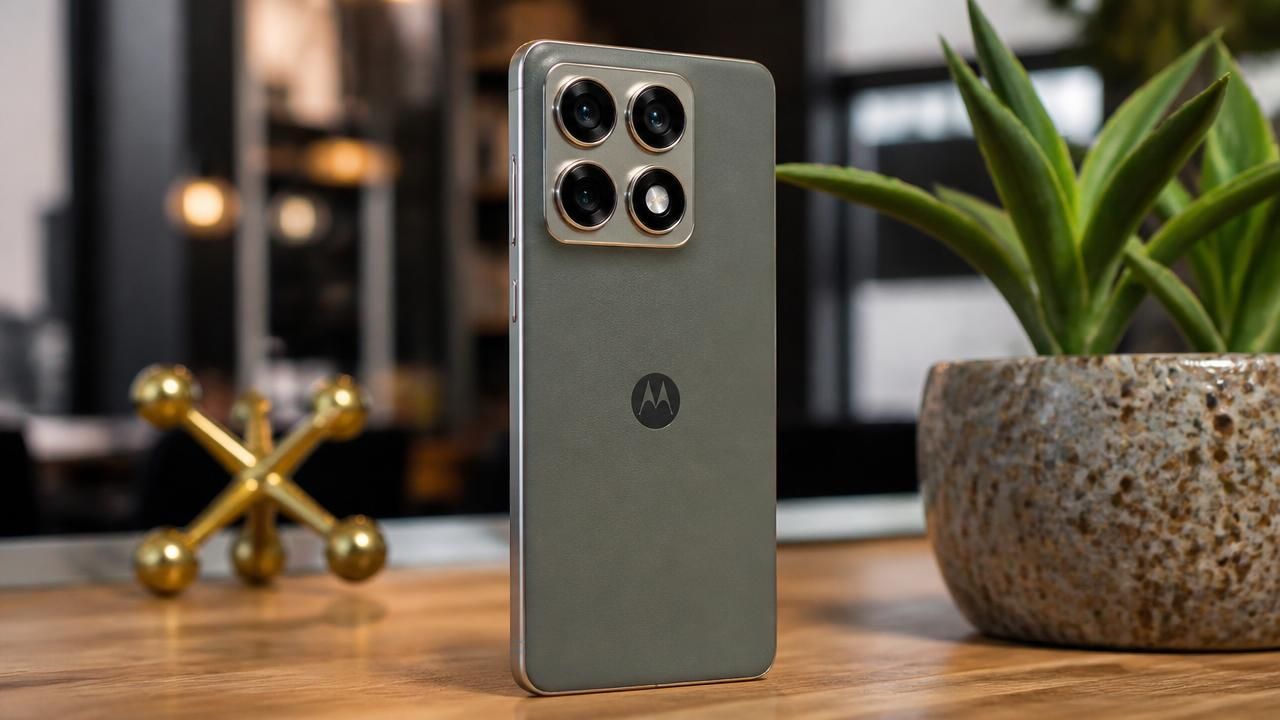
Motorola has spent years as the value alternative in the Android ecosystem — the brand you bought when a Galaxy or a Pixel felt like overkill. That era appears to be over. With the newly unveiled Signature 27, the Lenovo-owned company is charging headlong into ultra-premium territory, attaching a $1,599 price tag to a device that, on paper at least, out-specs nearly everything in the room.
The Signature 27 is official, and the reaction across the tech press has been remarkably uniform in tone: disbelief at the price, followed by a grudging acknowledgment of the hardware. The Verge summed up the maneuver bluntly in its headline, framing the launch as "Motorola is going ultra premium with its $1,600 'Signature' phone." HotHardware was more combative, declaring that the device "declares war on flagships with monster specs." AndroidGuys, meanwhile, led with the number that will define the conversation: $1,599.
The Hardware: Motorola's Kitchen Sink
At the heart of the Signature 27 is Qualcomm's Snapdragon 8 Elite Extreme Gen 6 chipset — a part that had already surfaced in Geekbench listings ahead of launch, giving leakers early confidence about the phone's performance tier. Mashable's coverage ahead of the global rollout noted that benchmark data confirmed the silicon months before Motorola made it official.
The spec sheet reads like a checklist assembled by someone with nothing to lose:
- Display: A panel rated at up to 12,000 nits, which Motorola is calling the brightest display it has ever shipped — and, by its accounting, the brightest on any phone.
- Battery: A 7,000mAh cell, a capacity that sits well beyond the 5,000mAh norm among premium Android flagships.
- Camera: A 200-megapixel telephoto lens, eschewing the more common approach of reserving the high-resolution sensor for the primary shooter.
- Build: A chassis combining ceramic and aluminum, a materials pairing typically reserved for the most expensive tier of the market.
- Sensing: An "Event-Based Vision Sensor," a component that captures changes in a scene at the pixel level rather than recording full frames — technology borrowed from machine-vision and robotics applications.
Phone Scoop's assessment was succinct: the Signature 27 "is a true flagship." That framing matters. Motorola's previous high-end efforts, including the Edge line, were routinely praised for value and quietly dinged for compromise. The Signature 27, by contrast, appears designed to have no obvious gap.
Pricing: The Elephant in the Room
At $1,599, Motorola lands directly on top of Samsung's Ultra tier. ShiftDelete was explicit about the comparison, noting the Signature 27 "costs $1,599, matching Galaxy S26 Ultra" — a positioning choice that leaves Motorola with none of its traditional price advantage and all of the brand-equity burden.
Ars Technica's take captured the tension precisely: the phone "has it all if you can stomach the $1,600 price tag." That conditional is the story. Motorola is asking consumers to pay Apple and Samsung money for a Motorola phone, a proposition the company has never before tested at this altitude.
India: A Different Calculation?
The most intriguing wrinkle comes from India, where Motorola has confirmed a launch and where, according to Trak.in, the phone is expected to start at roughly Rs 69,999. That figure — approximately $790 at current rates — sits at less than half the US price and would represent a radically different value proposition.
Indian tech outlets have folded the device into their November 2026 launch previews alongside the Vivo X500 and other upcoming handsets, suggesting Motorola sees the subcontinent as a strategic battleground rather than an afterthought. Whether the Rs 69,999 figure reflects aggressive regional pricing, a different memory configuration, or simply pre-launch speculation remains unresolved. Motorola has not clarified the discrepancy, and the gap is wide enough that it deserves scrutiny rather than repetition.
Why It Matters
Motorola's global smartphone share has long been concentrated in the budget and mid-range segments, particularly in North America and Latin America. The Signature 27 is a bet that the company can manufacture aspiration, not just affordability — and that a genuinely differentiated spec sheet can shortcut a brand-perception problem that usually takes years to fix.
The event-based vision sensor and the 200MP telephoto are the most credible differentiators. Competitors have spent the last two cycles converging on similar camera stacks and near-identical Snapdragon silicon; a genuinely novel sensor architecture is one of the few remaining ways to stand out.
But flagships are won on more than parts. Software support longevity, carrier relationships, retail presence, and resale value all matter at $1,600 — and those are arenas where Motorola has historically been outmatched. The Signature 27's global rollout, expected next month, will be the first real test of whether the market believes Motorola belongs in that conversation. The hardware, nearly every outlet agrees, is ready. The question is whether buyers will follow.