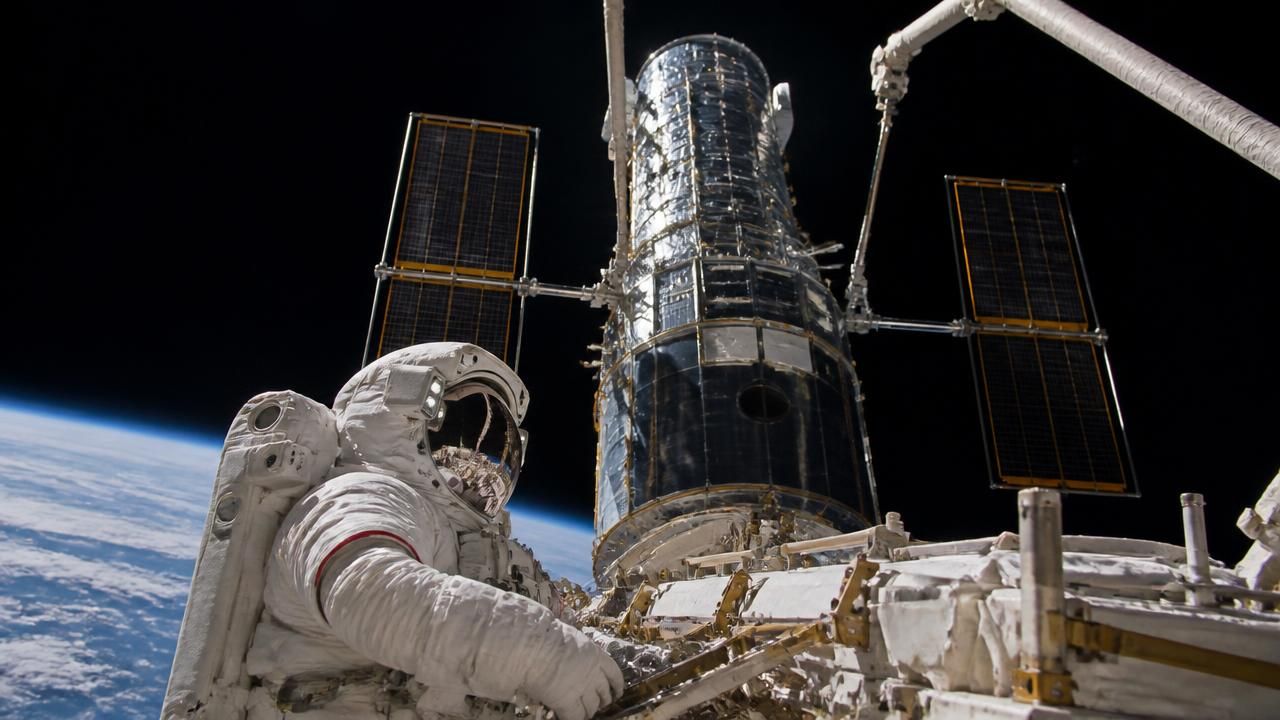
In the three and a half decades since its launch, the Hubble Space Telescope has become less a camera than an archive — a machine for reading history written in starlight. This month alone, NASA, ESA and a host of science outlets have unfurled a cluster of Hubble results that, taken together, sketch an unusually complete picture of how galaxies like our own assembled themselves, from the first glimmers after the cosmic dark ages to the dense, bustling heart of the Milky Way.
The findings range from a single glittering globular cluster to panoramic surveys of the galactic core, and they arrive as Hubble approaches its 35th anniversary in orbit. Each result is a different page from the same book — one that astronomers are only now learning to read.
Reading galactic history in ancient stars
NASA's own release focused on Messier 30 (M30, also catalogued as NGC 7099), a tightly packed sphere of stars roughly 28,000 light-years away. First logged by the French comet-hunter Charles Messier in the 18th century as a diffuse object that might be mistaken for a comet, M30 is now understood to be among the oldest objects in the galaxy — a relic population of stars whose chemistry and motions preserve the conditions of the Milky Way's infancy.
Globular clusters serve as cosmic fossils. Because their stars formed together and have aged together, their composition acts as a chemical fingerprint of the gas cloud that birthed them. By resolving individual stars in M30 and in similarly dense clusters, Hubble lets astronomers date stellar populations and trace the enrichment of the galaxy with heavier elements forged inside earlier generations of stars and scattered by supernovae.
Scientists describe globular clusters as fossil records of galaxy formation — self-contained laboratories in which the history of star birth, chemical enrichment and gravitational binding can be studied star by star.
One such haul, widely covered by ScienceDaily, produced an image described as a star-spangled sea of roughly 500,000 stars — the kind of crowd that exists only in a cluster's core, where stellar densities are measured in thousands per cubic light-year.
A barred spiral, a distant neighbour, and the Milky Way's surprising youth
Alongside the cluster work, Hubble imagery of the barred spiral galaxy IC 486 offered a different kind of lesson: a portrait of active star formation organized along a central bar, where gas is funneled inward and compressed into new suns. A separate Hubble view of a spiral galaxy some 53 million light-years distant, distributed through Phys.org's image feed, delivered the sharp structural detail — dust lanes, knotty spiral arms, glowing nurseries — that has made Hubble the benchmark for galaxy portraiture.
The headline-grabber, however, concerned the Milky Way itself. Reports circulated by MSN and others suggested that the Milky Way's growth began earlier than previously thought. The claim rests on the same logic as the globular cluster work: if the oldest stars in and around our galaxy formed sooner than models predicted, then the assembly of the Milky Way's halo and disk began sooner too, compressing the timeline of early galaxy formation and putting pressure on simulations of how dark matter and gas built structure after the Big Bang.
Oxygen, dwarf galaxies, and the leaky universe
A subtler result, also distributed via MSN, turned to the small galaxies orbiting larger ones. Stars forge oxygen in their cores and expel it in winds and supernova explosions; the assumption has long been that this oxygen enriches a small galaxy's own reservoir of gas. Hubble observations suggest instead that dwarf galaxies lose most of the oxygen their stars produce — ejecting it into intergalactic space through galactic winds. The finding complicates the use of oxygen abundance as a simple clock of star formation and raises the possibility that small galaxies have been polluting the cosmic web around them for billions of years.
The twist in the end of the dark ages
Perhaps the most consequential Hubble result in this batch, highlighted by both ScienceDaily and SciTechDaily, concerns reionization — the epoch when the first stars and galaxies flooded the neutral hydrogen fog of the early universe with ultraviolet light, ending the cosmic dark ages and making the cosmos transparent.
The standard account holds that the most luminous early galaxies did the job. The newer Hubble analysis points to a twist: the process appears to have been more uneven, or driven by different populations of objects, than the textbook picture allows. Precisely how the fog lifted, and by whose light, remains an open question — one that Hubble can probe but not fully answer.
Scouting the way for Roman
That limitation is the reason the newest Hubble programme near the Milky Way's centre matters. As Newswise reported, a Hubble survey of the densely packed galactic bulge — a region choked with dust and crowded with stars — is designed in part as a reconnaissance mission for NASA's Nancy Grace Roman Space Telescope, which will carry a field of view roughly a hundred times larger than Hubble's.
Hubble's near-infrared survey work near the core has revealed that our galaxy's central region is a more complicated place than models predicted, part of what Mashable characterized bluntly: something about the Milky Way's core just does not add up. The bulge appears to contain multiple stellar populations with distinct ages and chemistries, a sign that the galactic centre assembled in fits and starts rather than in a single, orderly collapse.
Why it matters
The framing across outlets is telling. NASA's institutional voice emphasizes legacy and education; ScienceDaily and SciTechDaily lead with the cosmic mystery; Mashable sells the anomaly; Newswise speaks to the research community about future instruments. The underlying story is the same: Hubble has become an instrument of archaeology as much as astronomy, and its most valuable recent output may be the questions it hands to the next generation of telescopes.
Roman, due for launch later this decade, will map the bulge at unprecedented scale and survey the sky for the faint, distant galaxies that drove reionization. But the groundwork — the star-by-star dating, the chemical fingerprints, the surprises in the core — was laid by a telescope that, 35 years on, still keeps finding that the universe's history is more tangled than anyone expected.