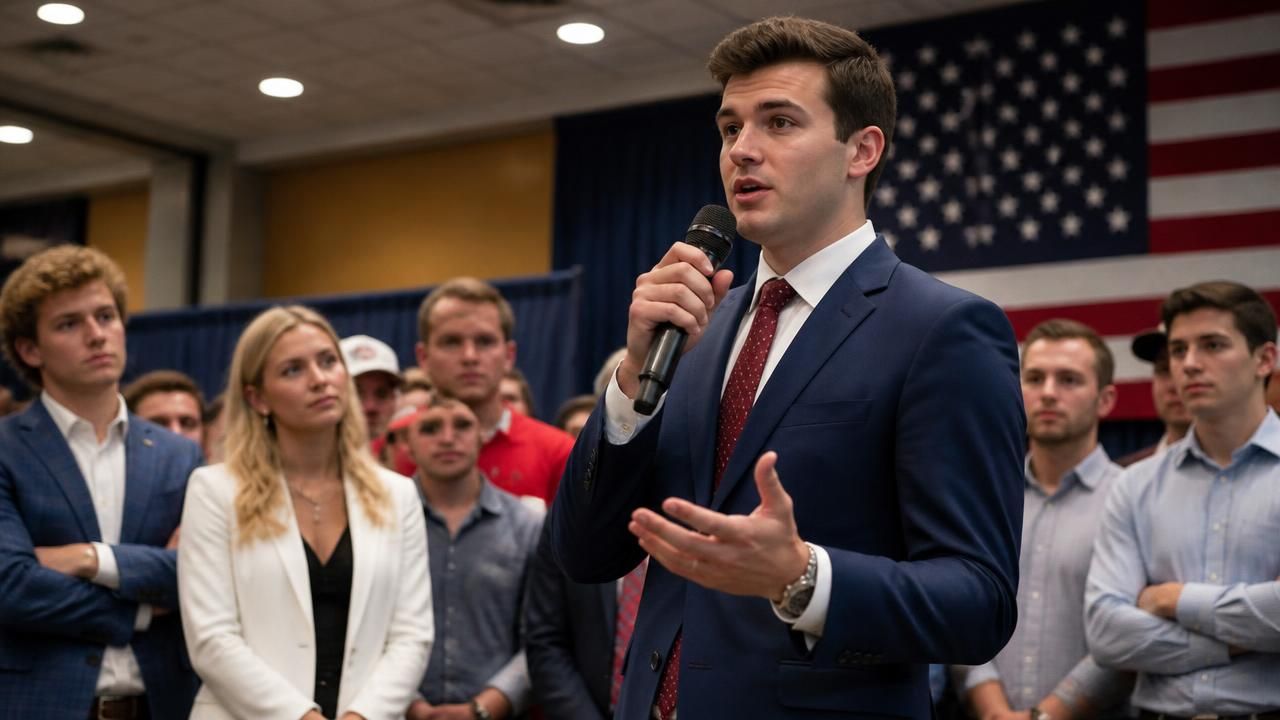
As Republicans brace for a difficult midterm environment, a new crop of young conservatives is trying to turn generational frustration into a governing message. On the eve of what may prove to be a tough election for the GOP, young Republicans running for Congress are seeking to become part of the first Gen Z class on Capitol Hill and want a role shaping the party's next chapter, according to NPR Politics. Their pitch is less a wholesale rejection of the party than an argument that a new generation should inherit and redirect it.
A new generation steps forward
The candidates are running in House races across the country, and their rise reflects a broader demographic shift. Gen Z, generally defined as those born between 1997 and 2012, is now old enough to run for Congress and increasingly vocal about the issues that shape its politics: housing, student debt, wages and institutional trust. RedState framed the trend through Alabama races where candidates were aligned but the future was said to lie with Gen Z leaders. The Daily News headline similarly described young Republicans pitching a new direction for the party as they seek House seats.
But generational change is not a cure-all. An MSN opinion piece argued that generational change in Congress is coming but will not fix everything, a caution that cuts against the idea that younger lawmakers automatically produce a less polarized or more effective institution. Politico's framing was blunter: Gen Z is broke and fed up with politics. That frustration is real, but it does not belong to Republicans alone, and it does not guarantee that young voters will embrace a GOP rebrand.
The midterm map and the limits of a message
The stakes extend well beyond individual candidacies. PBS's Amanpour & Company noted that Trump won these states, yet Republicans now face an uncertain midterm. The New York Times focused on whether Republicans can hold the Senate and which voters they need to do it. MSN examined how Democrats could win the House, how the GOP could hang on, and where to look for a wave. Together, those frames describe a party trying to defend a narrow map while experimenting with a new messenger.
Yahoo's profile of a 28-year-old Republican outlined the GOP's post-Trump future in a district Harris won by 24 points. That is the central test: whether a younger, less MAGA-coded candidate can sell a generational reset in hostile terrain without alienating the base. The answer will depend less on biography than on whether the party's new voices can connect on costs, housing and opportunity.
Anger in swing districts and a party rethink
In swing districts, the mood is raw. MSN reported on a GOP congressman facing angry voters, with the message captured in the phrase: 'I'm against the party that caused this.' Whether that anger is aimed at Republicans or at the political class broadly, it illustrates the squeeze on incumbents who must defend a party brand while distancing themselves from its most unpopular features.
'I'm against the party that caused this.' — a voter's blunt message to a swing-district Republican congressman, as described by MSN.
That pressure is echoed by calls for introspection. USA Today reported that Sen. Todd Young says the GOP is 'due for a rethink' and outlined what he would change. The comment gives cover to younger candidates who want to argue that the party can be reformed from within. It also exposes a tension: a rethink can sound like renewal to some Republicans and like apology to others.
Housing, young men and the policy test
The policy test is especially sharp on housing. The Hill reported on what Democrats would do about Gen Z's housing crisis if they win Congress, a reminder that the issue is already being contested on Democratic terms. For Republican candidates, the challenge is to offer a credible supply-side or affordability agenda rather than merely criticizing Democratic plans. Politico's 'broke and fed up' frame captures why housing costs are central: they shape whether young voters see the economy as rigged against them.
The gender gap is another variable. MSN reported that Trump is losing young men and asked whether frat-bro outreach can alleviate Republican woes. Such outreach may generate attention, but it is unlikely to solve structural economic problems on its own. Young men, like young women, are responding to costs, work and status, not just cultural signals.
Turbulence beyond the generational story
The party's broader turbulence complicates the generational message. MSN reported that Republicans are putting pressure on 'shockingly unprofessional' Hegseth as an impeachment vote looms. For young candidates trying to talk about housing and the future, such controversies can drown out their message and reinforce the impression that Washington is consumed by conflict.
What to watch
- Whether Gen Z Republican candidates win primaries without being defined by national party controversies.
- Whether they can offer concrete housing and cost-of-living policies that appeal beyond the base.
- Whether swing-district incumbents can separate themselves from voter anger toward the party.
- Whether Democratic gains among young voters hold, or whether GOP outreach to young men changes the margins.
- Whether Senate and House maps leave any room for a generational rebrand to matter.
The rise of Gen Z Republicans is a real story about who will inherit the party, but it is not yet a story about a party that has resolved its direction. The young candidates are betting that fresh faces and kitchen-table economics can overcome a difficult environment. The midterms will show whether voters see generational change as a reset or simply as a new cast performing an old script.