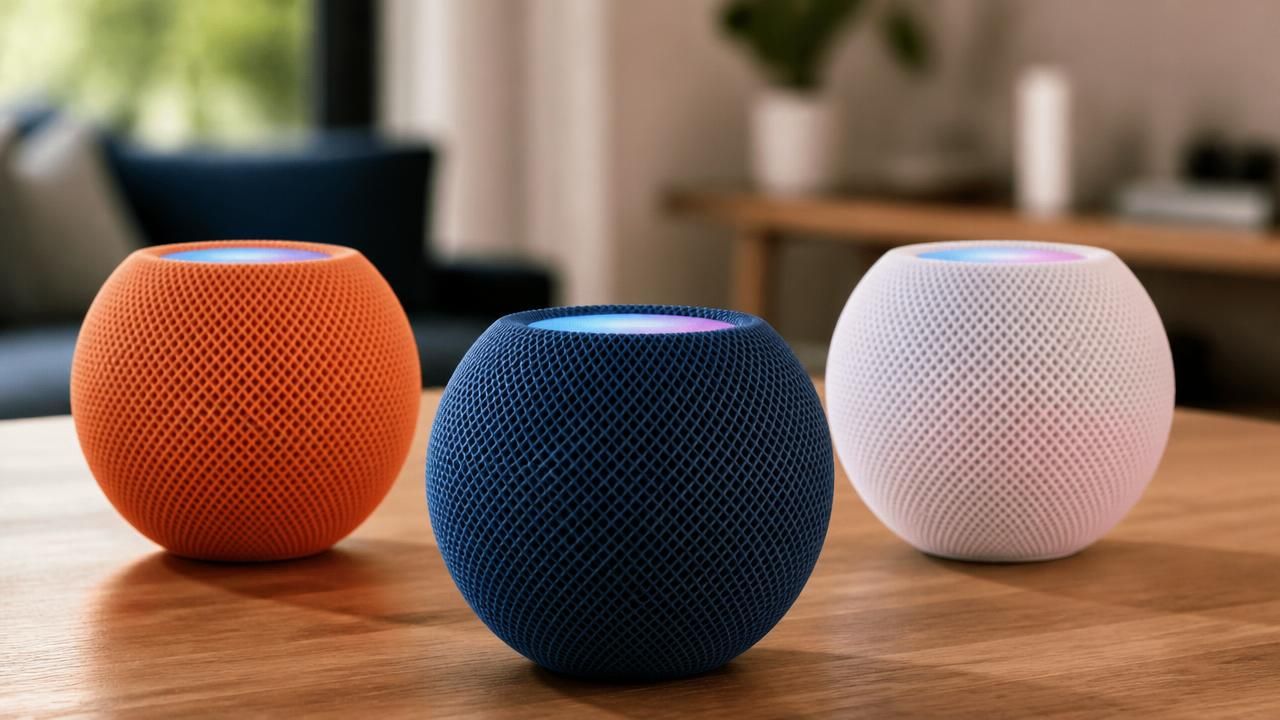
It has been six years since Apple first put a $99 puck-shaped speaker on nightstands and kitchen counters. This week the company finally replaced it. The HomePod Mini 2, unveiled at Apple's “Welcome Home” event last month and now reaching reviewers, arrives at $149 — a $50 premium over its predecessor — with a faster chip, a new two-tone color scheme and improved AirPlay, but without the one thing many owners had been waiting for: a better sound system.
The launch is part of a broader smart-home refresh that also includes a new Apple TV 4K and a device referred to as HomeView, a home hub that Apple demonstrated alongside the speaker. But the roll-out has been unusually leaky, with details of the new colors and the wider lineup surfacing in Apple's own software before the company was ready to show them.
What actually changed
On paper, the upgrade is modest. Apple swapped in a newer processor, added a set of finishes MacRumors described in an exclusive first look as “two-tone” — three new colors in total — and improved AirPlay handling. The audio hardware itself is essentially carried over.
That combination initially struck The Verge's Jennifer Pattison Tuohy as thin gruel. Writing after the event, she said the second-generation Mini felt like a product where “Apple didn't even upgrade the sound system,” adding that “it felt like the company phoned this one in.”
Hands-on time changed her mind — partly. Setting up two units in a home office, she found the Mini 2 “so much faster than the first-gen Mini, playing music in a few seconds and responding to smart home commands” almost instantly. The chip bump, in other words, is not a spec-sheet formality; it is the difference between a speaker that feels responsive and one that feels like it is thinking about it.
The improvement that hasn't arrived
The central tension in the coverage is that the Mini 2's most anticipated feature is not shipping yet. The Verge's headline verdict was blunt: “the biggest improvement hasn't arrived yet.” That refers to the long-promised, repeatedly delayed overhaul of Siri and the Apple Intelligence layer that is meant to make Apple's smart-home devices genuinely conversational rather than command-driven.
That gap matters commercially. Apple is asking customers to pay 50 percent more than the original launch price for hardware that is, by the company's own roadmap, waiting on software. Buyers are effectively pre-paying for a capability that will be delivered later.
“It's been six years since Apple launched its entry-level smart speaker, and all it got in the second gen was a chip bump, some color glowy stuff, and better AirPlay.” — The Verge
A lineup, not a product
Reviewers who saw the devices together came away with a different emphasis. MSN's hands-on with HomeView, the HomePod Mini 2 and the Apple TV 4K concluded that the writer was “sold on one” of the three — a reminder that Apple is now selling a system rather than individual gadgets, and that the strongest link in the chain may not be the speaker.
Apple is also sweetening the bundle. MacObserver reported that the Apple TV 4K ships with three months of Apple TV and the HomePod Mini 2 with an Apple Music offer — small incentives that nonetheless signal how heavily the company is leaning on services revenue to justify hardware pricing.
How the news got out early
The launch narrative was complicated by Apple's own code. Digital Trends reported that the company's software “may have spoiled the HomePod mini 2 early,” while AndroidHeadlines went further, reporting that Apple accidentally leaked its upcoming HomePod Mini 2 colors alongside references to an “iPad 8 Mini” and the wider smart home lineup through a security-verification-gated post.
These pre-announcement artifacts have become a recurring feature of Apple releases: firmware strings and asset files surface in beta builds, enthusiasts extract them, and the surprise is gone before the keynote. For a company that trades heavily on staged reveals, the pattern is a genuine, if self-inflicted, marketing problem.
The bottom line
- Price: $149, up from $99 at the original's 2016-era launch — a 50 percent increase.
- Speed: Reviewers consistently cite dramatically faster startup and smart-home response.
- Design: Three new two-tone colorways, no acoustic overhaul.
- Missing: The delayed Siri/Apple Intelligence upgrade that was meant to define this generation.
Whether the Mini 2 succeeds depends on which customer Apple is courting. For someone building out a home with HomeView at the center and an Apple TV 4K in the living room, the faster chip and improved AirPlay make the $149 easier to swallow. For anyone who already owns a first-generation Mini, the calculus is harder: the sonic experience is largely unchanged, and the feature that would justify the upgrade is still on a roadmap rather than in a box.
The early coverage converges on a single conclusion. The HomePod Mini 2 is a better product than the one it replaces — quicker, prettier and more responsive — but it is not yet the product Apple has spent two years promising. That verdict, like the software, is pending.