OPEC+ is set to leave its oil production quotas unchanged when its ministers meet on Sunday, according to delegates briefed on the plans, a decision that would extend the group's cautious, wait-and-see posture into the final weeks of the year even as conflict in the Middle East removes barrels from the market.
Reports from Bloomberg, Reuters, MSN and Yahoo Finance converged on the same core conclusion — that the coalition of more than 20 oil-producing nations has no appetite for adjusting its official output targets at this meeting — while differing on which month's quotas were under discussion. Bloomberg reported that major OPEC+ nations would stick with plans to keep quotas unchanged in December; MSN and Yahoo Finance described the same expectation in terms of November quotas. The discrepancy reflects the short, headline-driven nature of much of the coverage rather than any real disagreement among delegates about the direction of policy.
The substance of the decision
At issue is the group's official production ceiling, which has been in place since late 2022, along with a parallel layer of voluntary reductions pledged by a smaller group of member countries. Those voluntary cuts — which the group has repeatedly extended rather than unwound — do much of the heavy lifting in restraining supply. Sunday's meeting is not expected to change either layer, according to the delegates, who spoke on condition of anonymity because the deliberations are private.
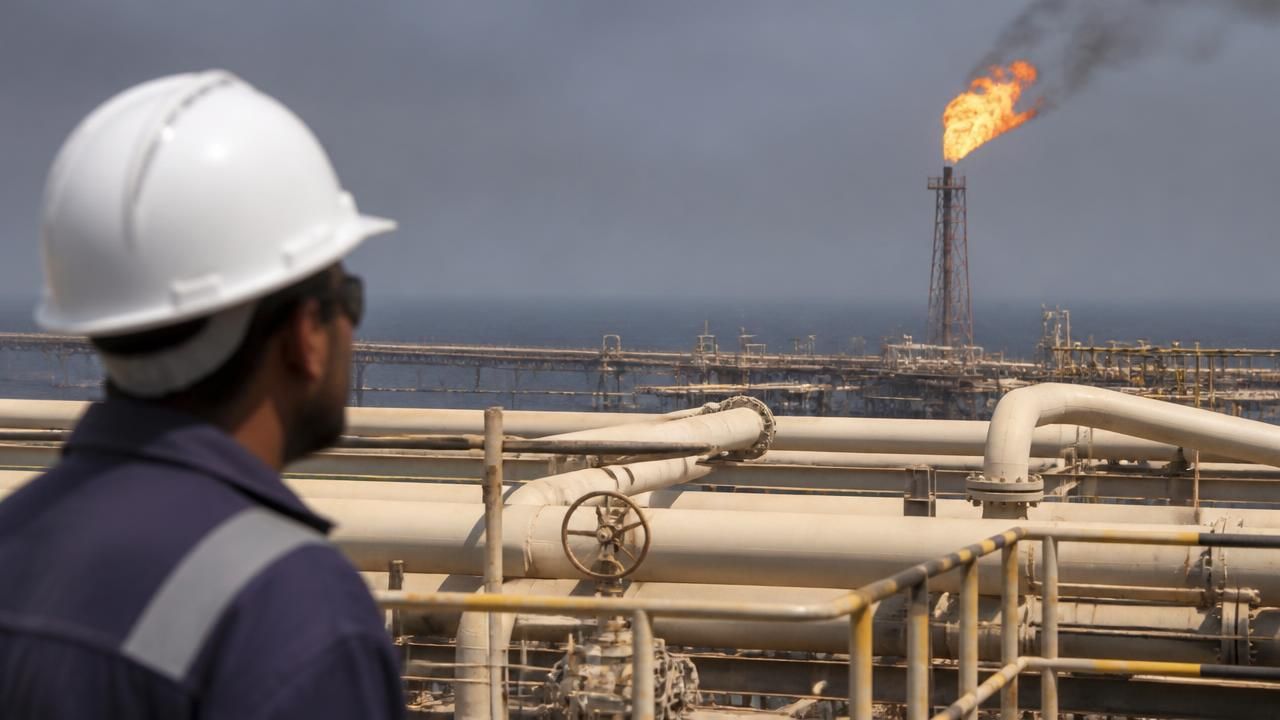
Bloomberg's framing placed the emphasis on the Middle East: the group, its sources said, is content to hold steady while "conflict in the Middle East continues to curb swaths of the group's output." That is a notable admission of a reality the cartel rarely discusses openly — that in a period of war-driven disruption, some of the supply management is being done for OPEC+ by geopolitics rather than by policy.
"Major OPEC+ nations are set to stick with plans to keep oil production quotas unchanged in December, two delegates said, as conflict in the Middle East continues to curb swaths of the group's output."
Why holding steady makes sense — for now
The logic of inaction is straightforward. Raising output would risk pushing prices lower at a moment when demand growth in key economies is soft and when traders are already focused on the possibility of a supply glut. Cutting further would tighten a market already absorbing the loss of conflict-affected barrels, risking a spike that would draw political attention from consuming nations — most notably the United States, which has consistently pressed producers to open the taps to ease pump prices.
Doing nothing, by contrast, preserves optionality. OPEC+ has repeatedly shown that it prefers to keep its decisions reversible and to telegraph policy months in advance. The group's gradual unwinding of voluntary cuts has already been pushed back more than once, a pattern that suggests deep internal caution about adding barrels before the market demonstrates it can absorb them.
How the coverage differed
The four reports, though consistent in direction, illustrated how differently newsrooms package the same information:
- Bloomberg led with the geopolitical driver, tying the decision directly to Middle East conflict and the loss of member output.
- Reuters framed the story institutionally, emphasizing the Sunday meeting and attributing the expectation to "sources," the standard formulation for a pre-meeting trial balloon.
- MSN presented a compact, wire-style summary aimed at a general audience, leaning on the delegate confirmation.
- Yahoo Finance went further than the others, describing a "deal outline" for steady November quotas — language suggesting the broad shape of an agreement had already been sketched out before ministers formally convened.
None of the reports contained final, on-the-record confirmation. That is typical: OPEC+ announcements are made after the meeting concludes, and the pre-meeting briefing of selected reporters is itself part of the group's communication strategy, allowing ministers to test market reaction before committing.
What to watch
The formal communique after Sunday's meeting will matter more than the headlines that precede it. Three things bear watching:
- The language on compliance. Several members have produced above-quota volumes in the past; a sternly worded call for discipline would signal deeper concern about market share and internal cohesion.
- The schedule for unwinding voluntary cuts. Any shift in the timeline — even an implied one — would move prices more than the headline decision itself.
- Commentary on demand. The group's monthly reports have repeatedly trimmed demand growth forecasts; further pessimism would reinforce the rationale for holding steady.
Context and implications
For consumers, a hold means no near-term relief on the horizon from the producer side, but also no new shock. For producers outside the group — notably US shale operators — a steady OPEC+ policy keeps prices supported without inviting aggressive market-share defense. For governments in importing economies, the decision shifts attention back to geopolitics and refining capacity as the drivers of fuel costs.
For OPEC+ itself, the deeper question is strategic. The coalition has spent three years managing supply in a market that keeps surprising it: resilient demand in some quarters, disappointing growth in others, and repeated geopolitical risk that has, paradoxically, helped the group achieve its price objectives without further cuts. Whether that luck holds depends on conflicts over which the ministers have no control.
Sunday's decision, in other words, is less a statement about confidence than one about uncertainty — a collective decision by a group that believes its best move, for now, is to wait.