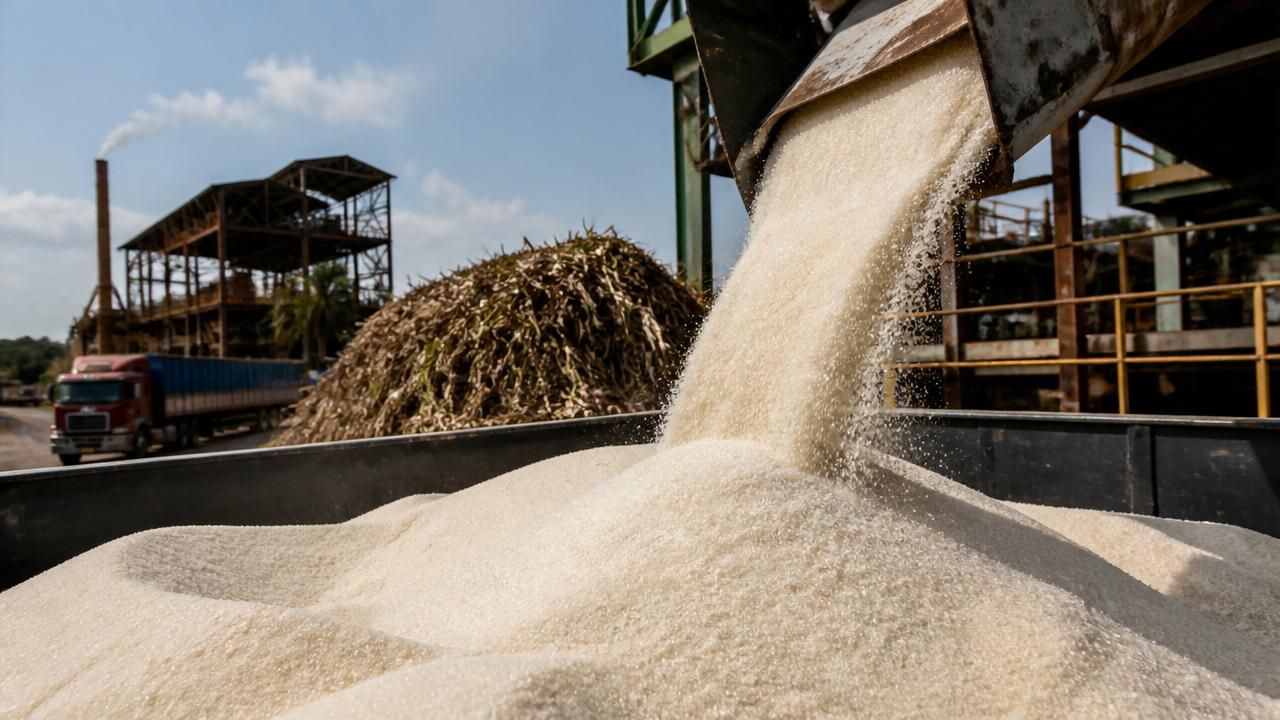
The United States Department of Agriculture (USDA) has projected a significant increase in sugar imports from Mexico, estimating up to 1.15 million metric tons for the 2026-2027 period, as announced by Mexican President Claudia Sheinbaum. This development comes amid a complex backdrop of USMCA trade talks, retaliatory tariff concerns, and shifting dynamics in the global agricultural market.
A New Chapter in North American Sugar Trade
The announcement, made via Sheinbaum's X account, signals a deepening integration of the North American sugar market under the United States-Mexico-Canada Agreement (USMCA). The USDA's projection aligns with long-term trends: since NAFTA's implementation, U.S. sugar and sweetener trade with Mexico has grown substantially, as documented by the USDA's Economic Research Service. The American Enterprise Institute (AEI) notes that NAFTA's sugar provisions have gradually eroded the U.S. sugar program, which historically protected domestic producers through quotas and price supports. The new import levels could further pressure U.S. growers, who face stiff competition from Mexico's lower-cost cane sugar.
However, the timing is delicate. The U.S. Trade Representative is scheduled to travel to Mexico for USMCA talks, as reported by Bloomberg. These negotiations will cover not only sugar but also contentious issues such as Mexico's proposed ban on genetically modified (GMO) corn, which Purdue University's Center for Commercial Agriculture warns could disrupt billions of dollars in U.S. corn exports. The sugar import increase could serve as a bargaining chip, offering Mexico greater market access in exchange for concessions on other agricultural fronts.
Market Volatility and Bearish Sentiment
The USDA's World Agricultural Supply and Demand Estimates (WASDE) report, released alongside the sugar import projection, has turned markets bearish despite yield cuts for corn and soybeans. According to Michigan Farm News, the report's demand-side adjustments, including lower export expectations and increased carryover stocks, outweighed supply reductions. This has weighed on grain prices, compounding uncertainty for farmers already grappling with input costs and trade policy risks.
In the sugar sector specifically, Farm Progress highlights that price volatility has intensified due to a mix of market fundamentals and policy factors. The prospect of higher Mexican imports adds downward pressure on U.S. sugar prices, which could benefit industrial users like beverage companies but hurt domestic cane and beet growers. A Reuters analysis warns that Coca-Cola's potential shift to cane sugar from high-fructose corn syrup would be expensive and harm U.S. corn farmers, illustrating the interconnectedness of sweetener markets.
Broader Agricultural Trade Frictions
Beyond sugar, U.S.-Mexico agricultural trade faces multiple flashpoints. The Pig Site reports that Mexico has halted U.S. hog imports due to concerns over New World screwworm, a parasitic disease. This follows a broader pattern of non-tariff barriers that complicate bilateral commerce. Meanwhile, China's push for feed efficiency, as noted by The Poultry Site, could cool global demand for poultry inputs like soybeans and corn, further pressuring U.S. exports.
The threat of retaliatory tariffs looms large. A Congressional Research Service report analyzed by EveryCRSReport.com outlines how U.S. agricultural exports are vulnerable to retaliation in trade disputes. Mexico is a top market for U.S. corn, dairy, and pork, and any escalation could have severe consequences for American farmers.
Global Sugar Landscape and Cuba's Woes
The U.S. import increase reflects broader global trends. According to Investopedia, Brazil, India, and Thailand are the world's top sugar producers, with Mexico ranking among the top exporters. The USDA's projection could reshape trade flows, potentially displacing imports from other origins. Meanwhile, Cuba's sugar industry, once a global powerhouse, continues to decline. The Americas Society/Council of the Americas (AS/COA) charts Cuba's economic woes, including a 50% drop in sugar production over the past decade, highlighting how political isolation and inefficiency have crippled its capacity.
Implications for U.S. Farmers and Consumers
For U.S. sugar growers, the increased import quota represents a double-edged sword. On one hand, it provides market access for Mexican producers, but on the other, it depresses domestic prices. The USDA's move may also influence the ongoing debate over the U.S. sugar program, which AEI argues has long distorted markets. Consumer groups welcome lower sugar prices, but farm advocates warn of consolidation and loss of livelihood.
The corn sector faces its own challenges. Mexico's proposed GMO ban, if enacted, could reduce U.S. corn exports by up to 40%, per Purdue's analysis. This would upend a trade relationship that has flourished under NAFTA and the USMCA. The ban, justified by Mexico on health and biodiversity grounds, is contested by U.S. trade officials as unscientific and protectionist.
Looking Ahead: USMCA Talks and Policy Crossroads
As U.S. and Mexican officials meet, the sugar import increase may be just one piece of a larger puzzle. The USMCA's review clause, which allows for renegotiation in 2026, adds urgency to these discussions. The outcome will shape not only sugar and corn trade but also the broader trajectory of North American agricultural integration.
In summary, the USDA's projection of 1.15 million metric tons of Mexican sugar imports by 2026-2027 is a watershed moment for U.S. sugar policy. It reflects the enduring legacy of NAFTA, the pressures of globalization, and the complex interplay of trade negotiations, market forces, and domestic politics. As the U.S. Trade Representative heads to Mexico, the stakes for farmers, consumers, and policymakers on both sides of the border have never been higher.