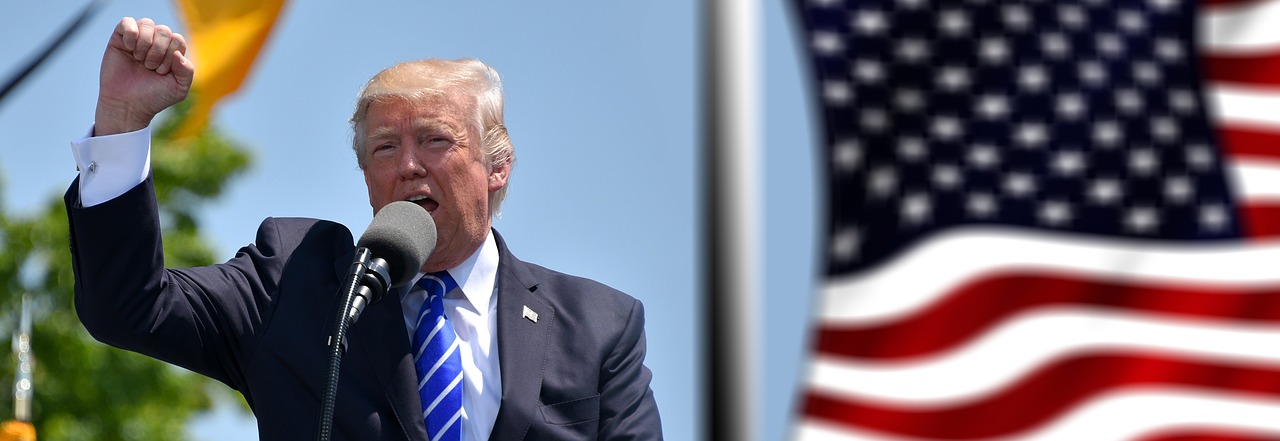
President Trump's return to the rally stage is producing the kind of volatile, headline-grabbing scenes that defined his 2016 campaign — and the way those scenes are being covered depends heavily on where you read about them. In the span of a week, the president praised a supporter who punched a protester, watched a South Carolina event devolve into what one tabloid called a "royal rumble," used an upstate New York rally to air grievances about the Nobel Prize on the very day the award was announced, and headlined a get-out-the-vote event for a candidate trailing badly in the polls.
A 2016 Echo, Carefully Measured
The New York Times framed the week's most consequential moment through history. After Trump publicly praised a rallygoer who punched a protester last week, White House and national security correspondent David E. Sanger examined the atmosphere at the president's recent events. His conclusion was measured: what he found was a faint echo of the moments that made Trump's 2016 rallies so shocking.
A faint echo of the moments that made Mr. Trump's 2016 rallies so shocking.
The Times' framing is deliberate — the word "faint" matters. The paper's assessment implies that the current environment has not yet reached the boiling point of a decade ago, when clashes between supporters and demonstrators in places like Chicago, Louisville and San Jose became defining images of a campaign. But the fact that a correspondent of Sanger's stature is revisiting that comparison at all signals how seriously the mainstream press is treating the president's rhetoric about political violence.
The Tabloid Version: 'Whacked'
The New York Post told a considerably more vivid — and more sympathetic — story. Its headline declared that the South Carolina rally "turns into royal rumble with hecklers getting 'whacked' by MAGA supporters." The language is a world away from the Times' analytical caution: where one outlet investigates the conditions that produce scuffles, the other narrates them as spectator sport, casting the crowd as the protagonist and the hecklers as the instigators who got what was coming.
That divergence is itself the story. The same event is, in one telling, evidence of a broader pattern of political violence creeping back into American public life, and in another, an entertaining dust-up in which the president's supporters gave as good as they got. Neither account disputes what happened; they differ on what it means and where the blame begins.
The Rallies as a Running Record
Aggregators and regional outlets have begun treating the president's rally itinerary as a kind of running archive. One widely syndicated piece promised "a look back at top news moments from past Donald Trump rallies in South Carolina" — a reminder that the state, an early and reliably friendly primary venue, has produced some of the most memorable scenes of Trump's political career.
Another syndicated explainer tackled a smaller but telling episode: why a garbled sentence at a Trump rally became a national story. The answer lies partly in the mechanics of modern political coverage. In an era of live streaming, clip-driven social feeds and opposition research war rooms, an incomplete thought delivered from a podium can travel further, faster than a policy speech. Every rally now generates a debate not only over what the president meant but over whether the stumble was notable at all — a dispute that is itself part of the coverage cycle.
Nobel Grievances in Upstate New York
Reporting from WF MZ captured a different facet of the week: Trump veering into Nobel Prize grievances during an upstate New York rally — on the day the award was announced. The juxtaposition is striking. Rather than using the moment to project statesmanship, the president used it to litigate a perceived slight, folding an international honor into the personal ledger of recognition he argues he has been denied.
For supporters, the grievance is authentic and long-standing: a belief that the establishment has never given him credit. For critics, it is a window into a preoccupation that distracts from the day's message. Either way, the Nobel aside fit a familiar pattern — the rally as a venue for settling scores rather than setting agendas.
On the Trail for Ramaswamy
The most conventional rally of the stretch came as Trump campaigned for Vivek Ramaswamy, as polls showed the candidate trailing opponent Amy Acton. The numbers, reported alongside the event, underscore the strategic stakes: a presidential visit is a finite resource, deployed where a campaign hopes to move a race, and its scheduling reveals what the president's advisers consider a priority.
- Violence and rhetoric: The Times sees a muted repeat of 2016; the Post sees a spectacle in which hecklers got "whacked."
- Message discipline: A garbled sentence goes national, illustrating how clips now outrun substance.
- Grievance politics: Nobel complaints on announcement day in upstate New York.
- Down-ballot stakes: A rally for Ramaswamy amid polls showing him behind Acton.
Why It Matters
Taken together, the week's events describe a president who remains his party's most potent draw and its most unpredictable messenger. The rallies still deliver the energy that made Trump a political phenomenon, but they also carry the risks: clashes that can be minimized in one outlet and analyzed as a trend in another, verbal slips that dominate news cycles, and grievances that can crowd out the case for candidates he is there to help.
For the press, the challenge is calibration — distinguishing between a genuine escalation in political violence and a nostalgic echo; between a harmless tangle and a norm worth flagging. For voters, the challenge is triangulation across narratives that increasingly share the same facts and almost nothing else. And for the campaigns involved, from South Carolina to upstate New York to Ramaswamy's race, the lesson is that a presidential rally is never only about the candidate at the top of the ticket.