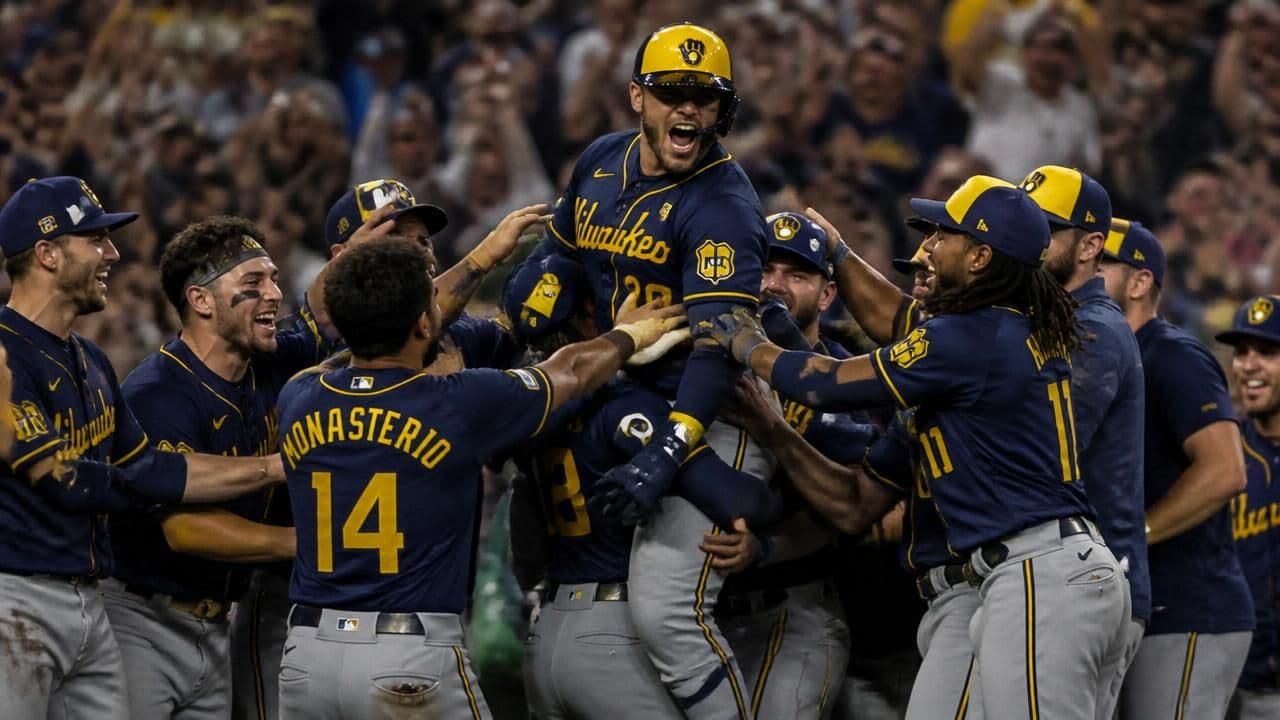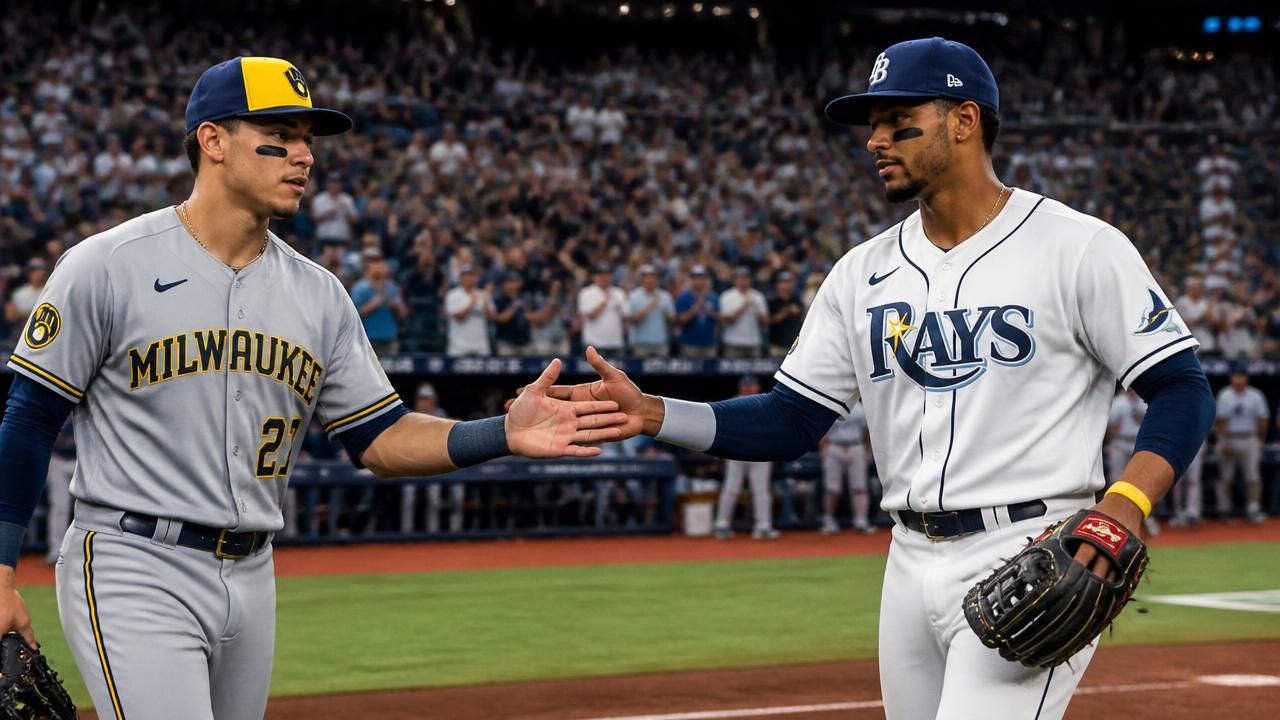
The World Series opener between the Milwaukee Brewers and the Tampa Bay Rays was supposed to be a celebration of baseball's unpredictability. Instead, it has become the backdrop for the sport's most consequential labor fight in a generation — a showdown over a salary cap that the players' union has already labeled a "nuclear bomb."
The two clubs rank 19th and 26th in Major League Baseball in player payroll, according to analysis from Andrew Brandt, who discussed the matchup on Bloomberg's "The Close" with Romaine Bostick. Their presence in the Fall Classic is, depending on who is telling the story, either proof that the sport's economic system works fine as it is — or a charming exception that owners will dismiss as unsustainable.
A Fall Classic That Undercuts the Owners' Case
For the union, the matchup is a gift. Two of the game's smallest spenders reaching the final series is precisely the evidence players need as MLB argues that only a hard cap can deliver competitive balance.
"Strong management, scouting and player development can compete with high spending," Brandt said, describing the series as evidence for the players' union that success is achievable without a cap.
Brandt was careful to note the counterargument owners will make: the Brewers and Rays are exceptions, not a model. Smaller-market clubs operate with little margin for error, and they can lose homegrown stars to wealthier clubs in free agency — a dynamic that has defined Tampa Bay's roster churn for years and now shadows Milwaukee as its core players approach free agency.
That tension is the heart of the dispute. Forbes framed the series bluntly, arguing the Rays-Brewers matchup "undermines MLB's salary cap push" — a headline that captures how the on-field product has become ammunition in a negotiating war.
The 'Nuclear Bomb' Proposal
MLB's proposal, reported as the league and union begin positioning for the next collective bargaining agreement, would fundamentally reshape how players are paid. The union's response was immediate and unusually blunt: its head called the cap proposal a "nuclear bomb" ahead of the World Series opener, according to reports.
The language is not hyperbole in labor terms. A salary cap would mark the most significant structural change to baseball's economics since free agency was won in the 1970s. The sport has long operated with a luxury tax — a soft threshold that penalizes high spenders but does not cap them — rather than the hard ceilings used by the NFL, NBA and NHL. For players, crossing that line would reset the balance of power.
Publicly available coverage of the dispute has been fragmented — several major outlets' stories were unreachable or truncated by paywalls and access restrictions — but the outlines are consistent: owners want cost certainty and claim they need it to sell competitive balance to small-market clubs; players see a cap as a mechanism to suppress salaries under the banner of parity.
Shorter Season, Same Fight
Adding to the uncertainty, MLB has floated a shorter season as part of its broader proposal, according to Reuters. The idea sits alongside the cap as part of a package that would meaningfully alter the shape of the sport's calendar and, by extension, its revenue split.
A shorter schedule has long been popular with segments of the fan base and some players concerned about workload and October fatigue. But in a bargaining context, the number of games is inseparable from the money: fewer games means fewer gate receipts and broadcast inventory, and how owners propose to compensate for that will determine whether a shorter season is a genuine reform or a bargaining chip.
Boras Enters the Fray
Superagent Scott Boras, whose clients have repeatedly tested the top of the market, rejected the salary cap argument outright ahead of the series, according to reports. Boras has spent decades arguing that baseball's problem is not spending but the behavior of a subset of clubs that treat payroll as a cost center rather than a competitive tool — a critique that reframes the debate from "how much is too much" to "why are some teams not trying."
That argument gains force from the data. The gap between baseball's biggest and smallest payrolls routinely exceeds $200 million, and several large-market clubs have spent recent seasons trimming costs while rebuilding — behavior a cap would not necessarily correct.
How the Story Is Being Framed
- Business outlets emphasize the economics: payroll disparity, the viability of small-market models, and whether the Brewers and Rays are replicable or a statistical blip.
- Team- and league-friendly framing treats competitive balance as a structural problem requiring structural fixes, pointing to the handful of clubs that perennially chase the biggest stars.
- Labor- and agent-aligned framing casts the cap as a salary-suppression device dressed up as parity, and points to the playoff field as proof the system already produces Cinderella runs.
History Hangs Over the Negotiation
Baseball's labor history is a graveyard of brinkmanship. The 1994 strike wiped out the World Series and delayed the sport's recovery for years. The 2021-22 lockout dragged into March and shortened spring training. The current agreement runs through December 2026, meaning the real confrontation is still ahead — but the framing war is already underway, and a World Series featuring two of the game's cheapest rosters could not have arrived at a more awkward moment for the commissioner's office.
For now, the players have the best possible exhibit: a Fall Classic that a salary cap was supposed to make impossible. Owners have a rebuttal ready: watch what happens to these rosters when free agency arrives. Which argument persuades the public — and, ultimately, the arbiters of a new deal — may matter more than anything that happens on the field this October.