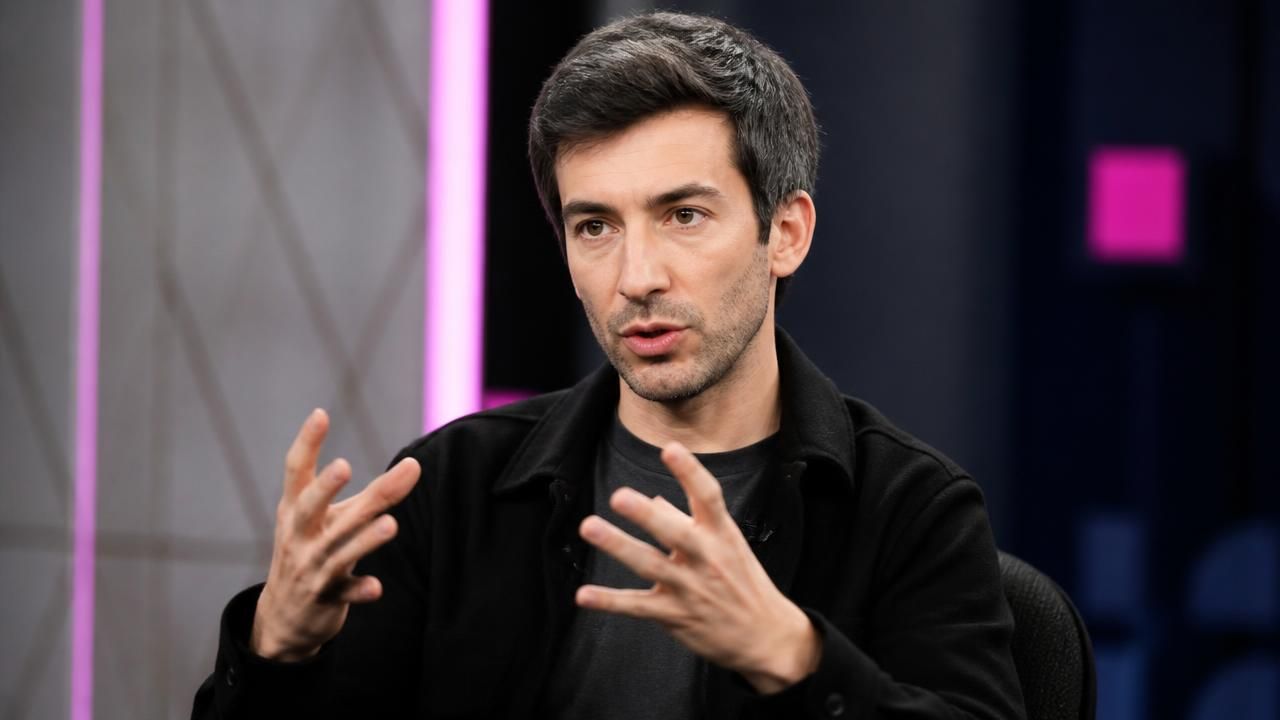
Nathan Fielder, the comedian and filmmaker known for engineering elaborate, uncomfortable social experiments in shows like Nathan for You and The Rehearsal, is having an unusually busy news week — and this time the story is not entirely his own. WIRED has published a cover story on Fielder, paired it with an exclusive on-camera interview, and devoted a new episode of its "Uncanny Valley" podcast to the making of the profile. Then, according to a report circulated by MSN, Elizabeth Holmes — the convicted Theranos founder serving a federal prison sentence — called Fielder last week with what was described as a cryptic message.
The convergence is a case study in how a single subject can radiate across formats: a reported feature, a video interview, a podcast post-mortem, and an aggregator-friendly headline about a sudden phone call. Each outlet frames the story differently. WIRED treats it as a piece of enterprise journalism about a person whose work is fundamentally about the machinery of charisma and trust. MSN, by contrast, leads with the spectacle of a prison call from one of Silicon Valley's most notorious figures.
What WIRED Actually Published
WIRED's rollout came in three overlapping parts. The centerpiece is a cover story on Fielder. Alongside it, the magazine released a video sit-down with him — presented as "WIRED's Exclusive Interview With Nathan Fielder" — in which the conversation moves beyond the promotional and into the mechanics of his work. The third component is the "Uncanny Valley" episode, which pulls back the curtain on how the cover story was reported and produced.
That podcast episode also widens the lens considerably, covering three distinct threads:
- The behind-the-scenes reporting process and editorial decisions behind the Fielder cover story;
- The track record of tech billionaires making generous-sounding public promises, and what those pledges are actually worth;
- A spate of suspicious letters sent to US election offices, and the questions they raise about election security.
This week on "Uncanny Valley," we go behind the scenes of our Nathan Fielder cover story, unpack tech billionaires' generous promises, and discuss the suspicious letters sent to US election offices.
That editorial framing is telling. Fielder's comedy has always circled the same questions the podcast raises directly: why people believe confident people, how large promises get made, and what happens when the structures of trust turn out to be performance. Placing his profile alongside a discussion of billionaire philanthropy and an election-threat scare is less a tangent than a thematic thesis.
The Holmes Call
The most viral element of the week, however, arrived via aggregation. According to the MSN report, Elizabeth Holmes called Fielder from prison last week and left him with a cryptic message. Details remain thin; the account does not specify the content of the message, the nature of the prior relationship, or why Holmes would reach out to Fielder specifically.
The connection is not as random as it first appears. Holmes built Theranos on a combination of persuasive storytelling, credential mimicry, and the willingness of powerful people to believe an extraordinary claim — dynamics that have been central to Fielder's work for a decade. His audiences are never quite sure whether the people on screen are in on the joke, which is precisely the ambiguity that made Holmes' rise possible before the 2015 Wall Street Journal reporting that cracked her company open.
Holmes was convicted on fraud charges in 2022 and began serving a prison sentence the following year. Any phone communication from a federal facility is logged and time-limited, which makes the reported call a tightly constrained event — and a prized detail for reporters, since it is one of the few channels through which incarcerated figures still communicate directly with the press.
Why It Resonates Now
All of this lands in a moment when the relationship between technology, narrative, and truth is under sustained scrutiny. That broader conversation is not confined to tech outlets. In a separate Wikinews interview, writer John Reed held forth on George Orwell, God, self-destruction and the future of writing — a discussion that touches on many of the same anxieties about how stories are manufactured and who polices them, even though it sits well outside the Fielder story.
What distinguishes the Fielder coverage is the willingness of a major technology publication to treat comedy as serious subject matter. WIRED's three-pronged release — magazine, video, podcast — signals that the magazine sees in Fielder a useful instrument for examining how trust is manufactured in the digital economy.
What Happens Next
Several open threads will determine how the story develops:
- Whether Fielder, WIRED, or representatives for Holmes confirm, deny, or elaborate on the reported call;
- Whether the contents of any message emerge — cryptic or otherwise;
- Whether the election-office letter threats discussed on the podcast become a larger national story;
- Whether the tech-billionaire promise ledger prompts follow-up reporting on specific pledges.
For now, the week's coverage shows a familiar pattern: a carefully produced magazine package gains traction not through its own reporting but through the pull of an adjacent, stranger story. Fielder, who has built a career on that exact dynamic, may find the experience recognizably uncomfortable.