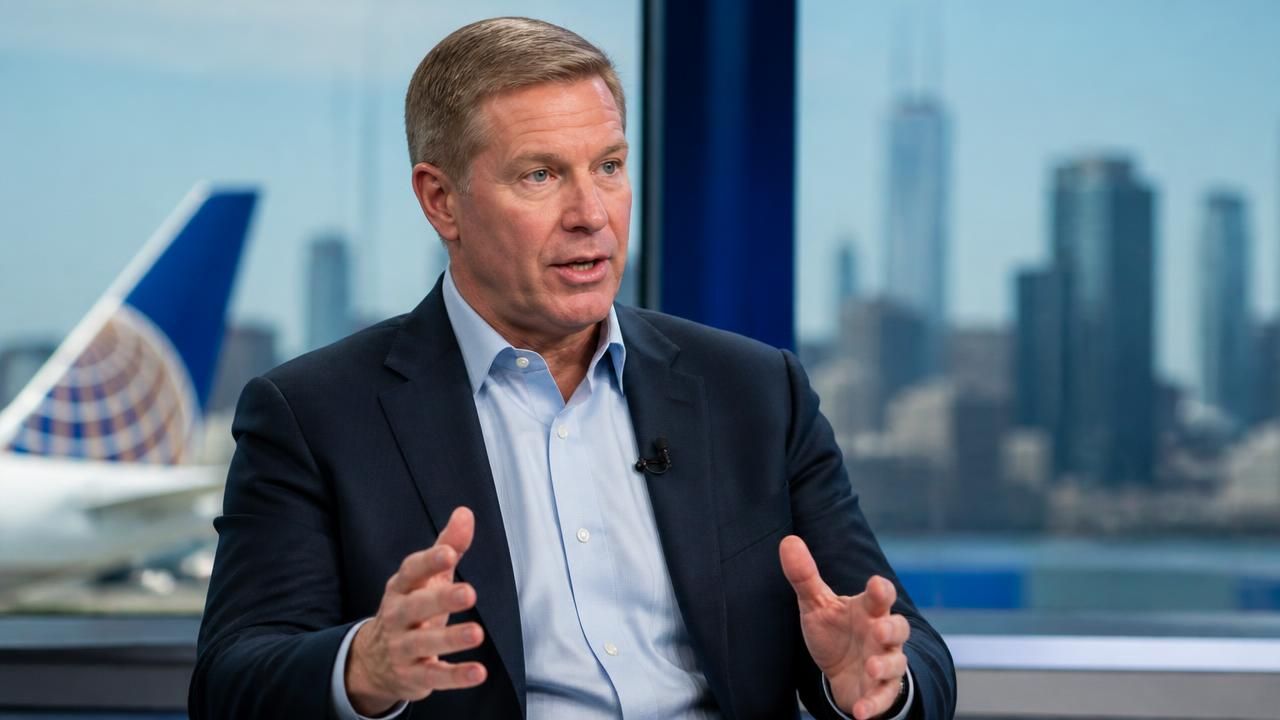
United Airlines chief executive Scott Kirby said the carrier remains "still solidly profitable" even as jet fuel prices rise, arguing that the airline's pricing power and resilient customer demand allow it to absorb higher costs, according to an interview with Bloomberg Surveillance. Kirby's remarks, which also touched on U.S. tax policy and broader social questions, come at a delicate moment for the industry: fuel is one of airlines' largest variable expenses, and a sustained climb in crude and refined-product prices has historically forced carriers to rethink which flights are worth operating at all.
Two Frames, One Story
The story emerging across outlets is less a contradiction than a difference of emphasis. Bloomberg's coverage foregrounds management confidence — a CEO telling investors and analysts that demand is strong enough to pass along costs through fares. Coverage from local television affiliates and the Honolulu Star-Advertiser, by contrast, emphasizes the operational consequence: headlines warn that airlines are expected to trim cheaper fares and cut less profitable flights, and that both American Airlines and United are preparing capacity reductions in response to fuel costs.
Both framings can be true simultaneously. An airline can be profitable in aggregate — particularly on premium cabins, transatlantic and transpacific routes, and loyalty-driven revenue — while still pruning marginal flying from its schedule. Capacity discipline is, in fact, one of the industry's most reliable levers for restoring pricing power when input costs rise.
Why Fuel Matters So Much
Jet fuel typically represents somewhere between 20% and 30% of an airline's operating expenses in a normal year, and because fuel is priced globally in dollars while tickets are sold months in advance, carriers are structurally exposed to swings they cannot fully hedge. Airlines buy fuel hedges — contracts that lock in prices — but hedging programs are rarely complete, and carriers often choose to hedge only a portion of anticipated consumption to avoid paying premiums that erode savings when prices fall.
When costs rise, airlines generally respond along three tracks:
- Fare and ancillary increases. Passing costs to passengers works best where demand is inelastic — business travel, international long-haul, and routes with limited competition.
- Capacity discipline. Retiring underperforming routes or reducing frequencies reduces fuel burn and tightens supply, which supports fares.
- Fleet and efficiency upgrades. Newer aircraft burn materially less fuel per seat, but deliveries are years in the making and cannot respond to a quarterly price spike.
The reporting pointing to American and United preparing capacity cuts fits squarely into the second track. For travelers, the practical effect is usually felt first in the disappearance of the cheapest inventory — the deep-discount fare buckets that fill middle seats on off-peak days — and in thinner service to secondary markets.
The Consumer Angle
Kirby's argument that United can pass along higher fuel costs is, in effect, a claim about the strength of demand. That claim has been tested repeatedly in the post-pandemic era, when travel demand rebounded faster than carriers could restore capacity, producing record revenues alongside operational strain. If demand holds, higher fuel costs translate into higher fares rather than lost profitability. If demand softens — because of slower economic growth, a pullback in corporate travel budgets, or consumer fatigue with rising prices — the calculus changes quickly, and capacity cuts become defensive rather than opportunistic.
"Still solidly profitable" — United CEO Scott Kirby's characterization of the carrier's position as fuel costs rise, per Bloomberg.
Beyond the Balance Sheet
Kirby also used the Bloomberg appearance to weigh in on U.S. policy debates, including proposals for a wealth tax, reflecting a broader willingness among some airline chiefs to speak on national fiscal questions at a time when the industry is lobbying heavily on matters ranging from aviation infrastructure funding to emissions regulation. CEO commentary on tax policy is not new, but it lands differently in a period when carriers are simultaneously asking travelers to absorb higher fares.
What to Watch
The next signals will come from earnings calls and schedule filings. Analysts will be watching three things: whether United reaffirms full-year capacity guidance or trims it; how aggressively American adjusts its domestic schedule; and whether fare data shows the cost pass-through Kirby describes actually materializing in ticket prices rather than simply in management commentary. Fuel prices themselves remain the wildcard — a sustained decline would relieve pressure and likely revive the marginal routes now under review, while a further spike would test how much more the traveling public is willing to pay.
For now, the message from United's corner is confidence: profitability intact, demand strong, costs manageable. The message from the broader coverage is a reminder that behind that confidence sit schedule decisions that will quietly reshape where and how cheaply Americans can fly.