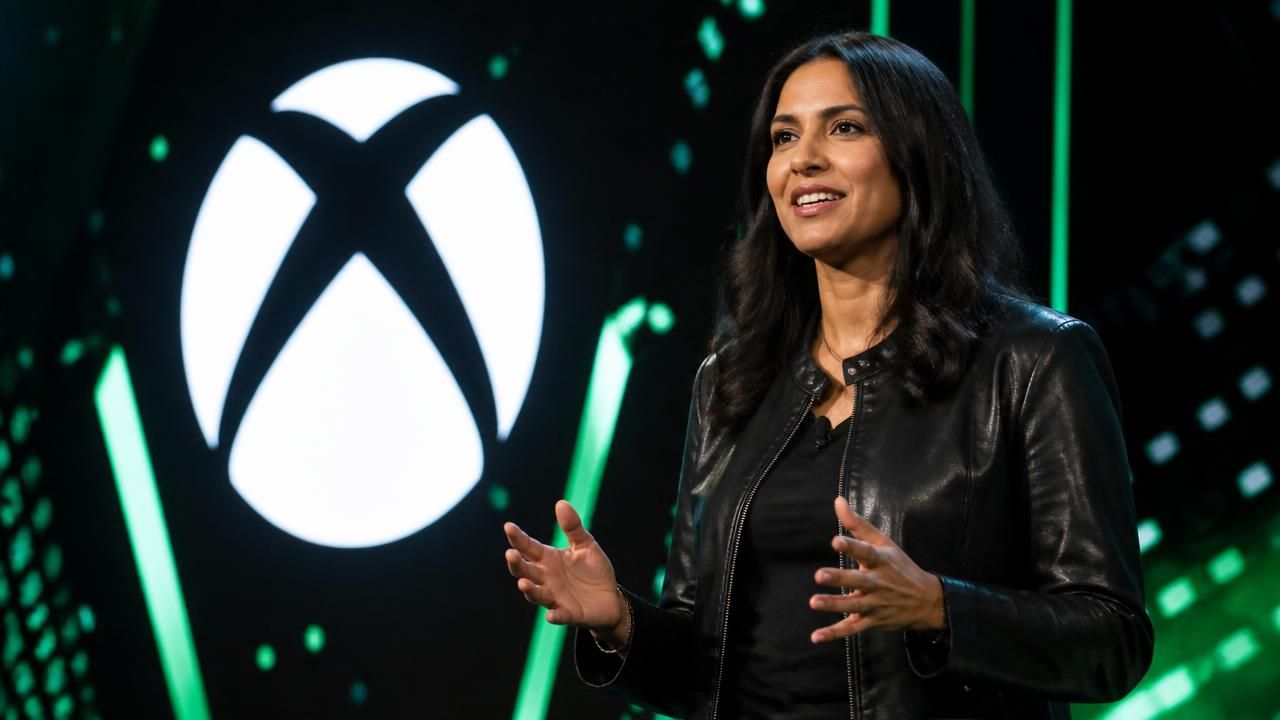
Microsoft's next-generation gaming hardware is coming into sharper focus — and so is its likely price tag. According to a wide-ranging Fortune profile of Xbox CEO Asha Sharma, the company is internally projecting that its 2028 flagship console, developed under the codename Project Helix, could retail for between $1,200 and $1,800 when it arrives in time for the 2028 holiday season.
The report, first surfaced by Ars Technica and echoed across outlets including TechPowerUp and MSN, sketches a dual-track launch strategy: a "next-generation handheld device" targeted for release by the end of next year, followed by the full console in late 2028. The figure is described as an internal projection rather than a final retail decision, leaving room for Microsoft to adjust course before launch.
What Microsoft has actually said
Redmond formally announced Project Helix in March, positioning it as a device that will, in the company's own framing, "play your Xbox and PC games." That single phrase carries substantial strategic weight. It signals a convergence play in which the traditional console walled garden gives way to something closer to a branded gaming PC — a machine capable of running the sprawling Xbox back catalog alongside titles distributed through PC storefronts.
The device will "play your Xbox and PC games." — Microsoft's March announcement of Project Helix
Beyond that, Microsoft has been notably quiet. The Fortune profile of Sharma, who leads Xbox, is the first substantial window into the program's commercial shape, and the handheld timeline in particular had not previously been reported with specificity.
The sticker shock — and why it may not stick
A $1,200 starting price would be historically high for a game console, even after adjusting for inflation. But the number, as reported, is not necessarily what consumers would pay. Fortune notes the price could come down if "Microsoft decides to subsidize the cost" — the industry's longstanding practice of selling hardware near or below cost and recouping margins on software, subscriptions and storefront commissions.
That subsidy question is the crux of the story. Microsoft's willingness to absorb losses depends on how confident it is in monetizing the Helix ecosystem through Game Pass, its store cut and PC software distribution. A $1,800 ceiling would suggest a company either hedging on mass-market adoption or preparing a premium, low-volume flagship aimed at enthusiasts — a meaningfully different posture from the aggressive pricing that defined the Xbox 360 and Xbox One eras.
The new normal in hardware economics
The reported range does not emerge from nowhere. The slowdown in Moore's Law — the decades-long cadence of doubling transistor density at falling cost — has flattened the performance-per-dollar gains that once made each console generation cheaper to build. Layered on top is an AI-driven component crunch: datacenter demand for high-bandwidth memory and advanced packaging has tightened supply across the semiconductor industry, inflating the bill of materials for any device needing cutting-edge silicon.
The market has already repriced accordingly:
- The Steam Machine broke the $1,000 starting-price barrier this year.
- The PlayStation 5 Pro, built on two-year-old technology, currently sells for around $900.
- The Xbox Series X, launched in 2020 with six-year-old internals, now starts at roughly $750.
Read against that backdrop, a $1,200–$1,800 Helix is an escalation, but a legible one. It is the same curve the rest of the industry is riding, steepened by the fact that Helix, unlike a mid-cycle refresh, must be capable of running PC games — hardware demands that push toward general-purpose computing components rather than tightly optimized, subsidized console silicon.
How outlets are framing it
Coverage has converged on the same facts but with different emphases. Ars Technica frames the number primarily as an economic story — a symptom of AI-era component scarcity and the end of cheap performance — while TechPowerUp leads with the launch window, treating "Holiday 2028" as the headline datum and the price as secondary. The distinction matters: one reading positions Helix as an expensive but inevitable product of industry conditions; the other positions it as a scheduling story with pricing still very much in flux.
Both, notably, are working from the same source. No Microsoft spokesperson has confirmed the figures, and the reported projections come secondhand from Fortune's profile rather than from any Microsoft disclosure. Treat the range as a planning assumption inside the company, not a commitment to buyers.
The strategic bet
The handheld-plus-console cadence is itself revealing. A handheld arriving roughly a year ahead of the console would let Microsoft seed its unified platform story — one library, multiple form factors — before asking customers to spend four figures on the flagship. It also puts the company in direct competition with a fast-maturing portable PC segment that has expanded aggressively since the Steam Deck established the category.
The unresolved question is whether the console market can bear a $1,200–$1,800 entry point at all, or whether Helix is genuinely a different product category wearing a console's name. Microsoft's own marketing language — Xbox and PC games — hints at the latter. If Helix is effectively a living-room gaming PC with an Xbox badge, the premium pricing is defensible. If it is meant to be the next mass-market Xbox, it is a far harder sell.
What to watch
Three signals will resolve the ambiguity. First, whether Microsoft signals a hardware subsidy strategy — historically telegraphed through aggressive launch pricing and bundled subscription offers. Second, the handheld's pricing and positioning when it surfaces, likely within the next year, which will establish the floor of the new hardware family. Third, memory and packaging supply conditions into 2027; a loosening of the AI-driven crunch would give Microsoft room to bring the console's bill of materials — and its retail price — down from current internal projections.
Until then, the $1,200–$1,800 range stands as the clearest public signal yet of where Microsoft thinks the premium console market is heading: upward, and faster than many players expected.