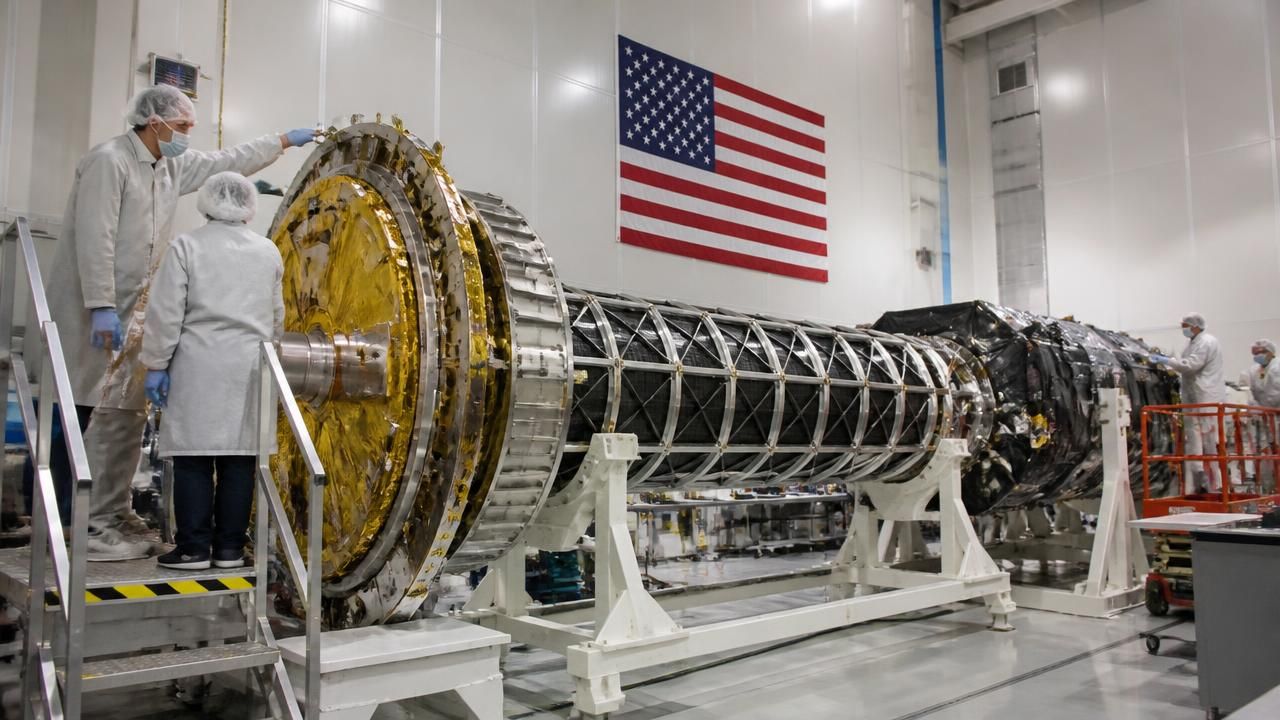
NASA’s Space Reactor-1 (SR-1) Freedom is moving from concept to hardware, with the agency and its partners agreeing to contract actions meant to accelerate development of the spacecraft’s nuclear power module and protect a 2028 launch window. The mission, announced during NASA’s “Ignition” event, is designed to be the first spacecraft to demonstrate fission power beyond Earth’s orbit and the first fission-powered vehicle to travel outside Earth orbit, carrying a Mars science payload called SkyFall.
NASA said the contract moves reduce technical risk, sustain momentum and strengthen collaboration across partners. The agency’s SR-1 program director, Steve Sinacore, framed the decisions as a foundation for a wider space nuclear future.
“These contract actions not only reduce technical risk and help us maintain momentum toward our 2028 launch, but they also strengthen collaboration across our partners,” said Steve Sinacore, SR-1 Freedom program director. “These actions keep SR-1 Freedom on track and ensure we’re building the strongest possible foundation for NASA’s first fission-powered voyage beyond Earth orbit while developing technology extensible to a vibrant space nuclear future.”
Inside the nuclear power module
At the heart of the spacecraft is a boom-mounted nuclear power module. It consists of a reactor that generates heat through nuclear fission and a power conversion system that turns that heat into electricity. That electricity is intended to run spacecraft systems and an electric propulsion system, making SR-1 a demonstration of nuclear electric propulsion in deep space.
The architecture matters because solar power becomes increasingly impractical as missions move farther from the Sun. Mars receives far less solar irradiance than Earth, and a reactor can provide steady power regardless of distance, dust storms or illumination. NASA has used radioisotope power systems for decades on probes, but those systems rely on the decay of plutonium and produce relatively modest power. A fission reactor is scalable and can support higher-power payloads, communications and propulsion.
Placing the reactor at the end of a boom is also a safety and engineering choice: it helps separate the power source from sensitive spacecraft systems and gives designers more control over thermal and radiation effects. NASA’s description makes clear that the module is not an afterthought but the enabling element of the mission.
Why 2028 and why Mars
The 2028 launch target is central to the program’s identity. NASA and outside outlets have described SR-1 Freedom as the first fission-powered interplanetary spacecraft, with Mars as its destination and SkyFall as its science payload. The mission is meant to prove that fission power can work beyond Earth orbit, where previous fission demonstrations have not operated.
That milestone would matter well beyond one Mars mission. Nuclear electric propulsion could open the way to more capable cargo and crew transportation, sustained operations in deep space and missions to destinations where solar arrays would be too large or too weak. NASA has said the technology should be extensible to a broader space nuclear future.
How the story is being framed
Official NASA coverage emphasizes engineering progress and contract discipline. Syndicated reports, including Mirage News, echoed the agency’s headline about advancing the nuclear power module, focusing on the technical milestones and the 2028 schedule. That framing reflects the agency’s need to show that a complex, first-of-its-kind program is maturing.
Regional and business coverage has taken a different angle. GeekWire reported that NASA’s chief used an “Inspiration Tour” of Northwest space ventures to talk up nuclear power, linking the mission to the agency’s advocacy for space nuclear technology and its relationships with commercial and regional partners. MSN and WKYC coverage placed the story under a “Mission Possible” banner and tied it to NASA’s Glenn Research Center in Cleveland, underscoring how the mission is being read as an economic and research opportunity as well as a science milestone.
Trade press coverage from World Nuclear News framed the news around a NASA-DOE partnership and a “new era” of space technologies. That emphasis is significant: the reactor work draws on nuclear expertise beyond NASA, and the Department of Energy’s involvement signals that space fission is being treated as part of a broader national nuclear technology agenda, not only a planetary science experiment.
Risks and implications
The contract actions are designed to lower technical risk, but they do not eliminate it. A fission-powered spacecraft must pass stringent safety reviews, prove its reactor and power conversion system in relevant environments, and integrate with propulsion, communications and science hardware on a schedule that leaves little margin. Launch delays or budget pressure could still affect the 2028 target.
Public perception also matters. Nuclear power in space has a long history, but fission reactors attract more scrutiny than radioisotope generators. NASA and DOE will need to explain safety, launch contingency planning and the difference between a reactor that begins operation in space and the radioisotope systems used on earlier missions.
If SR-1 Freedom succeeds, the implications could be substantial. A flight-proven space fission reactor would give NASA and its partners a new building block for deep-space exploration, and it could strengthen the case for nuclear electric propulsion in future Mars architectures. For now, the message from NASA is incremental but consequential: the nuclear power module is advancing, the 2028 launch remains the target, and the agency is trying to turn a first-of-its-kind demonstration into the start of a durable space nuclear era.