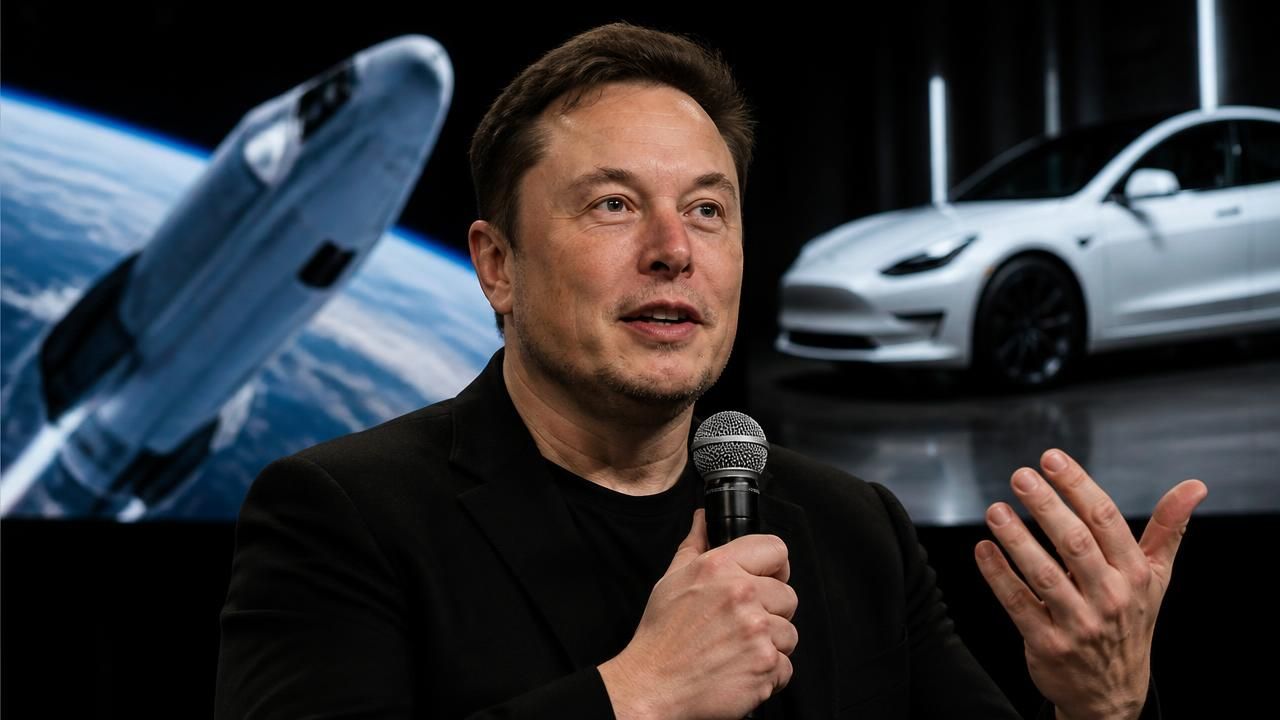
Elon Musk said Tuesday that SpaceX and Tesla have formed special committees to explore a potential merger, describing a combination of his rocket-and-satellite company and his electric-vehicle maker as a “good idea” while stressing that the decision is not his alone.
Speaking during the question-and-answer portion of SpaceX’s third-quarter earnings call, Musk said the two companies had set up independent committees to examine a deal. The comments confirmed reports that had circulated ahead of the results and turned an earnings update into a referendum on the future shape of Musk’s sprawling business empire.
A ‘good idea’ — with caveats
“Do I think it would be a good idea? Yes,” Musk said, according to Ars Technica. “But at the end of the day the shareholders have to be supportive of this.” He also described the potential combination as having “significant advantages” and “a lot of merit,” while cautioning that it is “not a certainty.”
“Do I think it would be a good idea? Yes. But at the end of the day the shareholders have to be supportive of this.” — Elon Musk
The Wall Street Journal framed the disclosure as “Committees—Not Musk—Are Discussing SpaceX-Tesla Merger,” a reminder that any transaction would run through boardrooms, independent advisers and shareholder votes rather than Musk’s public enthusiasm alone. That process matters because both companies are now public, and a merger would rank among the most complex related-party deals in corporate history.
Earnings sharpen the stakes
The merger talk arrived alongside strong SpaceX results. The company reported a profit and revenue that jumped 161%, beating estimates, as its artificial-intelligence business surged. SpaceX stock soared on the blowout numbers, while Tesla shares also rose as Musk dropped new clues about a possible combination, according to MarketWatch. Investors had pressed Musk on the Tesla merger ahead of the results, MarketScreener reported.
SpaceX’s AI ambitions are central to the story. The company acquired Musk’s AI firm, xAI, in February, and on the earnings call it said it could rent out its AI compute several times over — a sign of the scale of the infrastructure it has built. In June, SpaceX went public in the largest initial public offering on record, giving it a public currency and a new set of shareholders to answer to.
Why combine a carmaker and a rocket company?
A merged SpaceX-Tesla would span electric vehicles, energy storage, rockets, satellite broadband and artificial intelligence — an unusual conglomerate even by Musk’s standards. Proponents see potential synergies in AI compute, manufacturing scale, robotics and autonomous systems. Musk has increasingly blurred the lines among his companies: SpaceX absorbed xAI, Tesla has invested heavily in autonomy and AI, and the companies already share a founder, a brand and a tendency to recruit from the same talent pool.
But the deal would also concentrate risk and create governance challenges. Tesla shareholders would need to be convinced that a merger protects the value of the carmaker rather than subordinating it to SpaceX’s capital needs. SpaceX’s new public investors would need assurance that they are not overpaying for Tesla’s AI ambitions. And regulators would scrutinize the combination of two companies with overlapping ownership and extensive government contracts.
The governance question
Analysts and governance specialists say the burden will be on the boards to prove the deal is fair to minority holders at both companies. Special committees are standard practice in related-party transactions, but they carry unusual weight here because Musk is the public face of both companies and has a history of testing the boundaries of corporate governance. The WSJ’s emphasis on committees rather than Musk reflects that tension: the process, not the personality, will determine whether a deal happens.
How different outlets framed it
Coverage varied by beat. Tech outlets such as Ars Technica and The Verge focused on Musk’s comments and the sheer audacity of combining a carmaker and a rocket company. Financial outlets, including MarketWatch, Yahoo Finance and Seeking Alpha, zeroed in on the stock reaction and the earnings beat, with Seeking Alpha asking, “Should Tesla merge with SpaceX?” The Wall Street Journal and other business publications stressed the committee process and the limits of Musk’s authority. The Associated Press emphasized the profit milestone and the hint of a merger, while the BBC and Telegraph cast it as Musk pushing to merge his two biggest companies. MSN aggregated a range of headlines, from “Musk backs SpaceX-Tesla merger as rocket firm turns profit” to “SpaceX Reports Profit as Revenue Doubles.”
That divergence is telling. For Musk’s fans, the merger is a logical next step in an empire that already spans cars, rockets and AI. For skeptics, it is a test of whether public shareholders and independent directors can restrain a founder who has repeatedly used his platform to float ideas that later become corporate strategy.
What happens next
No timeline has been set. The committees are expected to study valuation, synergies and governance, and any deal would require approvals from both companies’ boards and shareholders. Musk’s language — “not a certainty” — was a signal that the process could end without a transaction.
For now, the earnings beat has given SpaceX momentum and Tesla investors a new narrative. But the real decision will not be made on an earnings call. It will be made in boardrooms and proxy statements, where the question is not whether Musk likes the idea, but whether two very different sets of shareholders can agree on a price.