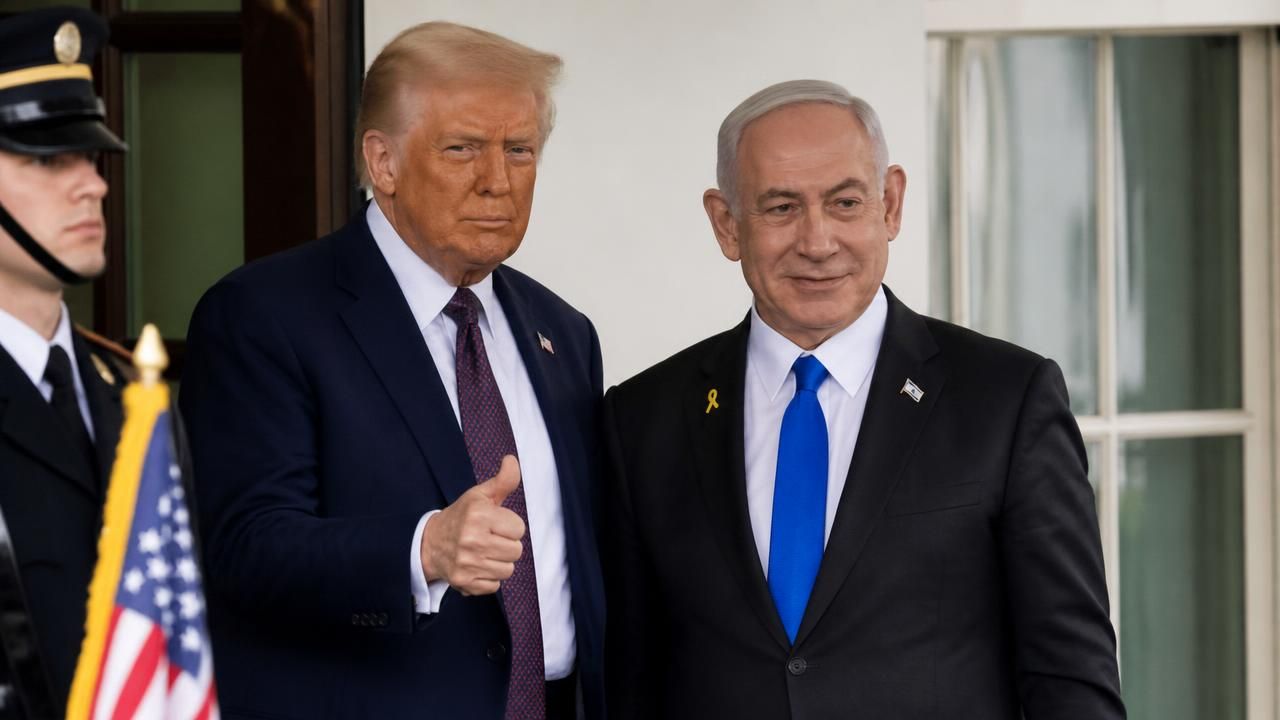
President Donald Trump endorsed Israeli Prime Minister Benjamin Netanyahu for reelection in a social media post published about nine days before Israel's October 27 parliamentary vote, ending months of silence from Washington on the race and thrusting the U.S. president directly into one of the tightest and most consequential elections in Israel's recent history.
In the post, Trump praised Netanyahu as a seasoned ally and a reliable partner against Tehran, describing him as a “Great Warrior Prime Minister, and an even greater Partner for Peace in combatting the Islamic Republic of Iran.” The language was classic Trump — personal, superlative-laden and framed around a shared adversary — and it was quickly amplified by Israeli and international media covering the contest.
“He has been a Great Warrior Prime Minister, and an even greater Partner for Peace in combatting the Islamic Republic of Iran.” — President Donald Trump, in a social media post endorsing Benjamin Netanyahu
The timing and the stakes
That the endorsement landed just over a week before Election Day is, according to multiple outlets, the story. NPR, CBS News, NBC News and France 24 all led with the timing, noting that the American president had stayed conspicuously quiet on the Israeli race for months before weighing in at the moment the campaign entered its final, most volatile stretch. Some reports framed the intervention as a deliberate lifeline to a leader described in nearly every headline as “embattled”; others emphasized the risk that a late, high-decibel endorsement from a polarizing foreign leader could just as easily energize Netanyahu's opponents.
The New York Times framed the post as a declaration that Netanyahu is the United States' “best partner” in the region, effectively casting the election as a choice between a proven ally and an unknown quantity. Outlets including SCMP and OAN leaned into the “great warrior” phrase, projecting the endorsement as a validation of Netanyahu's security credentials. Yahoo News and MSN's syndicated versions stressed the nine-day gap and the months of prior silence, presenting the post as a break in presidential reticence rather than a routine statement.
A relationship with a long history
The endorsement is the latest chapter in a partnership that has reshaped both countries' politics. During Trump's first term, the administration recognized Jerusalem as Israel's capital, moved the U.S. embassy there, recognized Israeli sovereignty over the Golan Heights and brokered the Abraham Accords normalizing relations between Israel and several Arab states. Netanyahu, in turn, has long presented himself to Israeli voters as the leader with unmatched access to Washington — a claim that carries more weight when the occupant of the White House is publicly embracing him.
Trump's decision to speak out also fits a broader pattern of commenting on foreign elections, a habit that has drawn both praise and criticism. Recent reporting on his remarks urging Ukraine to elect a new president underscores how readily he applies the same logic across capitals: that leadership contests abroad are legitimate arenas for American presidential persuasion.
The complications
The endorsement is not without friction. The phrase “Partner for Peace” sits awkwardly alongside a regional picture in which the Gaza war, tensions with Iran and settler violence in the West Bank have strained Israel's standing among key U.S. constituencies. Coverage from WAPT, for instance, highlighted an American photographer's account of being attacked by Israeli settlers and his sense of being “insulted” by Netanyahu's response — a reminder that the prime minister's international image is contested well beyond the ballot box, and that American public opinion is not monolithic in its support.
There is also the question of interference. Israeli campaigns are fiercely protective of their domestic political turf, and a visible endorsement from a U.S. president can cut both ways — reassuring centrist and right-leaning voters anxious about security ties, while handing rival blocs a ready-made argument about foreign influence and Netanyahu's dependence on Washington.
- What it gives Netanyahu: A late-stage demonstration of influence with the world's most powerful leader, aimed squarely at undecided security-minded voters.
- What it gives his rivals: A fresh talking point about foreign meddling and a leader who needs outside help to close a race.
- What it gives Trump: A public stake in the outcome of a vote he cannot control, and a claim to credit or blame depending on the result.
What to watch
With the vote days away, the decisive variables remain coalition arithmetic and turnout rather than any single statement from abroad. Israeli elections are decided by parliamentary seat allocation among competing blocs, and a race repeatedly described as tight suggests neither camp has sealed a majority. The most immediate test of the endorsement's potency will be whether it shifts undecided voters in security-focused constituencies — or whether it simply hardens lines that were already drawn.
For Washington, the episode is a preview of the post-election landscape: if Netanyahu wins, the endorsement will be cast as a down payment on future coordination over Iran and regional normalization; if he loses, the president will have publicly backed a losing incumbent just as a new Israeli government takes shape. Either way, the nine-day window between Trump's post and Israel's vote has made one thing clear — the American president intends to be a visible actor in the region's politics, not a spectator.