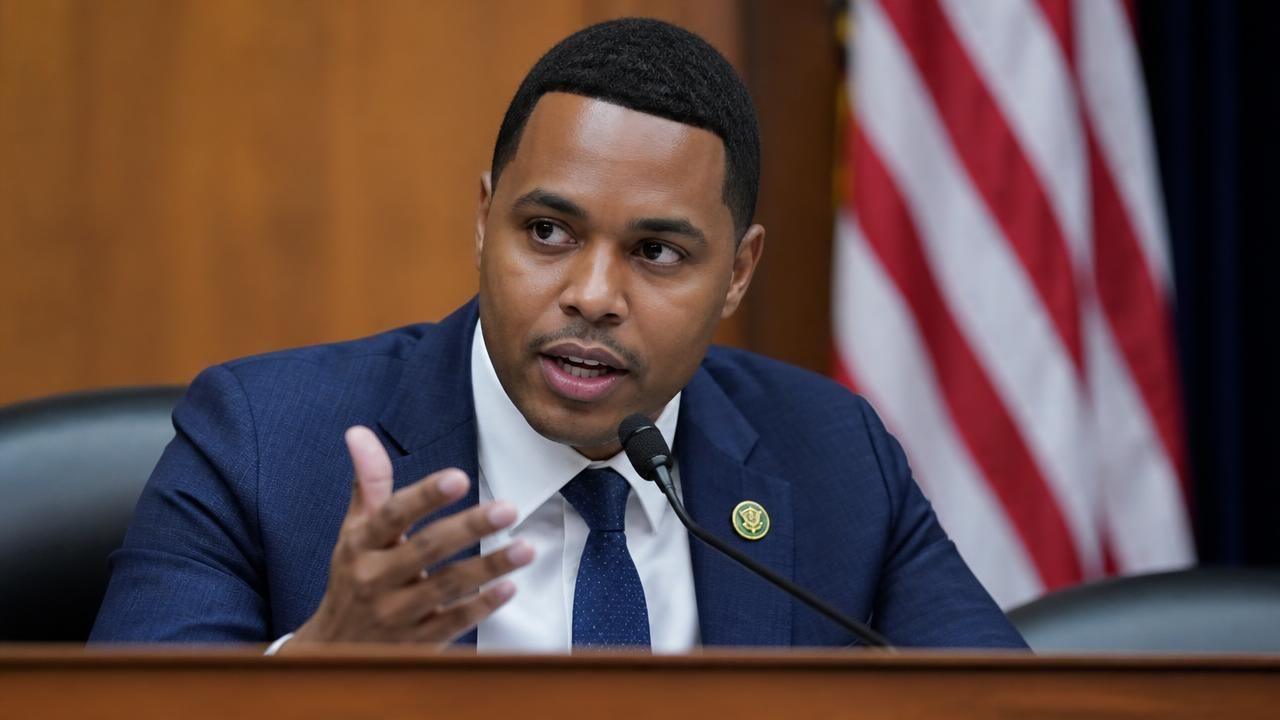
Americans who click "buy" on a video game may soon get something closer to a deed than a rental agreement. Rep. Ritchie Torres (D-N.Y.) has announced a new federal bill, the Power to Players Act, that would establish that purchasing a video game grants the consumer ownership of that game rather than a mere license to play it — including an assurance that they can keep accessing it years after release.
The proposal, first reported by Ars Technica, marks one of the most direct legislative challenges yet to the digital-distribution model that has governed the games industry for more than a decade, in which storefronts sell revocable licenses that can expire when a publisher pulls a title or shuts down the servers that keep it running.
What the bill would actually do
According to the announcement, the Power to Players Act would direct the Federal Trade Commission to take action to prevent publishers from stripping access to games consumers have already paid for. Ars Technica reported that the measure is intended to ensure "buying a video game would give the consumer ownership of the game rather than a license to play it," with guarantees that buyers can continue to access their purchases long after launch.
The precise mechanics — whether the FTC would gain new rulemaking authority, civil penalty powers, or a mandated disclosure-and-refund regime — have not been spelled out publicly. That ambiguity is already shaping early coverage: Ars Technica focused on the regulatory machinery and the FTC's role, while outlets including MSN characterized the effort more broadly as consumer-protection legislation aimed at "protecting digital game ownership amidst an industry shift."
The example the bill's authors chose
The announcement leans heavily on a single, vivid case: NBA 2K25, which the bill's backers cite as the archetype of the problem. Per the announcement, the game launched in September and is scheduled to become unplayable on December 31 because of server shutdowns — meaning that customers who paid full price for a title would lose access to it entirely within months.
That framing is deliberate. Server-dependent games — always-online sports titles, live-service shooters, and multiplayer platforms — are the sharpest edge of the ownership debate, because even a physical disc becomes a coaster once the matching servers go dark. Torres's office is effectively arguing that the industry has converted a product into a service without the buyer's meaningful consent.
"If you pay for it, you own it."
That slogan, circulated alongside the bill's unveiling, was echoed across international coverage. Inven Global headlined its report with a near-identical formulation — "If you buy a game, it's yours" — underscoring how uniformly the announcement's messaging traveled across outlets covering the story from different countries and audiences.
A fight the industry has been losing in public opinion
The bill lands in the middle of a broader revolt against digital delisting. In 2024, Ubisoft's shutdown of The Crew servers — rendering a decade-old racing game unplayable for everyone who bought it — became a flashpoint, prompting the European "Stop Killing Games" citizen's initiative and a wave of consumer anger that publishers had largely dismissed as noise.
Lawmakers have begun responding. California enacted a law, signed in 2024, requiring digital storefronts to disclose clearly that purchases are licenses rather than sales. Torres's bill goes further: rather than mandating that consumers be told they own nothing, it would require that they own something.
The framing reflects a genuine legal tension. Copyright law has generally treated software as licensed, not sold, and publishers argue that perpetual access obligations would make long-tail server maintenance financially untenable. Consumer advocates counter that companies happily market games as purchases, at purchase prices, and only invoke licensing when the economics of keeping them alive turn unfavorable.
The hard questions ahead
The Power to Players Act will have to answer several questions that its announcement does not resolve:
- What counts as ownership? A guaranteed right to play offline, a mandate for end-of-life server code release, or a requirement that publishers fund perpetual hosting?
- Who enforces it? The bill points to the FTC, but the agency's authority over software licensing and its capacity for rulemaking are both contested.
- What about multiplayer? A game whose core experience depends on matchmaking cannot be preserved simply by granting a permanent license.
- Retroactivity: Would protections apply to games already sold — and already shut down?
Industry reaction has yet to fully materialize, but trade groups have historically opposed ownership mandates as unworkable and warned of chilled investment in live-service titles. Expect that argument to be sharpened considerably once bill text is released.
What happens next
A single House Democrat's bill faces long odds in a divided Congress, and similar consumer-tech proposals have stalled before. But the measure's real function may be catalytic: it forces a public accounting of the gap between how games are marketed and what buyers actually receive, and it gives state legislators a federal template to copy.
For now, the practical takeaway for consumers is unchanged — check the license, assume nothing lasts — but for the first time, a member of Congress is formally arguing that the answer should be different.