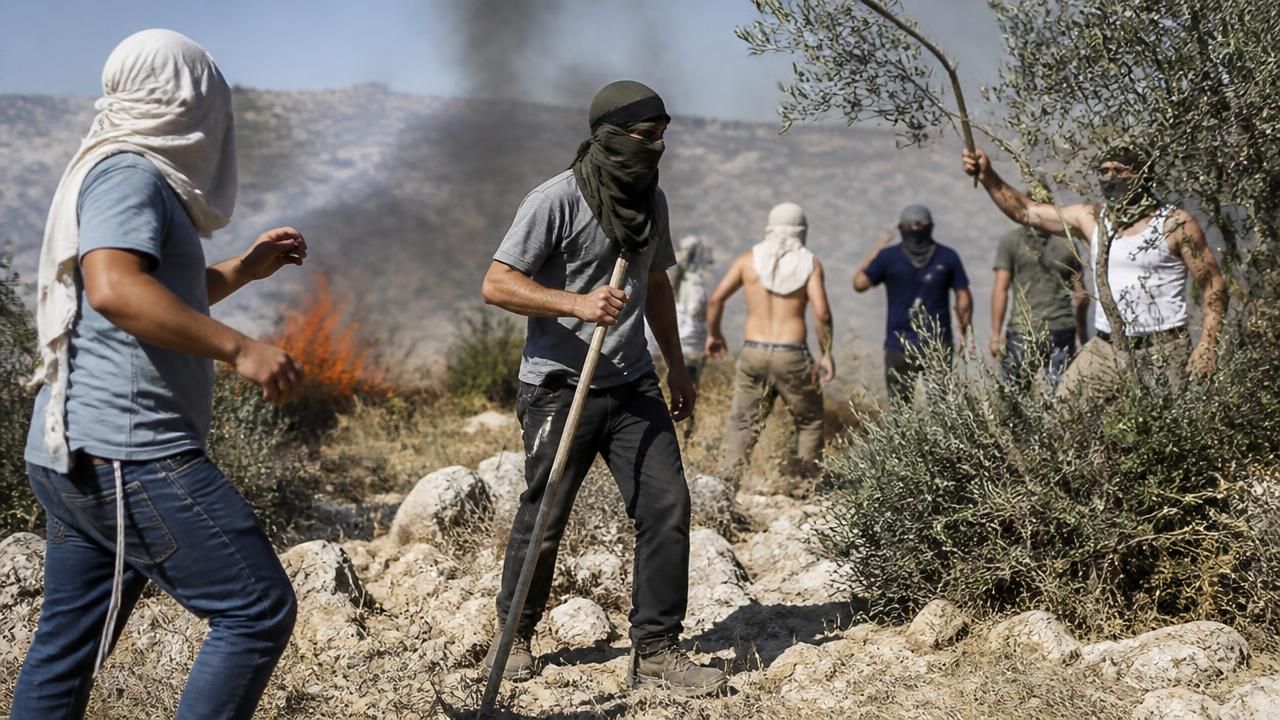
Masked Israeli settlers attacked Palestinian farmers as they harvested olives in the occupied West Bank on Friday, beating several people and hospitalizing a photojournalist working for The Washington Post, according to multiple reports. The assailants also burned olive trees and torched cars in West Bank villages, disrupting a harvest that is both an economic lifeline and a symbol of Palestinian attachment to the land.
The Washington Post confirmed that its photographer was attacked, The Hill reported, while NPR and other outlets identified the injured journalist as a U.S. photojournalist. Video footage described by MSN captured the photographer saying, “I’m going to die,” as the assault unfolded. The journalist was taken to a hospital; the exact condition was not immediately disclosed in the reports reviewed.
What happened
The attack occurred as Palestinians were gathering olives, a seasonal activity that often draws confrontations with Israeli settlers in the occupied territory. According to NPR, masked settlers descended on the harvesters and injured several people, including the Washington Post photojournalist. HuffPost reported that the mob beat the journalist and burned olive trees. Other accounts said settlers torched vehicles as well as trees in nearby villages.
The Washington Post photographer was covering the violence when attacked, according to Le Monde and other outlets. The incident quickly drew coverage from The New York Times, The Guardian, Al-Monitor, LBC, Outlook India and Roya News, among others. In related coverage, AFP said one of its photographers was beaten while covering violence in the West Bank, according to MSN and Roya News. It was not immediately clear whether the two attacks were part of the same incident or separate episodes on the same day.
“I’m going to die,” the Washington Post photojournalist said in video footage described by MSN, underscoring the ferocity of the assault.
A charged harvest season
The olive harvest is one of the most sensitive periods in the West Bank. For thousands of Palestinian families, it provides income and food; for many, it is also a ritual of stewardship over land that is increasingly contested by Israeli settlement expansion. Previous harvest seasons have seen repeated confrontations, with Palestinian farmers saying they are vulnerable to attacks by settlers who operate with little accountability. The reports on Friday did not include immediate comment from Israeli authorities, and it was not clear whether any arrests had been made.
The attack comes amid a broader pattern of settler violence in the occupied West Bank that has drawn increasing international scrutiny. Palestinian officials and human rights groups have long accused Israeli security forces of failing to protect Palestinian civilians from settler attacks, particularly during the harvest. Israeli authorities have sometimes said they investigate such incidents, but critics say prosecutions are rare. The latest assault is likely to intensify those arguments.
How outlets framed it
The story was covered across the world, but the framing varied. U.S. outlets such as NPR, The New York Times and The Hill emphasized the American photojournalist and the press-freedom implications of an attack on a working reporter. The Washington Post’s own confirmation became a central news peg. HuffPost used the word “mob” and highlighted the burning of olive trees, while MSN’s headline described a “pogrom,” a charged term that reflects the ferocity of the assault. Other outlets used more neutral language, describing an “attack” on farmers and a journalist.
International outlets, including The Guardian and Le Monde, placed the assault in the context of Israeli settler violence and the Palestinian olive harvest. Al-Monitor focused on the journalist’s hospitalization. Middle East-based Roya News placed the word “Israeli” in quotation marks in its headline, a stylistic choice that signals skepticism or distance from official Israeli framing. Outlook India combined the two most vivid elements: injured journalist and burned olive trees. The Baltimore Sun’s regional feed ran brief items on the attack and on settlers torching cars and trees in West Bank villages.
Local U.S. coverage added another dimension. WWLTV in Louisiana reported that Israeli settler violence hit home for a Gretna family, a reminder that the conflict’s reverberations reach American communities far from the West Bank.
Press freedom and accountability
The assault on a Washington Post photojournalist raises fresh questions about the safety of journalists covering settler violence. Reporters and photographers working in the West Bank often operate in high-risk environments, documenting confrontations between settlers and Palestinians. The attack on a clearly identifiable media worker is likely to draw condemnation from press-freedom advocates, who argue that attacks on journalists undermine the public’s ability to understand what is happening on the ground.
The incident also highlights the vulnerability of Palestinian farmers. The olive harvest is a civilian activity, yet it has repeatedly become a flashpoint. Settler attacks during the harvest can destroy livelihoods and escalate tensions across the West Bank. With the journalist’s hospitalization and the burning of trees and cars, Friday’s assault fits a pattern that Palestinian communities and rights groups have documented for years.
As reports continued to emerge, the central facts were consistent: masked Israeli settlers attacked Palestinians harvesting olives, beat a Washington Post photojournalist and injured others, and burned property. The differences in coverage reflected broader debates over how to describe settler violence, the responsibility of Israeli authorities, and the risks faced by journalists documenting the conflict. What remained clear was the human toll: a photographer hospitalized, farmers attacked, and a harvest disrupted by violence.