Apple's long-rumored smart home hub finally has a name — HomeView — and within days of the announcement, the device has settled into a comfortable paradox: it is simultaneously one of the most powerful pieces of hardware Apple has put in a living room, and one of the least capable platforms it has shipped in years.
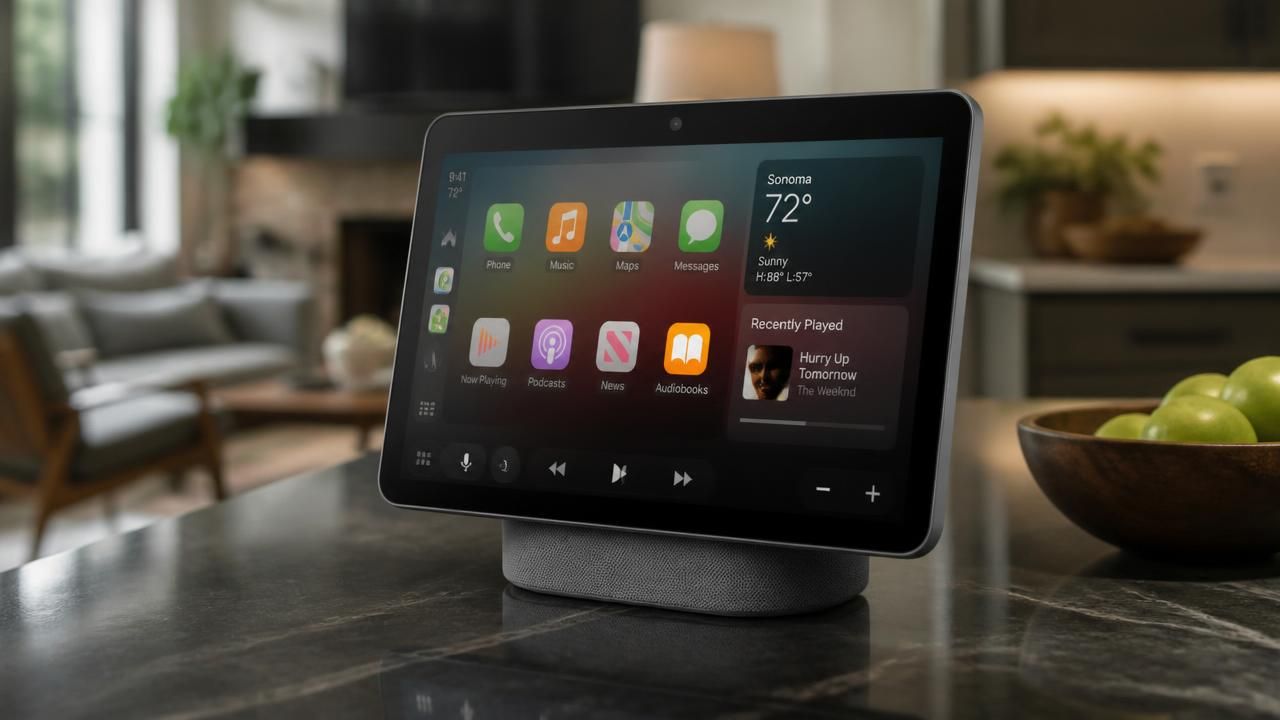
The device combines a display, an A18 chip borrowed from the iPhone 16 generation, and the one advantage most smart home gadgets can only dream of — it is always plugged in and always connected. On paper, that is the ideal recipe for a home hub that runs real software. In practice, reviewers and commentators say, HomeView is leaning almost entirely on CarPlay to supply its app experience.
The Hardware Is Not the Problem
By any measure, the internals are overqualified for the job. The A18 is a desktop-class-for-its-size mobile chip, and the combination of permanent power and permanent connectivity removes the two constraints — battery life and thermal ceiling — that normally limit what a small screen-bound device can do.
The Verge summarized the mismatch bluntly in its podcast discussion of the launch:
The device has plenty of computing oomph, is always connected to power, and looks like a perfect place to run a bunch of apps. And yet the HomeView is relying almost entirely on CarPlay.
That last detail is the crux of the criticism. CarPlay is an iPhone projection protocol — it was designed so drivers could put a familiar interface on a car's head unit without automakers having to build one. Porting that model into a stationary home display means the HomeView behaves less like a computer and more like a monitor for a phone that may or may not be in the room.
Why CarPlay Is a Stopgap, Not a Strategy
Apple's choice is defensible in the short term. CarPlay already has a mature developer ecosystem, a familiar design language, and a permission model users have been living with for a decade. Reusing it lets Apple ship on day one with thousands of compatible apps rather than a barren App Store shelf.
But the trade-offs are significant. CarPlay apps are built for glanceable, driving-appropriate interactions: large targets, minimal text, and a strict limit on how long a user looks at the screen. A kitchen display used for recipes, video calls, security camera feeds, or streaming is a fundamentally different context in which CarPlay's constraints become handicaps rather than guardrails.
AppleInsider's coverage approached the same issue from a practical angle, advising readers that the fastest way to preview what HomeView will actually run is to audit the CarPlay apps already installed on their iPhone. It is an unusually literal framing of the situation: what you get on Apple's new home hub is, for now, largely what you already have in your car.
Streaming, Content, and the Missing Platform
Digital Trends framed the launch around a different deficiency, highlighting the screen and the A18 chip before turning to what it called a streaming problem. The point is not trivial. A screen that lives in the home is, above all, a place where people watch things — television, video feeds, video calls, and the ambient dashboards that have become a staple of competing devices from Amazon and Google.
If HomeView cannot deliver a native, first-party streaming and media experience, its display becomes a compromise: capable hardware waiting on software that has not been authorized to exist yet.
The Bigger Question Apple Is Avoiding
Underneath the app complaint is a strategic one. Apple's rivals have spent years turning their smart displays into platforms — with their own developer tools, their own storefronts, and their own revenue-sharing economics. Apple, which owns one of the most lucrative app marketplaces in the world, has chosen not to build a second one here.
The Vergecast conversation widened the lens further, pairing the HomeView debate with a discussion of the latest Gemini model and a pointed question: does building the best model even matter if it cannot be widely distributed and used? The same logic applies to Apple's home strategy. Silicon and screen quality win benchmarks. Platforms and distribution win users.
MSN's syndication of the same criticism suggests the "app problem" framing has already become the consensus shorthand for the launch — a rare moment in which the tech press, a consumer advice site, and a mainstream aggregator arrived at the same conclusion.
What to Watch Next
- Whether Apple opens a native HomeView SDK or continues to treat CarPlay as the default app layer.
- How streaming services respond — a dedicated HomeView video experience would be the clearest signal of platform intent.
- Whether developers bother building for a display whose interaction model is still borrowed from the driver's seat.
- How Amazon and Google adjust pricing and positioning if HomeView's hardware advantage starts to matter.
None of this makes HomeView a bad product. The hardware, by consensus, is excellent, and an always-powered A18 device in the home is a genuinely useful wedge. But the launch has exposed an awkward gap between what Apple built and what Apple is willing to let it become. For now, the most powerful computer in the kitchen is running an app experience designed for the car.