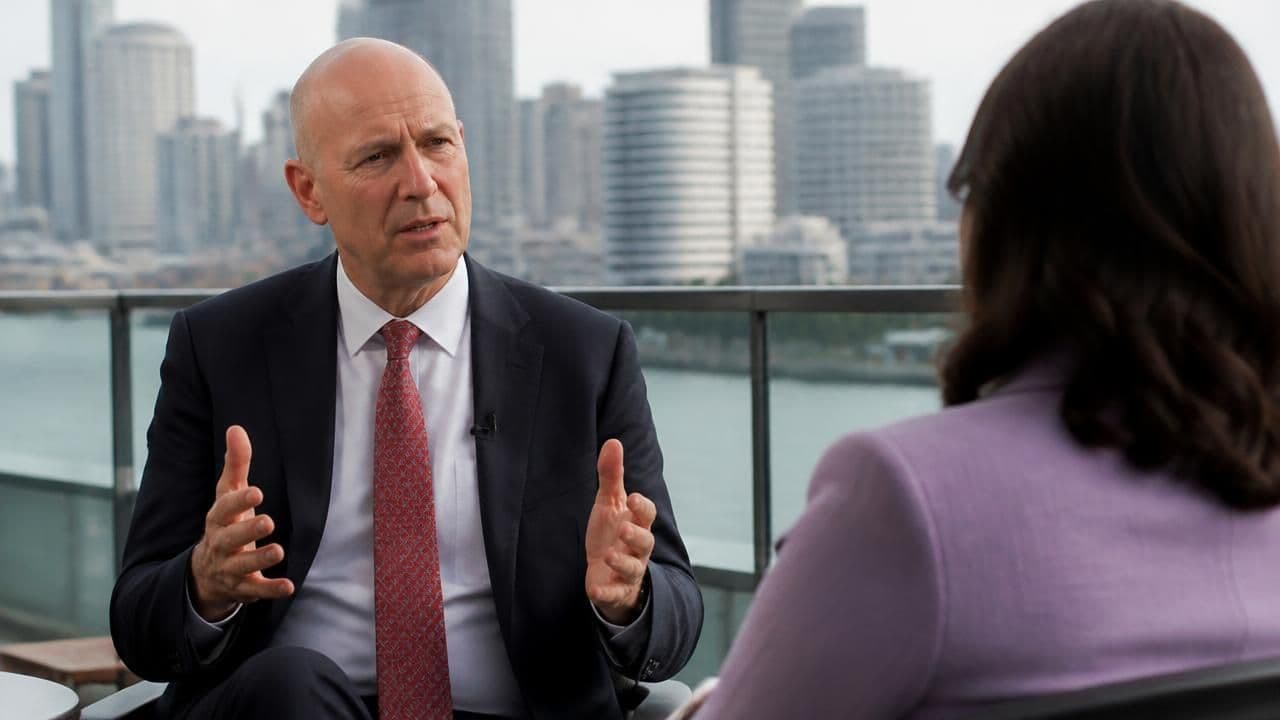
NEW DELHI — For decades, India's global story was told through three numbers: software exports, remittances and a fast-growing GDP. At the 2026 Bloomberg New Economy Forum in New Delhi, a different arithmetic took center stage — one measured in Oscar statuettes, payment rails, couture runways and video-game engines.
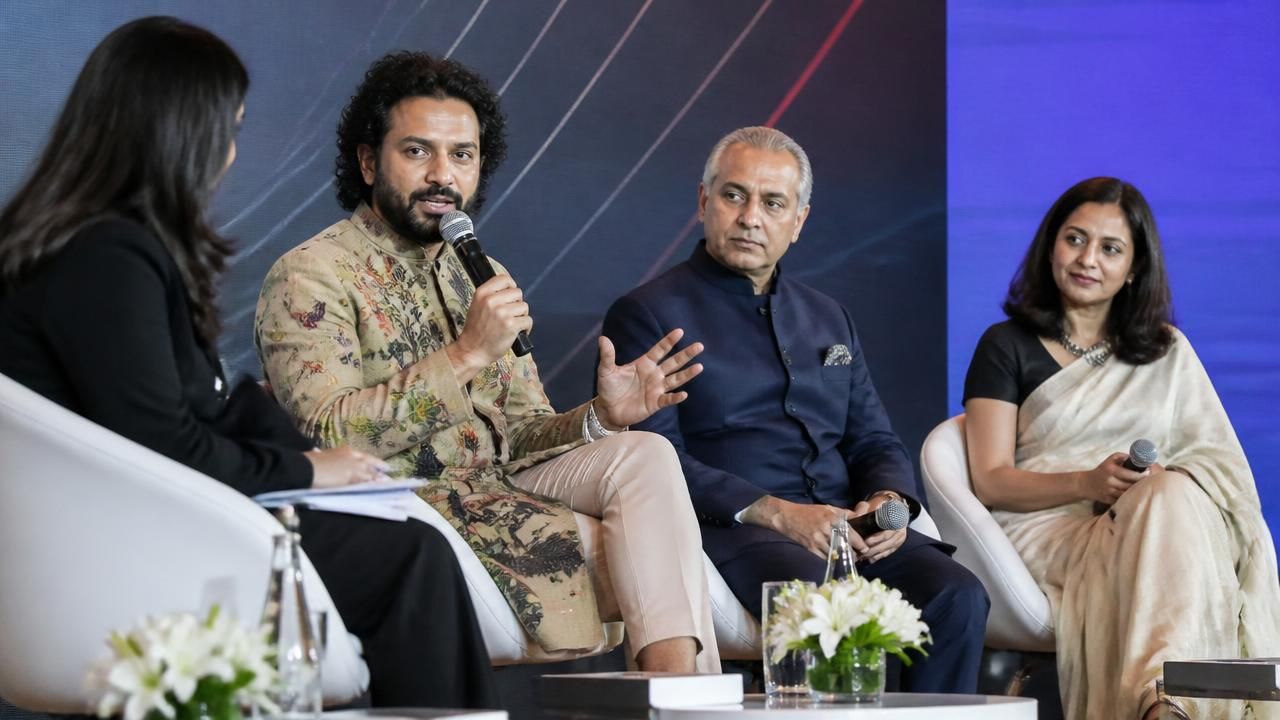
In a panel moderated by Bloomberg's Mallika Kapur, three figures drawn from very different corners of the creative economy — luxury fashion designer Rahul Mishra, Six Senses founder and Sosei chief executive Sonu Shivdasani, and Asia Society India CEO Inakshi Sobti — argued that culture and global connectivity, not manufacturing alone, are reshaping how India is perceived and priced abroad.
How are culture and global connectivity shaping India's international influence? That framing question anchored the New Delhi discussion, and it has become a recurring theme in Indian policy and corporate strategy alike.
Cinema as the First Mover
If soft power has a leading indicator, it is the box office. Indian cinema — long the world's most prolific film industry by output — has in the past five years converted sheer volume into genuine global reach. S.S. Rajamouli's RRR became a crossover phenomenon in the United States, and its track Naatu Naatu won the Academy Award for Best Original Song in 2023, the first for an Indian film. Telugu and Tamil-language tentpoles such as the Baahubali series and K.G.F built multinational fan bases well before Hollywood studios began courting them.
Analysts who follow the sector describe a structural shift: streaming platforms normalized subtitles for Western audiences, the Indian diaspora provided a reliable opening-weekend floor, and co-production treaties with countries across Asia and Europe lowered distribution barriers. The result is a creative export that travels with far less friction than goods or capital — and one that carries cultural framing with it.
The Digital Stack as Diplomatic Infrastructure
Perhaps the more consequential export is invisible. India's Digital Public Infrastructure — the Aadhaar identity system, the Unified Payments Interface launched by the National Payments Corporation of India in 2016, and layers such as DigiLocker — now processes billions of transactions every month and has become a template that roughly a dozen countries have agreed to adapt or link to, from Singapore and the UAE to Nepal, Bhutan, Sri Lanka, Mauritius and France.
New Delhi has treated that technical footprint as a diplomatic instrument, promoting DPI at the G20 under its 2023 presidency and packaging it as a development model for the Global South. For financiers, the payoff is twofold: it lowers the cost of building consumer businesses in emerging markets, and it gives Indian technology firms a credible claim on infrastructure contracts abroad. The East Asia Forum has made precisely this argument — that India is converting plumbing into influence — though the publication's site was intermittently inaccessible to automated collection at the time of writing.
Gaming's Bet on Mythology
The newest front is interactive entertainment. The upcoming AAA-scale title Age of Bhaarat — built around Indian mythology and fronted by actor Amitabh Bachchan, with author Amish Tripathi, of Shiva Trilogy fame, attached as a creative force — represents the industry's most ambitious attempt yet to turn epic narrative into a globally marketable franchise.
The economics are compelling and the risks are real. India already ranks among the largest gaming markets by player count, but domestic studios have historically been starved of the patient capital that a AAA budget demands, and global hits require localization, marketing spend and platform relationships that few Indian firms have cultivated. If Age of Bhaarat succeeds, it would validate a thesis that has worked for Japan, Poland and South Korea: cultural specificity is not a barrier to global scale, it is the product.
Luxury, Wellness and the Premium Tier
At the high end, the story is already partly written. Rahul Mishra became the first Indian designer to show on the official Paris Haute Couture calendar, converting craft-intensive embroidery into a European luxury proposition rather than a curiosity. Sonu Shivdasani built Six Senses — and later Soneva — into a benchmark for experiential hospitality, proving that wellness and sustainability could command premium pricing in markets from the Maldives to Thailand.
Their shared insight is that India's creative advantage lies in narrative density: mythology, craft traditions and hospitality culture that cannot be quickly replicated. What has been missing historically is the infrastructure of distribution — retail, finance and brand management — that turns a product into a global business.
The Financial Reckoning
Soft power is easy to celebrate and hard to invoice. The skeptical case, made regularly by economists, is that cultural influence does not substitute for per-capita income growth, manufacturing depth or institutional reform. Tourism receipts and creative-industry exports remain small relative to India's $4-trillion-plus economy, and the film and gaming sectors face familiar constraints: fragmented financing, piracy, censorship risk and fierce competition for engineering talent from higher-paying technology employers.
- The bull case: India's diaspora, English-language capacity and digital rails give it unusually low-cost access to global audiences.
- The bear case: Without deeper capital markets and consistent regulation, creative exports remain episodic rather than industrially reliable.
- The swing factor: whether Indian firms can retain intellectual property and distribution margins rather than selling them to foreign partners.
What to Watch
- Whether UPI-linked payment corridors expand from bilateral agreements into genuine multilateral infrastructure.
- Whether Age of Bhaarat reaches console and PC audiences outside the diaspora, and at what budget.
- Whether India's film exports convert awards recognition into sustained theatrical distribution deals.
- Whether luxury and hospitality brands scale through Indian-owned distribution rather than licensing abroad.
Editor's note: this report synthesizes available coverage of the New Delhi forum alongside reporting on Indian cinema's global expansion, the country's digital-infrastructure diplomacy and its gaming ambitions. Several aggregated feeds — including Wikinews archival entries and one think-tank publication — returned placeholder or access-restricted content and could not be independently verified at the time of publication.