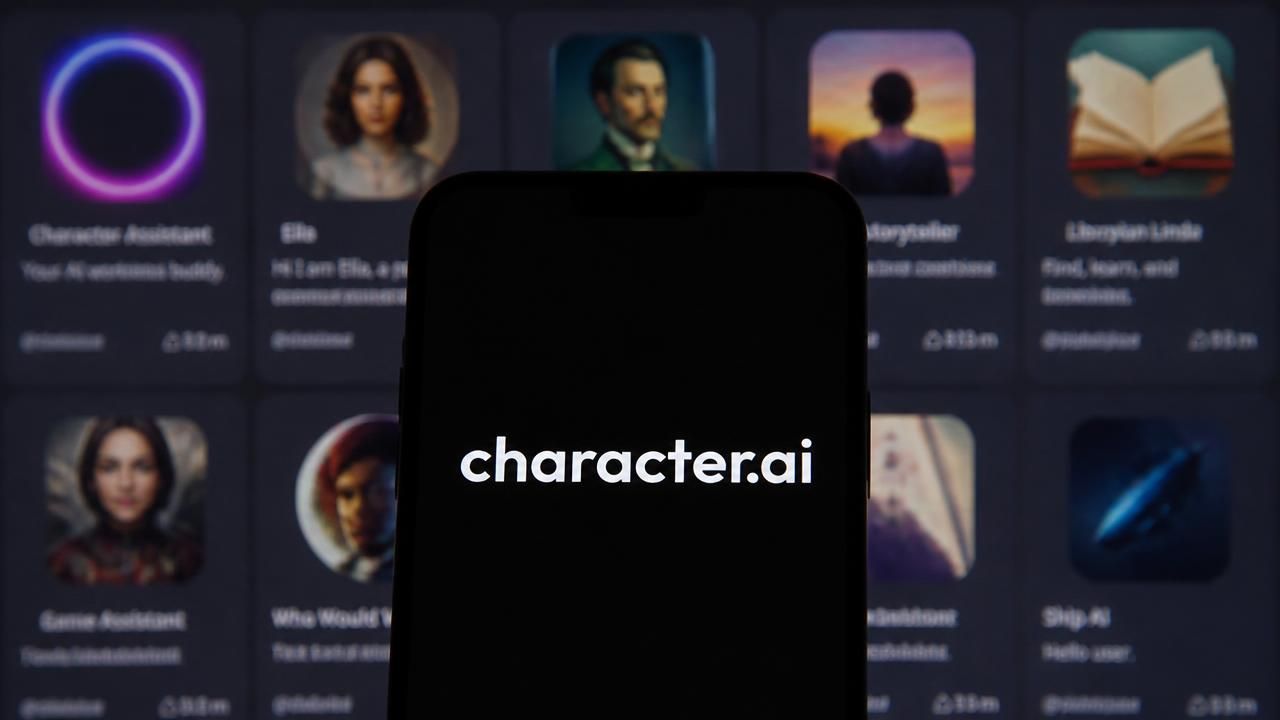
Character.AI, one of the earliest breakout companies of the generative AI era, filed for Chapter 11 bankruptcy protection in the United States on Monday and agreed to sell a package of assets to Disney for roughly $20 million, according to a company press release and blog post first reported by The Verge.
The filing, made voluntarily in a U.S. bankruptcy court, is intended to facilitate a sale process the company describes as value-maximizing. Disney has agreed to serve as the "stalking horse" bidder — a legal role that sets a floor price for the assets and allows other suitors to submit competing offers in a court-supervised auction.
A Fallen Star Seeks an Exit
Character.AI was founded in 2021 by former Google researchers Noam Shazeer and Daniel De Freitas, and quickly became one of the most-visited AI services on the consumer internet. Its premise was simple and potent: users could chat with, roleplay as, and build elaborate personas around customizable bots, from historical figures to fictional companions. At its peak, the platform drew tens of millions of monthly visitors and became shorthand for the emerging "AI companion" category.
That trajectory shifted in 2024, when Google struck a licensing deal for the startup's model technology and hired away its founders. The arrangement left Character.AI with a non-exclusive license to its own models and a drastically smaller independent footprint — a structure that regulators and industry observers have increasingly scrutinized as a form of acqui-hire that sidesteps traditional merger review.
Safety Lawsuits Cast a Long Shadow
Long before Monday's filing, the company was under mounting legal pressure. As The Verge noted, Character.AI has faced lawsuits and intensifying scrutiny over the safety of its chatbots, particularly regarding younger users and emotionally vulnerable people who formed deep attachments to AI companions. The company nonetheless continued shipping product updates in recent months, including new safety features aimed at minors.
Disney's interest in the assets adds a second legal dimension: copyright. The entertainment giant has been among the most aggressive corporate litigants on generative AI, arguing that models trained on or mimicking its characters infringe its intellectual property. Several outlets, including MSN and Neowin, framed the $20 million bid as arriving "after a copyright dispute" — a reminder that the same IP Disney once policed is now something it may own outright.
"Over the past year, we've taken meaningful steps to sustain and improve our business amid significant headwinds."
The line, drawn from the company's own blog post accompanying the filing, captures the delicate tone Character.AI has adopted: neither a full admission of failure nor a convincing case for independence.
How the Story Is Being Framed
Coverage of the bankruptcy has diverged sharply by outlet, reflecting the fragmented state of business and tech journalism.
- Tech and startup press (The Verge, The Next Web, Unite.AI) led with the cultural angle — the fall of a company that symbolized the first wave of consumer generative AI.
- Financial outlets (Seeking Alpha, Yahoo Finance) emphasized the mechanics of the deal, using precise bankruptcy language such as "voluntary Chapter 11 proceeding" and "stalking horse bidder."
- Aggregators and syndicated feeds (MSN, iJR, Neowin, NewsBytes) foregrounded the headline number — $20 million — and Disney's role as first in line for key assets.
- Analytics and industry blogs treated the filing as a case study in AI asset valuation, questioning why a once-hot startup's core IP would fetch just $20 million.
Several of those pages were themselves inaccessible at the time of writing, blocked by paywalls or bot protection — an ironic footnote given that the story concerns the durability of digital platforms.
What a Stalking Horse Bid Actually Means
In Chapter 11 sales, a stalking horse is a bidder that negotiates an initial purchase agreement before the auction. That agreement — including the $20 million Disney offer — sets a baseline price and gives the buyer protections such as breakup fees if a higher bid prevails. Crucially, it does not guarantee the deal closes. Creditors, competing bidders, and the bankruptcy judge all get a say, and a court-supervised auction could produce a higher figure.
For Disney, the calculus is straightforward: acquiring a working conversational AI stack and its associated intellectual property at a distressed price is far cheaper than building one. For Character.AI's creditors and former employees, the outcome hinges on whether the auction attracts rival bids — a prospect that analysts have described as uncertain given the litigation cloud hanging over the assets.
A Broader Reckoning for AI Startups
Character.AI's collapse arrives at an inflection point for the sector. Investor enthusiasm has concentrated around a handful of frontier labs and infrastructure players, while consumer-facing AI apps — expensive to run, hard to monetize, and exposed to safety and copyright liability — have struggled to justify their valuations.
The filing also raises unresolved questions about what happens to user data and the millions of personalized bots created on the platform. Bankruptcy proceedings typically prioritize creditor recovery over user interests, and it remains unclear whether existing bots, chat histories, or community features would survive a sale to Disney.
What is clear is the symbolic weight. Character.AI helped define what mainstream consumers expected from generative AI — and its bankruptcy now defines what happens when that expectation outpaces the business model underneath it.