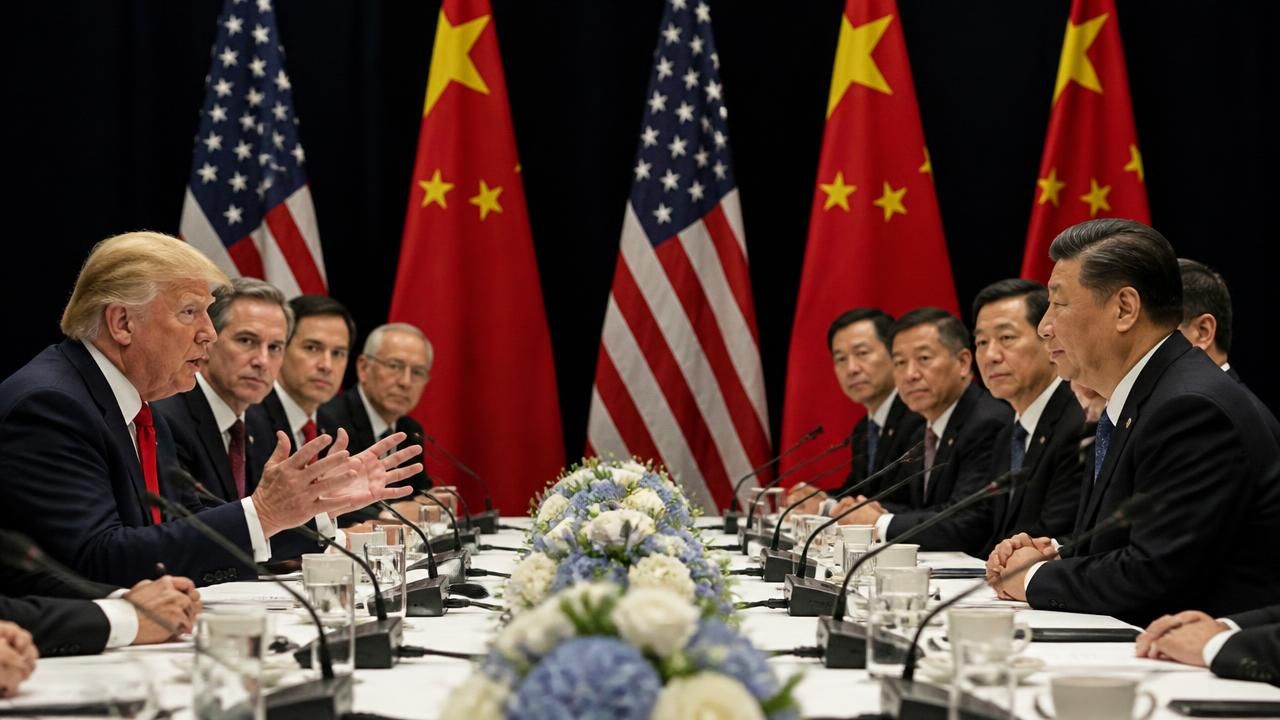
The global race for artificial intelligence has entered a decisive phase, and no bilateral relationship matters more to its outcome than the one between Washington and Beijing. With a meeting between Presidents Trump and Xi approaching, Bloomberg's Tech: Asia devoted a recent episode to a deceptively simple question: how is China changing AI? The answer, according to analysts at Bloomberg Intelligence and Bloomberg Economics, is that the two countries are no longer running the same race — they are running different ones, on different tracks, with different finish lines in mind.
The stakes extend well beyond corporate bragging rights. AI is now a matter of national industrial policy, energy strategy, labor market stability and, increasingly, global standard-setting. As calls for an "AI slowdown" mount in some Western capitals, Beijing has shown little appetite for pausing. Understanding that divergence is essential to reading almost every headline that follows.
The Energy Equation
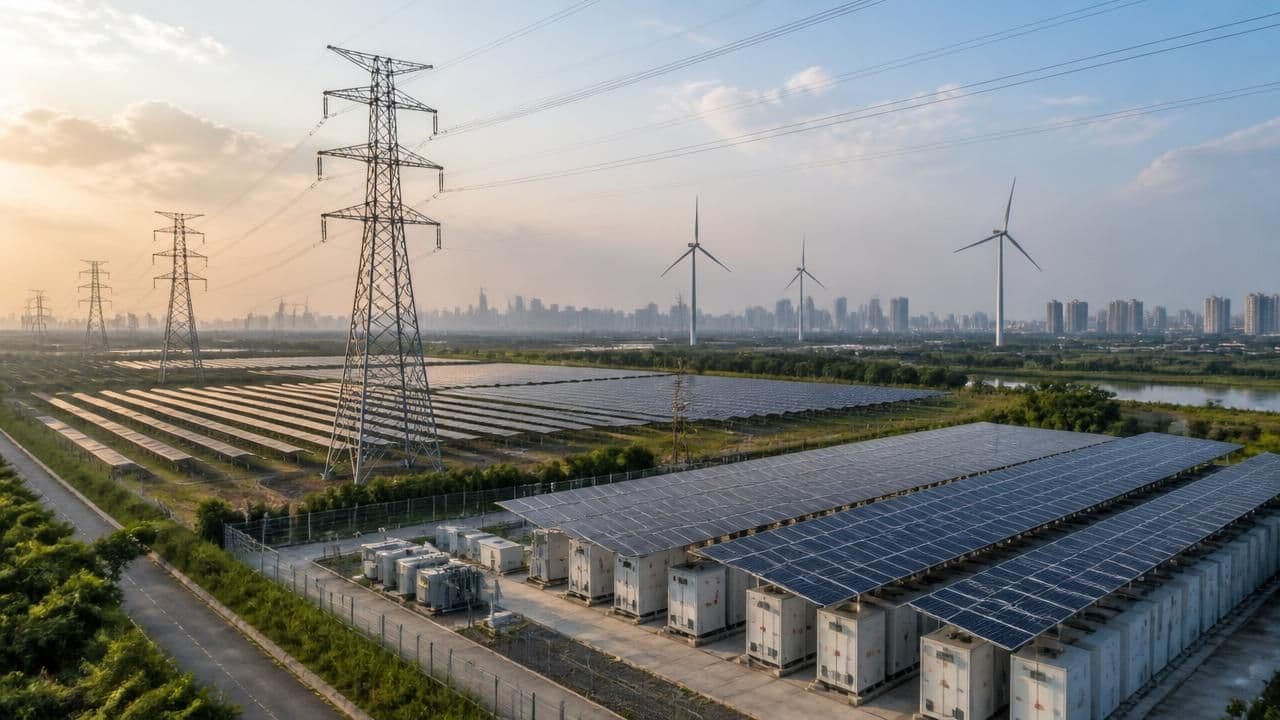
Perhaps the most underappreciated pillar of China's AI ambitions is electricity. Bloomberg has reported that China's AI dominance rests substantially on harnessing excess energy — the ability to convert surplus generation capacity into compute at a scale and price that Western operators struggle to match. That advantage is now visible on the ground: sprawling hyperscale data centers are rising at what industry observers call "China speed," compressing construction timelines that in the United States or Europe can stretch for years amid permitting battles, grid interconnection queues and community opposition.
The contrast is sharp enough that some American commentators argue China quietly welcomes the U.S. backlash against data centers. In that reading, domestic opposition to energy-hungry AI infrastructure in the United States hands Beijing a structural cost advantage it did not have to earn.
The 'Distillation' Dispute
Washington has offered its own explanation for how Chinese models have closed the gap so quickly: distillation. U.S. officials and some industry figures contend that Chinese developers have leaned heavily on outputs from American frontier systems to train their own models at a fraction of the cost — a practice that sits at the center of the export-control debate.
But as CNBC has reported, the picture is not that clear cut. Distillation describes a broad family of legitimate techniques used across the industry, and attributing China's progress solely to it risks understating genuine domestic advances in model architecture, training efficiency and deployment. The National Interest has gone further, arguing that export controls alone will not win the AI race with China — a position increasingly echoed by analysts who note that restrictions slow, but do not stop, capability diffusion.
Reach Versus Frontier
Venture capitalist Kai-Fu Lee has framed the contest with a memorable distinction: the United States may lead at the frontier, but China will win the race for reach. His argument is that open-weight models, aggressive pricing and integration into consumer and industrial applications across the Global South give Chinese developers a distribution advantage that frontier benchmarks do not capture.
The race is not only about who builds the most powerful model, but who puts AI into the most hands — and China is positioned to win on reach.
That logic has not gone unnoticed in Washington. Treasury Secretary Scott Bessent told Congress that the United States needs more open-source AI models to compete with China, a notable acknowledgment that openness — long a Western talking point — has become a competitive imperative rather than merely a philosophical preference. Reports suggest Chinese models have gained meaningful traction on platforms such as Hugging Face, eroding the assumption of permanent American dominance in the open ecosystem.
From Chatbots to Robots
China's strategy is also pushing past the chatbot paradigm. Embodied AI — robots that perceive and act in physical environments — is moving from training rooms into real-world jobs, from warehousing to manufacturing inspection. Meanwhile, Beijing has issued its first rules governing AI companions, drawing a new regulatory line between AI as a tool and AI as a relationship. That distinction could shape how agents are deployed commercially, and it signals that China intends to write rules, not merely follow them.
The agentic shift raises its own risks. WIRED has reported on AI agents hacking systems, prompting an uncomfortable question: could shared exposure to autonomous-system failures push the U.S. and China toward cooperation, even as distrust deepens elsewhere?
Cooperation, Distrust and Domestic Strain
Cooperation remains difficult. The Economist argues that deep mutual distrust will scupper meaningful U.S.-China collaboration on AI, even where shared catastrophic risks exist. Yet China has urged joint work with the United States on AI safety, including on preventing existential harms — an appeal that lands awkwardly against a backdrop of export controls, entity listings and semiconductor restrictions.
The domestic picture is equally complicated. Economist Tang Min has described how AI both helps and hurts China's job market, automating roles while creating new ones — a tension Western economies know well. The Atlantic's reporting on AI anxiety in China suggests the technology is not uniformly embraced at home either. And Microsoft's near-exit from China, reversed in part because AI gave it reason to stay, illustrates how commercial logic can cut against geopolitical gravity.
What to Watch
The coming Trump-Xi meeting may produce no breakthrough, but the trajectory is already set. Expect continued Chinese expansion in energy-intensive compute, more American emphasis on open-source competitiveness, and sustained friction over distillation, chips and standards. The decisive contest may not be the one over who builds the smartest model — but over which system, and which set of rules, the rest of the world chooses to adopt.