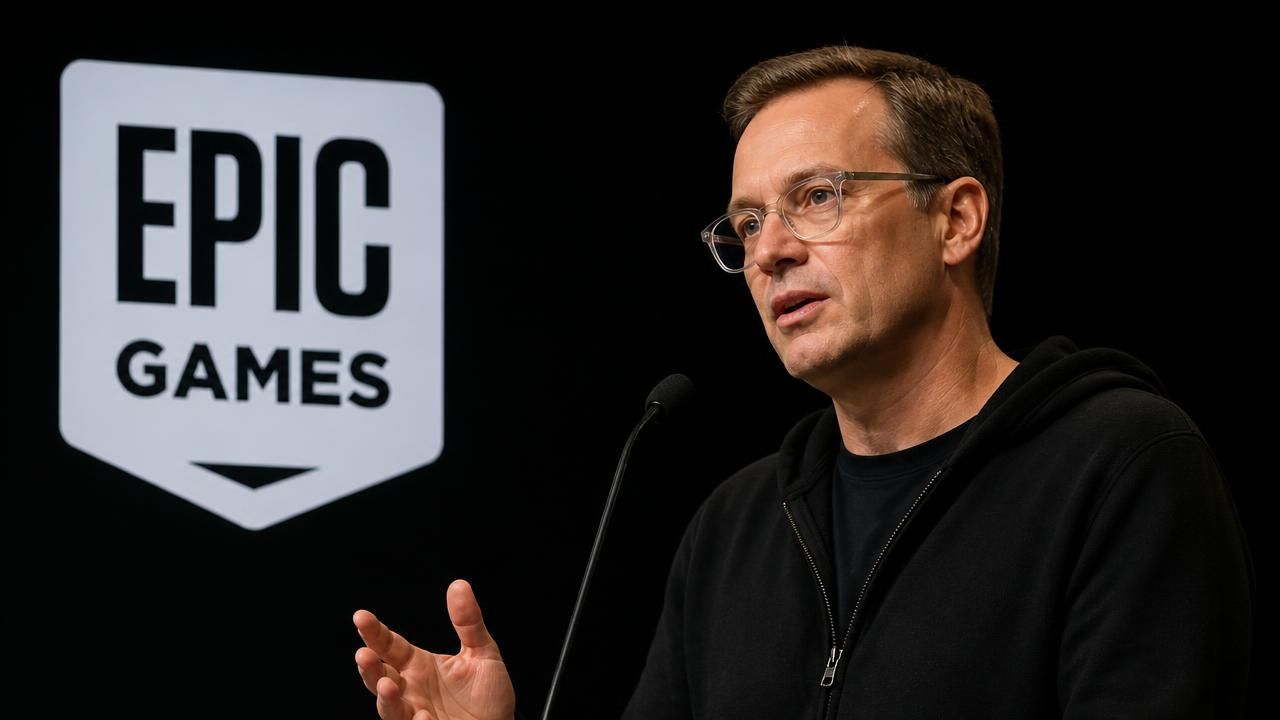
Epic Games has reportedly ordered staff working on its long-rumored Disney crossover shooter to adopt an "AI-first" development model, a dramatic internal pivot that has coincided with an indefinite delay to one of the most expensive licensing projects in the industry. The change was first reported by Bloomberg, which cited unnamed people familiar with the project and internal employee messages.
According to that reporting, human developers on the untitled shooter — a collaboration between the Fortnite maker and the Walt Disney Company — will be reassigned from creating content to managing and guiding assets produced by artificial intelligence models, including Anthropic's Claude. The internal guidance, as described by Bloomberg, amounts to "no more hand-written code," with art assets "generated with full AI workflows." Nobody at Epic or Disney has publicly confirmed the account, and the studio did not respond to requests for comment.
A $1.5 Billion Bet, Now Without a Date
The project traces back to early 2024, when Disney invested $1.5 billion for an equity stake in Epic and the two companies announced a multi-year partnership to build a persistent games and entertainment universe connected to Fortnite. The deal, personally championed by Disney CEO Bob Iger, was framed as a way for the media giant to move beyond licensing its characters and into owning interactive experiences featuring Marvel, Star Wars, Pixar, and Disney Animation properties.
The flagship output of that partnership was to be a Marvel- and Star Wars-themed shooter targeting a March 2027 release. Bloomberg's sources now say that date is gone. The game is described as understaffed and slower to develop than expected, and the AI overhaul has pushed it to an indefinite delay — a notable setback given that both companies have publicly framed the collaboration as a centerpiece of their respective futures.
What 'AI-First' Actually Means
The distinction matters. Most major studios have adopted AI as an accelerant: generating placeholder art, drafting boilerplate code, or automating testing while keeping humans firmly in authorial control. Epic's reported directive goes further, making AI-generated output the default source of the game's code and art rather than an assist — with developers positioned as editors, prompt engineers, and quality control.
"Human developers will be tasked with managing and guiding code and art assets generated by models such as Anthropic's Claude," Bloomberg reported, describing internal messages that indicated the studio has moved away from hand-authored production.
Coverage of the story has diverged sharply in emphasis. Ars Technica framed it as a technical and structural overhaul of Epic's production pipeline at the Unreal Engine maker, where AI tools are simultaneously a product line and an internal mandate. Kotaku led with labor anxiety, describing developers as "shocked" by the shift. Trade outlets including GamesIndustry.biz, Video Games Chronicle, and TechRaptor focused on the strategic and scheduling implications for the Disney deal, while aggregators such as MSN and Yahoo Finance carried the Bloomberg report largely verbatim. IGN and GamingBolt, covering the same rumor, foregrounded the lost release window over the AI details — a reminder of how differently the enthusiast press and the business press weigh the same set of facts.
An Industry Already Fighting Over AI
Epic is not operating in a vacuum. Microsoft has invested heavily in generative models for game development, unveiling its Muse AI system for gameplay ideation in 2025, and publisher Krafton has publicly committed to becoming an "AI-first company." Valve now requires developers to disclose AI-generated content on Steam. Meanwhile, the SAG-AFTRA video game strike, which stretched through much of 2025, was fought largely over AI protections for performers — a dispute that Epic's reported directive is likely to inflame rather than quiet.
The timing is awkward for other reasons. Epic has spent the past two years restructuring, cutting roughly 830 jobs in 2023 and continuing to trim costs while Fortnite's revenue stabilized. Unreal Engine remains the studio's most strategically important asset, and Epic has been marketing AI-assisted world-building tools to the broader developer community. A high-profile internal project that outsources code and art to models — and slips its schedule in the process — gives critics an easy counterargument to that pitch.
What Happens Next
- The game: No new release window has been given. The March 2027 target is effectively void, and Bloomberg's reporting suggests staffing shortfalls predate the AI mandate.
- The staff: Developers expecting to build a flagship title are instead being asked to supervise model output, a role shift that could drive attrition at a studio already stretched thin.
- The industry: If Epic's experiment succeeds commercially, it becomes a template. If it produces a delayed, uneven game, it becomes a cautionary tale for every publisher weighing how far to push automation.
What remains unclear is whether the AI-first approach is a genuine production philosophy or a cost-cutting measure dressed in technological ambition. Epic declined to say. Disney, which has $1.5 billion riding on the answer, has said nothing either — leaving the industry to watch one of its most consequential experiments unfold with no release date attached.