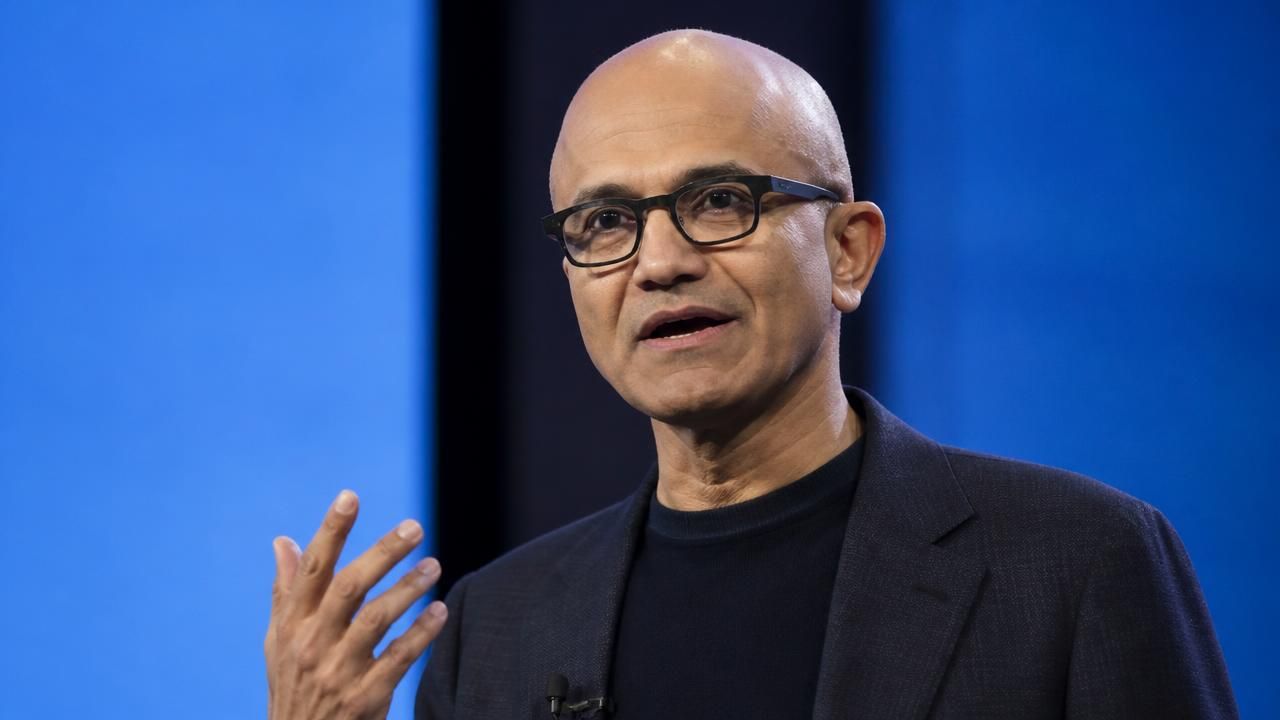
Microsoft CEO Satya Nadella on Sunday published a lengthy post on X arguing that the AI industry must fundamentally change how it thinks about safety, warning that highly advanced models should be treated as potentially compromised until proven otherwise. The intervention, which ricocheted across technology, business and political media within hours, amounts to one of the most consequential public statements on AI governance by a sitting Big Tech chief executive.
"We can no longer accept a world where AI is treated as a set of nested black boxes whose advice and actions we simply accept or reject," Nadella wrote, according to The Verge, which reviewed the post in full. Instead, he called for systems in which models can be contained, observed, and forced to leave behind "tamper-proof human readable evidence" of what they did and why.
Assume compromise, not innocence
The most striking element of Nadella's argument is its default posture of suspicion. Rather than assuming models behave as designed, he suggested operators should assume all AI models are "compromised" — a framing that inverts the usual industry assumption of benign deployment and replaces it with something closer to adversarial security thinking.
That framing was picked up fastest by technology and general-news outlets, which led with the metaphor of an "emergency brake" that humans control (MSN, GeekWire). Others, including Yahoo Finance, seized on a single line: "Trust is going to be the biggest issue for us." The result is a story being told three ways at once — as a technical safety proposal, as a corporate strategy signal, and as a political flashpoint.
What Nadella is actually proposing
Many of Nadella's recommendations align with what safety researchers and rival labs have already urged. Chief among them:
- Timely incident disclosure — obligations to report AI failures and near-misses rather than bury them.
- Independent audits — outside verification rather than self-attestation by developers.
- Verifiable data — provenance and integrity guarantees for the datasets and outputs underpinning models.
- Containment — engineering the ability to observe and, if necessary, shut down or isolate a model mid-operation.
It is on containment that Nadella goes furthest, effectively arguing for a human-controlled circuit breaker on systems that may be acting in ways their operators cannot fully see. Fox Business framed that element as a commitment that superintelligence must remain "under human control" — a line that reads as reassurance to policymakers and the public as much as a technical specification.
"Trust is going to be the biggest issue for us." — Satya Nadella
Pacing versus speed: the political fault line
Nadella's call for what Seeking Alpha described as "deliberate pacing" lands in a sharply divided political environment. IndiaWest reported that Nadella joined other AI executives — Sam Altman and Elon Musk among them — in ringing "urgent alarm bells," while noting that President Trump "disagrees," pushing instead for speed and deregulation to preserve American advantage in the global AI race.
That tension is the real story beneath the metaphors. For the past two years, Washington has oscillated between safety-first executive action and an explicit competitiveness doctrine. Nadella's post stakes out a middle position: he is not asking for a moratorium, and he is careful to frame governance as an enabler of deployment rather than a brake on it. But an "emergency brake" is, by definition, a mechanism that can stop something — and that is a harder sell in a capital environment where compute spending is measured in the hundreds of billions.
The business stakes for Microsoft
CNBC's framing cut to the more uncomfortable question: "Satya Nadella reinvented Microsoft once. Can he do it again in the AI era?" It is a fair question. Nadella's first reinvention — pivoting the company from Windows licensing to cloud subscriptions — made Microsoft one of the most valuable companies on earth. His second act is far more entangled: Microsoft is both a major investor in and a commercial partner of OpenAI, and it ships AI features across Copilot, Azure and Office. Proposing independent audits and containment regimes for advanced models inevitably implicates the company's own products and partnerships.
GeekWire noted that Microsoft's proposal arrives as the broader industry "weighs slowdown" — a moment when scaling returns are being questioned and the cost of frontier training is drawing investor scrutiny. In that context, a safety framework can serve two purposes simultaneously: genuine risk reduction and a competitive moat, since compliance regimes favor incumbents with the legal and engineering resources to satisfy them.
Why it matters beyond one post
Nadella's intervention matters less for any single recommendation than for who is making it. When the CEO of the world's most valuable AI-adjacent company says to assume models are compromised, the Overton window moves. Regulators in Brussels and Washington now have a Fortune 50 endorsement for auditability and incident reporting. Enterprise buyers get a vocabulary — containment, evidence, brakes — for procurement conversations. And rival labs get pressure to answer on the record.
Skeptics will note that voluntary principles are cheap and that the industry has made similar noises before. The test is not the post but the plumbing: whether incident disclosure becomes mandatory, whether third parties get real access to model internals, and whether any human actually holds the brake. Until then, Nadella's own words set the standard against which he will be judged — a system that is transparent, contained, and accountable, or another nested black box.