Every spacecraft that returns from orbit or beyond must survive a brief, violent passage through the atmosphere, and the hardware that makes that possible — the heat shield — has quietly become the single hardest engineering problem in the new era of reusable spaceflight. Two very different stories unfolding this fall illustrate why.
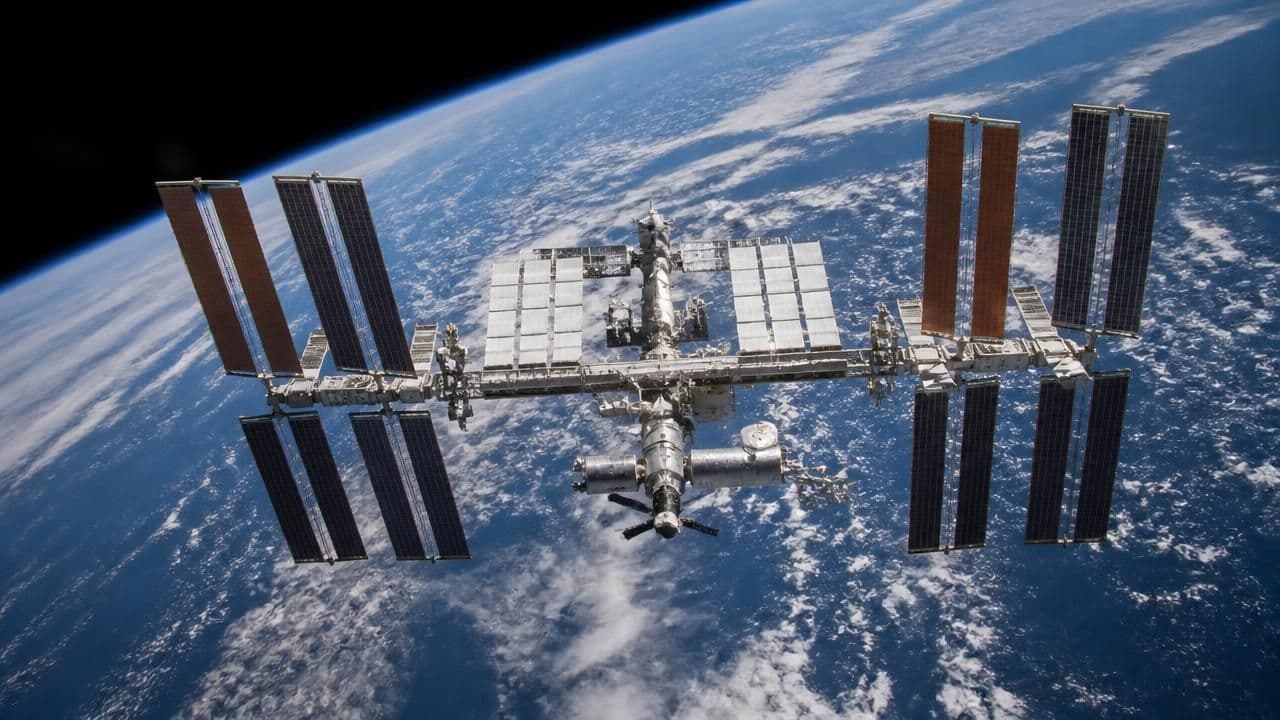
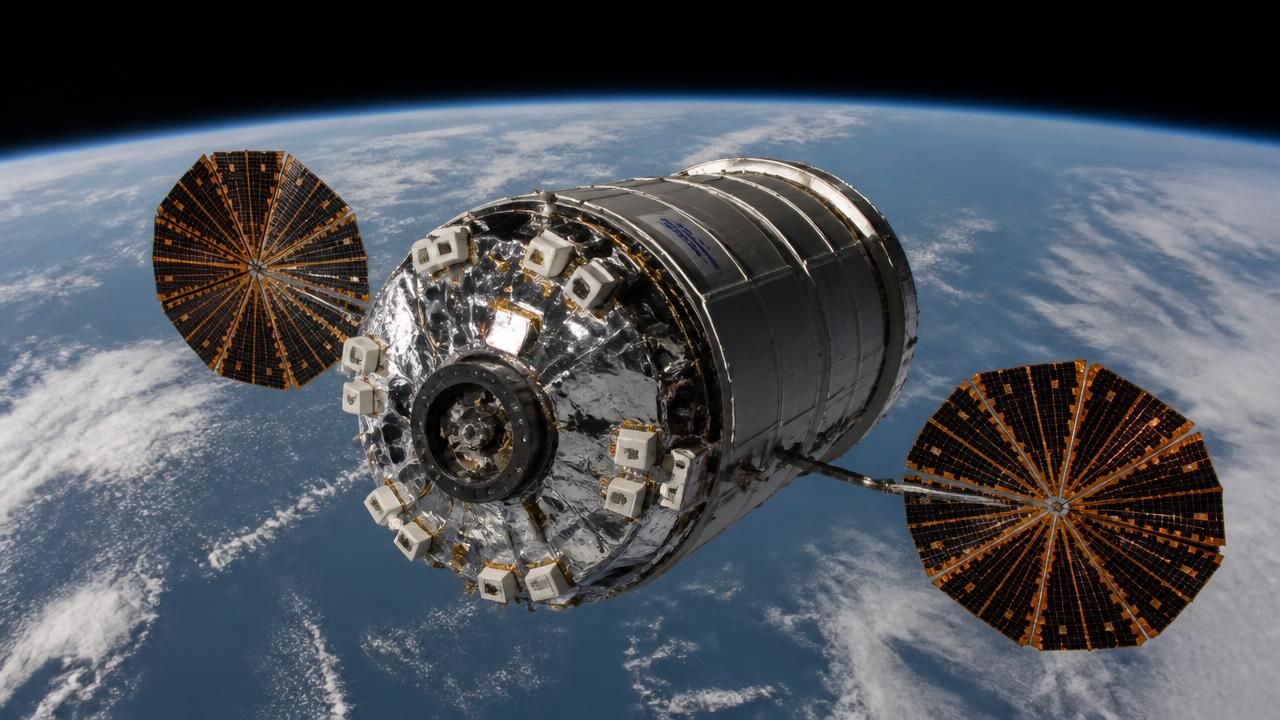
At NASA, engineers are taking an unconventional, low-cost route to testing the next generation of thermal protection materials: they are riding the trash home. When Northrop Grumman's 24th commercial resupply mission undocked from the International Space Station, it carried a fleet of 12 small experimental capsules tucked inside a Cygnus XL cargo craft. The spacecraft was already destined to burn up on reentry. NASA decided to use those final minutes as a free laboratory.
Twelve Capsules, One Fiery Final Exam
The experiment is called KREPE-3 — the Kentucky Reentry Probe Experiment — the third in a series of low-cost, high-impact missions built around the idea that a cargo ship's destruction can be turned into data. Inside the small capsules are 3-D printed heat shields designed by researchers at NASA's Johnson Space Center in Houston. As the Cygnus disintegrates, the probes are built to transmit measurements of temperature, pressure and material performance before they, too, are consumed.
The program is a collaboration among the University of Kentucky, the state of Kentucky, NASA's Established Program to Stimulate Competitive Research (EPSCoR), several NASA centers, and other federal and commercial partners — a deliberate effort to spread spaceflight research beyond the agency's traditional hubs.
"KREPE-3 is a great example of the goals of NASA's EPSCoR program," said David Berger, EPSCoR program manager at NASA Headquarters in Washington. "We are supporting the next generation of scientists and engineers as they develop unique projects that benefit their education and NASA's mission goals."
NASA's framing is optimistic and incremental: better materials, tested cheaply, feeding into heat shields for crews returning from the Moon and eventually Mars. The European approach to the same problem, the agency notes, is a long-standing emphasis on flight-testing thermal protection materials rather than relying solely on ground facilities, which cannot fully replicate the combined effects of plasma, shock and vibration.
Starship Turns Up the Heat — and the Criticism
Half a world away, SpaceX is pursuing the opposite strategy: fly big, fly often, and iterate in public. Its Starship vehicle, the largest rocket ever built, is covered in roughly 18,000 hexagonal ceramic tiles that are mechanically attached to the stainless steel hull. The company's stated goal is rapid reuse — a ship that lands, is inspected, refueled and launched again within hours.
That ambition has run into a stubborn physical reality. Reentry from orbital velocity converts enormous kinetic energy into heat, with stagnation temperatures at the vehicle's leading edges exceeding 2,500 degrees Fahrenheit (about 1,400 Celsius). SpaceX's early integrated flight tests put the shield under unprecedented scrutiny — and produced visible damage, including tile loss and burn-through along the forward flaps that forced redesigns and the addition of a backup ablative layer beneath the tiles.
Coverage from MSN and Ars Technica has seized on a sharp critique: former NASA experts argue that the current tile architecture is a "dead end" for rapid reuse. Their concern is not that the tiles cannot survive a single reentry, but that they cannot survive many. Each flight exposes the shield to vibration, aerodynamic flexing, micrometeoroid and debris strikes, and the debris shed by the vehicle itself. A tile that must be individually inspected and rebonded after every flight imposes exactly the kind of refurbishment burden that the Space Shuttle's 24,000 silica tiles once created — a maintenance cost that ultimately undercut the Shuttle's promise of routine, low-cost access to space.
The framing differences between the outlets are telling. NASA's own communications emphasize partnership, workforce development and incremental material science. The commercial-press coverage emphasizes risk: that SpaceX's vision of airline-like operations depends on a thermal protection system that may need a fundamental rethink rather than refinement — possibly toward transpiration cooling, metallic shields, or deployable structures.
Why This Is Not a New Argument
Thermal protection has always been where reusability goes to die, or to prove itself. Apollo's ablative Avcoat was reliable but single-use. The Shuttle's ceramic tiles were reusable in principle and fragile in practice. More recently, NASA spent two years investigating unexpected char loss on the Orion capsule's Avcoat heat shield after the uncrewed Artemis I reentry in 2022; the agency ultimately decided to fly the existing shield on Artemis II while modifying the reentry trajectory to reduce the stress it experiences.
That decision is instructive. Even when a heat shield performs within design limits, the physics leaves little margin, and the consequences of getting it wrong are catastrophic — as the 2003 Columbia accident demonstrated when damage to a leading-edge panel proved fatal.
The Road Ahead
- NASA's bet: Cheap, disposable probes can validate new materials faster and for far less money than dedicated reentry test flights.
- SpaceX's bet: Iterative flight testing will expose tile weaknesses faster than analysis can, allowing the company to engineer around them.
- The shared problem: Whether a shield is reusable once or a hundred times, the data needed to certify it for crewed flight remains expensive, scarce and hard-won.
Both approaches are, in a sense, answering the same question: how do you build a heat shield you can trust? NASA's answer this fall involved a cargo ship full of garbage and a dozen tiny capsules — and for the engineers watching Starship's tiles come back scorched, that humble experiment may end up mattering just as much as the biggest rocket ever flown.