SpaceX is pressing the world's satellite operators to share more data about where their spacecraft are — and where they are going — warning that the rapid growth of megaconstellations is outpacing the informal, ad hoc coordination that has governed orbital traffic for decades.
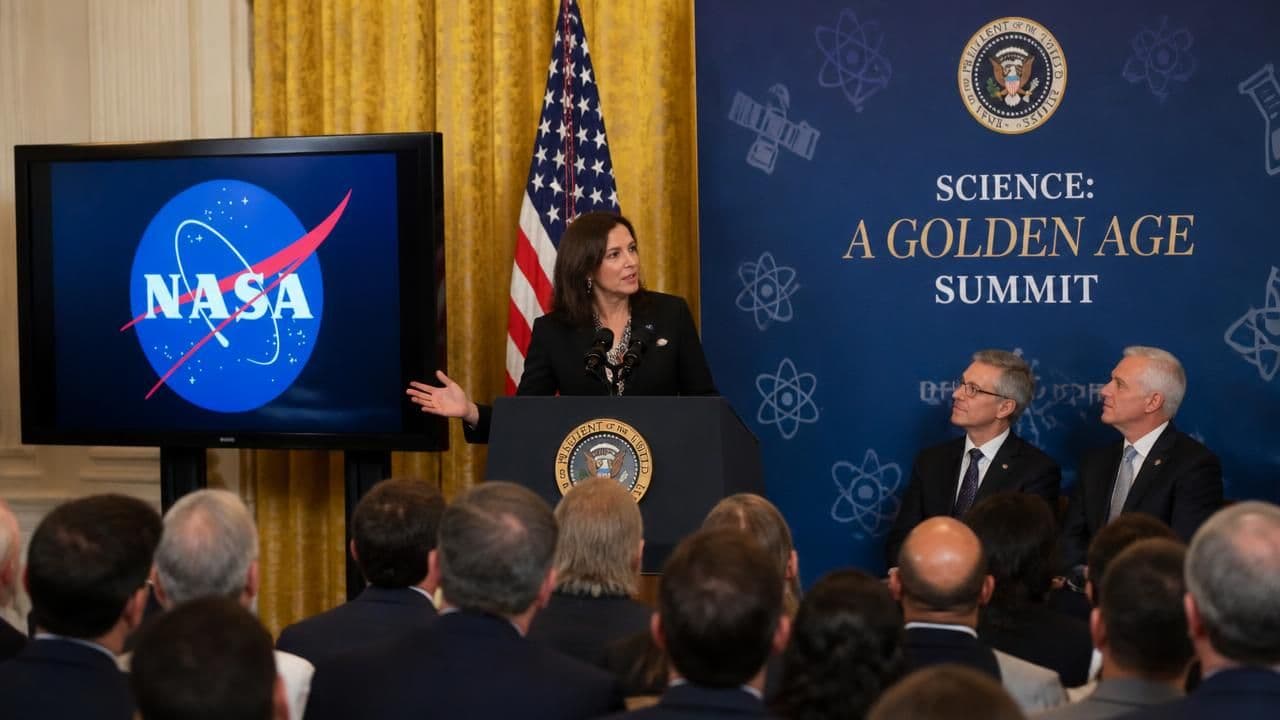
The call came from Michael Nicolls, SpaceX's vice president for Starlink, during a presentation Tuesday at the International Astronautical Congress in Turkey. Nicolls used the industry's largest annual gathering to argue that low Earth orbit has ample room for more constellations, but only if every operator — commercial, civil, and military — participates in the same information-sharing regime.
A Crowded Neighborhood
The scale of the problem is stark. SpaceX's Starlink network now numbers more than 11,000 satellites, roughly two-thirds of all active spacecraft in low Earth orbit. Radars and telescopes track thousands of additional pieces of debris, from dead payloads to spent rocket stages.
Against that backdrop, the margin for error is shrinking. Operators file conjunction warnings with the U.S. Space Force's 18th Space Defense Squadron and, more recently, with commercial tracking firms, but the process remains uneven. Not every operator publishes maneuver plans, and not every operator responds to a warning in time.
Space has room for more megaconstellations, Nicolls argued — but only if all operators are willing to share information about where their satellites are and where they are going.
Near-Misses Raise the Stakes
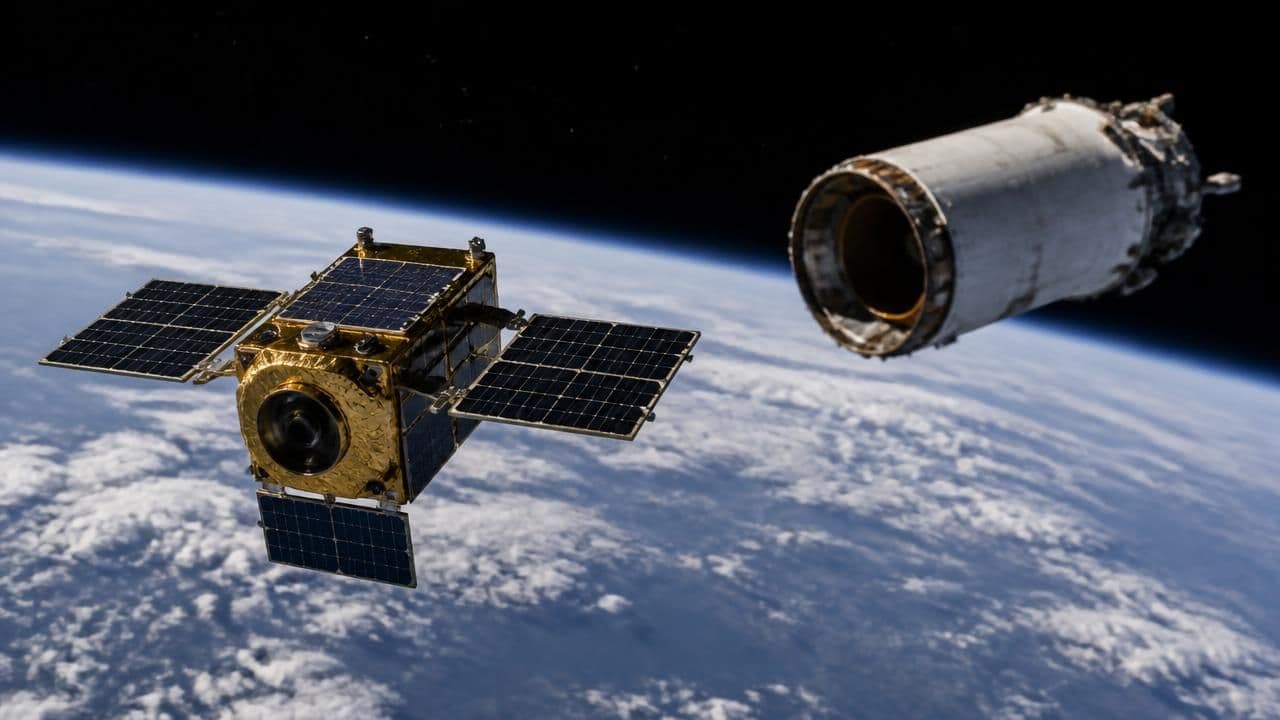
The urgency behind Nicolls' message was underscored by reports that Starlink had to maneuver to avoid a catastrophic collision with hardware associated with a Chinese rocket. Such incidents have become a recurring feature of orbital life, and they illustrate the asymmetry at the heart of the debate: SpaceX, with the largest constellation in history, is both the most frequent source of collision warnings and the most frequent party forced to dodge.
Coverage of the issue has reflected that tension. Some outlets framed the story as SpaceX "calling out" other satellite operators for nearly crashing into Starlink — a confrontational reading in which the dominant player points fingers at smaller rivals. Others emphasized the defensive dimension, describing Starlink as dodging a potentially catastrophic encounter with a Chinese launch vehicle. The two framings are not contradictory so much as complementary: the same event can be read as an accusation, a near-disaster, or both.
Chinese officials have previously pushed back on characterizations of their launch debris as uniquely reckless, noting that decades of U.S. and Russian activity left their own legacy of derelict hardware in orbit. The dead upper stages of the early space age remain among the most dangerous objects tracked today.
Starship's Dual Milestone
SpaceX's coordination push comes as its next-generation launch vehicle moves closer to operational service. A recent Starship test flight reached orbit and deployed Starlink satellites despite an engine problem during ascent — a result the company has presented as evidence that the vehicle is resilient enough to survive the kind of anomaly that would end a conventional mission.
The successful deployment matters for more than engineering. Each Starship flight is designed to loft far more Starlink mass per launch than the Falcon 9 it is meant to supplement, which means the constellation's growth curve — and the coordination challenge Nicolls described — could steepen considerably once the vehicle enters regular service.
Details of the engine issue remain limited, and SpaceX has not published a full anomaly assessment. Independent observers have noted that the ability to reach orbit and deploy payloads with a degraded propulsion system is encouraging, but that regulators will want a clear picture of the failure mode before certifying routine commercial flights.
The Regulatory Backdrop
Orbital traffic management sits at the intersection of several incomplete regimes:
- International Telecommunication Union filings govern spectrum and orbital slots, but they say little about operational collision avoidance.
- National licensing — chiefly by the U.S. Federal Communications Commission — imposes debris-mitigation rules, including a five-year post-mission disposal requirement for spacecraft launched under U.S. authority.
- Voluntary norms, such as the consortium of operators that share ephemeris data, cover only those who opt in.
The result is a patchwork in which compliance depends largely on goodwill, and in which the largest operator has both the most to lose from a collision and the loudest platform from which to demand change.
Why It Matters
A single high-energy collision in low Earth orbit could generate thousands of trackable fragments, raising the risk for every satellite in the affected altitude band — the scenario known as Kessler syndrome. Insurers, launch providers, and national space agencies all now price that risk, and analysts say the cost of inaction will fall hardest on operators without redundant spacecraft or maneuver budgets.
For now, the initiative rests on persuasion rather than enforcement. Nicolls' argument is essentially that the industry can either coordinate voluntarily or wait for a catastrophe that forces regulators to impose rules none of them will like.