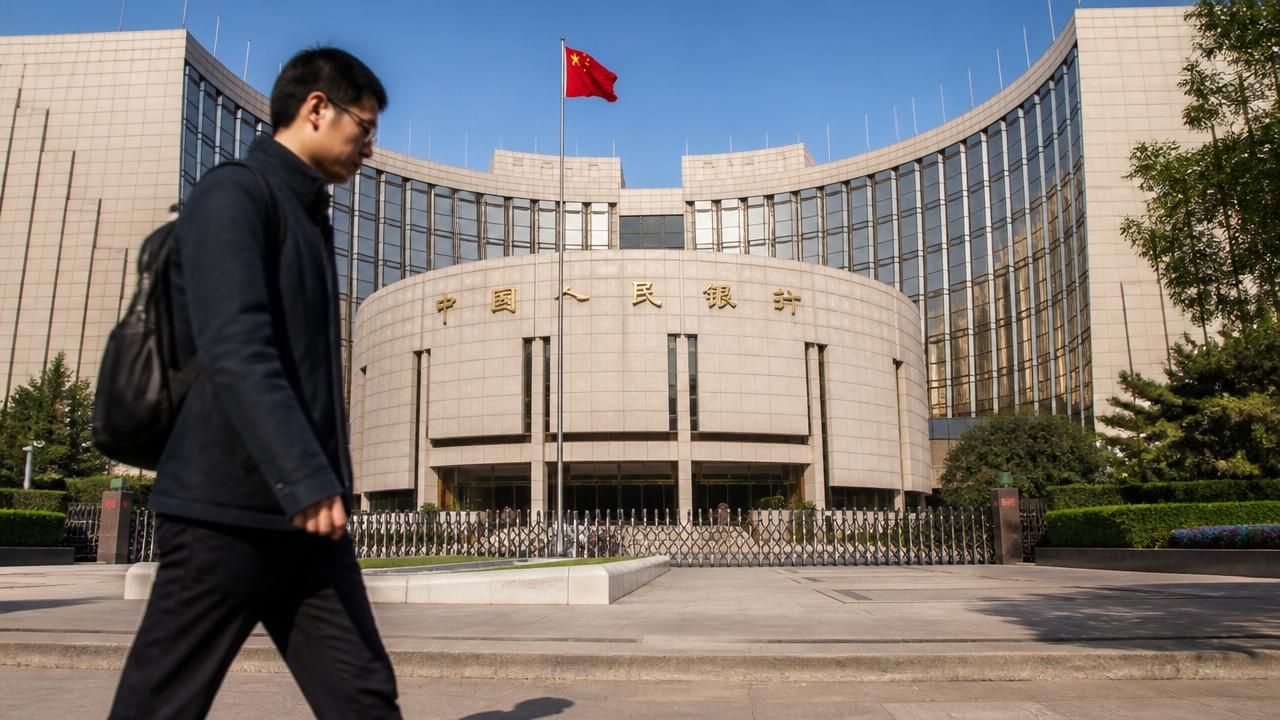
China's central bank publicly rejected accusations that it keeps the yuan artificially cheap, issuing a pointed defense of its currency policy just as a new round of trade negotiations with the European Union got underway. The People's Bank of China (PBOC) argued that exchange-rate adjustments cannot resolve what it describes as structural imbalances in the global economy — a direct rebuttal to European officials who have increasingly pinned the bloc's yawning trade deficit with China on the value of the renminbi.
The timing was deliberate. As delegations from Beijing and Brussels sat down for talks, the PBOC moved to frame the debate before European negotiators could, insisting that China has neither the need nor the intention to weaken its currency to gain a trade advantage. The statement was carried by Bloomberg, Yahoo Finance, MarketScreener, MSN and China's state-run Global Times — a sign that Beijing wanted the message heard in both financial markets and European capitals.
A Policy Defense, Not an Apology
At the center of the dispute is a long-running argument over how the renminbi is priced. The PBOC manages the yuan through a daily fixing against a basket of currencies, allowing it to trade within a band — a system Beijing describes as a managed float that protects stability, and which critics describe as a mechanism for keeping Chinese exports competitively priced.
Exchange-rate adjustments won't resolve structural imbalances in the global economy.
That argument — that currency revaluation is a blunt instrument for problems rooted in savings rates, industrial policy and consumption patterns — is the core of China's counter-offensive. It echoes a position Chinese officials have advanced for years: that the country's trade surplus reflects the structure of its economy and global demand, not a manipulated exchange rate.
Europe Turns Up the Heat
European officials have grown steadily more vocal about the imbalance. The EU's goods deficit with China remains enormous, and Brussels has already deployed tariffs on Chinese electric vehicles and launched probes into other sectors, from solar panels to medical devices. Within that broader economic-security agenda, the exchange rate has moved from a technical footnote to a headline grievance, with European policymakers arguing that an undervalued yuan amplifies the impact of Chinese industrial overcapacity on European manufacturers.
The talks themselves reflect how much the relationship has changed. What was once a largely technocratic trade dialogue now unfolds against a backdrop of subsidy investigations, supply-chain diversification and growing political pressure in European capitals to take a harder line on Beijing. China, for its part, has signaled it will not accept what it sees as an attempt to blame the renminbi for Europe's own competitiveness problems.
Markets Move the Other Way
Market reaction cut against the manipulation narrative. The yuan strengthened as the dollar retreated, according to coverage of the session, undercutting the claim that Beijing is actively driving its currency lower. Currency markets are, in practice, driven by interest-rate differentials, capital flows and expectations for Chinese growth — factors that have at times pushed the renminbi in both directions regardless of official preference.
Analysts also note that a weaker yuan carries real costs for Beijing. It risks capital outflows, unsettles foreign investors and complicates the PBOC's efforts to keep liquidity conditions stable while managing a property-sector downturn. That calculus helps explain why the central bank's language has emphasized stability rather than devaluation.
Historical Baggage
The fight over the yuan is not new. The 2015 surprise devaluation rattled global markets and triggered heavy capital outflows, prompting Beijing to tighten controls and burn through reserves defending the currency. In 2019, the US Treasury formally labeled China a currency manipulator during a sharp escalation of the trade war — a designation it later dropped.
What has changed is the arena. Where Washington once led the charge on currency grievances, Brussels has increasingly taken up the argument as part of a wider push to reduce economic dependence on China. Beijing is now fighting a two-front messaging battle, answering American and European critics simultaneously.
How the Story Is Being Framed
The coverage itself reveals the divide. Financial outlets such as Bloomberg centered on the substantive dispute — the clash between China's insistence on structural explanations and Europe's focus on exchange rates — and placed it squarely within the context of the EU trade talks. Market-focused coverage emphasized the currency's rally against a softening dollar, framing the PBOC's statement as one factor among several driving the session.
Chinese state media, by contrast, framed the announcement as a straightforward vindication. Global Times presented the central bank's position as a decisive rejection of what it characterized as baseless devaluation claims, a distinction that matters for domestic audiences and for Beijing's broader effort to present itself as a defender of the multilateral trading system rather than a beneficiary of it.
Several aggregators carried only headlines, illustrating how the story has been compressed into a single line — "China rejects yuan undervaluation claims" — across much of the news ecosystem.
What Comes Next
- The talks: EU and Chinese negotiators are expected to keep working through a packed agenda covering tariffs, market access and industrial subsidies, with the currency dispute now an explicit subtext.
- The fixing: Markets will watch the PBOC's daily reference rate for any signal of a shift in stance, particularly if the dollar's retreat continues.
- The policy gap: As long as Brussels measures the relationship in deficits and Beijing measures it in structural terms, the two sides are likely to keep talking past one another.
For now, the central bank's message is clear: China will defend its currency framework, and it will not accept the premise that the renminbi is the reason Europe buys more from China than it sells. Whether Brussels finds that argument persuasive may determine how far the trade détente can go.