Google has quietly released an experimental note-taking app that transcribes meetings and audio files entirely offline—a technical flex that arrives at an awkward moment for the fast-growing industry it targets. The app, called Google AI Edge Foresight, is free to use, runs on macOS, and relies on the company's on-device EmbeddingGemma 2 model rather than a remote server, as first reported by TechCrunch and covered by The Verge.
The timing matters. AI note-takers have gone mainstream in the past two years, promising to eliminate the drudgery of meeting minutes. But as adoption spreads, so do questions about consent, data retention, and what happens when a casual Tuesday stand-up becomes an exhibit in a lawsuit. Google's offline approach is, in effect, an argument that the best way to protect a transcript is never to upload it at all.
A note-taker that never touches the cloud
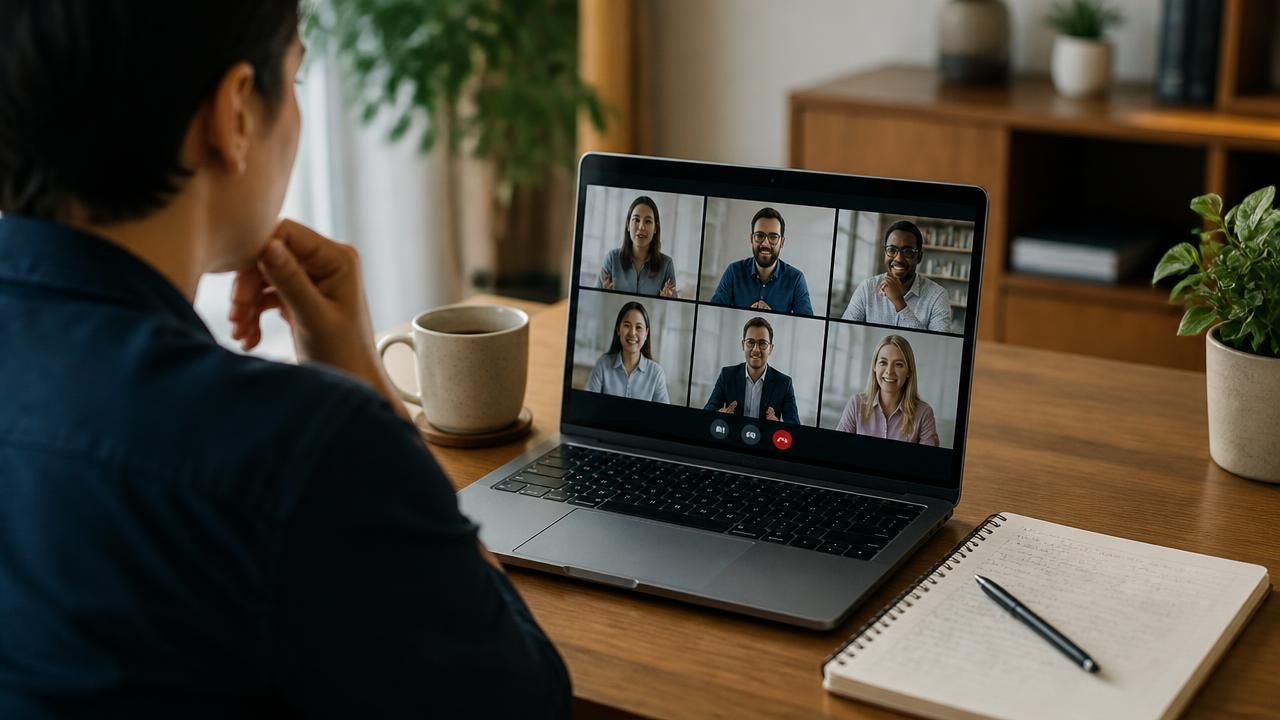
Foresight works much like established competitors such as Granola and Wispr Flow: it listens to a meeting, produces a running transcript, and generates a summary, while giving users a pane to type their own notes. Where it diverges is the architecture. Because the model runs locally, transcription happens on the machine, without audio being shipped to a data center.
Google says users can jot down shorthand bullet points mid-meeting, and the app will expand them into what it calls "polished notes" drawn from the surrounding transcript. The result is a hybrid workflow: human intent, machine elaboration, all processed on the laptop in front of you.
- Cost: Free, with no subscription tier announced.
- Platform: macOS at launch, running Google's on-device EmbeddingGemma 2 model.
- Capability: Live meeting transcription plus audio file transcription and summarization.
- Status: Experimental—Google frames it as an AI Edge testbed rather than a finished product.
The subscription economy gets squeezed
For the startups built on AI meeting notes, a free, capable, on-device alternative from Google is a familiar kind of threat. Android Authority framed the shift bluntly, publishing a first-person account from a writer who canceled a paid AI note-taking subscription after adopting a free Google app instead. The economics of the category have always rested on convenience: users pay monthly because transcription and summarization were computationally expensive and awkward to run themselves.
On-device models erode that moat. If a phone or laptop can handle the workload locally, the value proposition of a $15–$20 monthly subscription narrows to polish, integrations, and cross-platform reliability—thin ground when a platform owner is giving the core feature away.
"They all are"
The cultural backdrop is just as unsettled. The Wall Street Journal captured the mood with a headline that doubles as a warning: "This Conversation Is Being Recorded. They All Are." The piece describes a world in which ambient capture has become the default—meetings, calls, and casual conversations swept up by tools that promise to remember everything so users don't have to.
That normalization has consequences beyond awkwardness. Participants frequently don't know they're being transcribed, and even when they do, few understand where the resulting text lives, how long it persists, or who can search it. Offline processing addresses one part of that equation—the cloud exposure—but it does nothing about the question of whether everyone in the room agreed to be recorded.
From meeting minutes to legal exhibits
Forbes raised the sharpest-edge implication: AI note-takers can turn routine meetings into potential legal evidence. A transcript is a contemporaneous record, and contemporaneous records are exactly what litigators prize. In disputes over contracts, employment, intellectual property, or corporate governance, a searchable, time-stamped transcript of who said what—and when—can be discovery gold or an existential liability, depending on which side you're on.
Companies that once treated meeting notes as ephemeral now preside over searchable archives. Legal teams are increasingly being asked whether AI-generated summaries are covered by litigation holds, whether they must be produced in discovery, and whether a model's paraphrase of a conversation could be mistaken for a verbatim admission.
A transcript is a contemporaneous record—and contemporaneous records are precisely what litigators prize.
The Granola lawsuit and the consent question
Those concerns stopped being theoretical when a lawsuit involving Granola, one of the category's most visible startups, put AI note-taking privacy in the spotlight, as Computerworld reported. The case has renewed debate over disclosure: whether participants were adequately informed, what consent actually means when a tool joins a call silently, and how transcripts and derived summaries are stored and protected.
Granola has built a loyal following among knowledge workers precisely by sitting unobtrusively alongside meetings, but the litigation illustrates how quickly a productivity feature can become a compliance problem. Vendors now face pressure to add clearer recording indicators, retention controls, and enterprise-grade governance—features that cost money and complicate the frictionless experience that made the apps popular.
What happens next
Google's experiment points toward a durable split in the market. On one side, cloud-based platforms that trade privacy for collaboration, team-wide search, and cross-device syncing. On the other, local-first tools that sacrifice some integration in exchange for the assurance that audio never leaves the device.
Which model wins may depend less on engineering than on law. If courts and regulators continue to treat AI-generated meeting records as discoverable evidence, and if consent lawsuits multiply, the on-device pitch stops being a technical curiosity and becomes a selling point. Google, characteristically, is testing both the technology and the appetite for it at once—free, experimental, and pointedly offline.