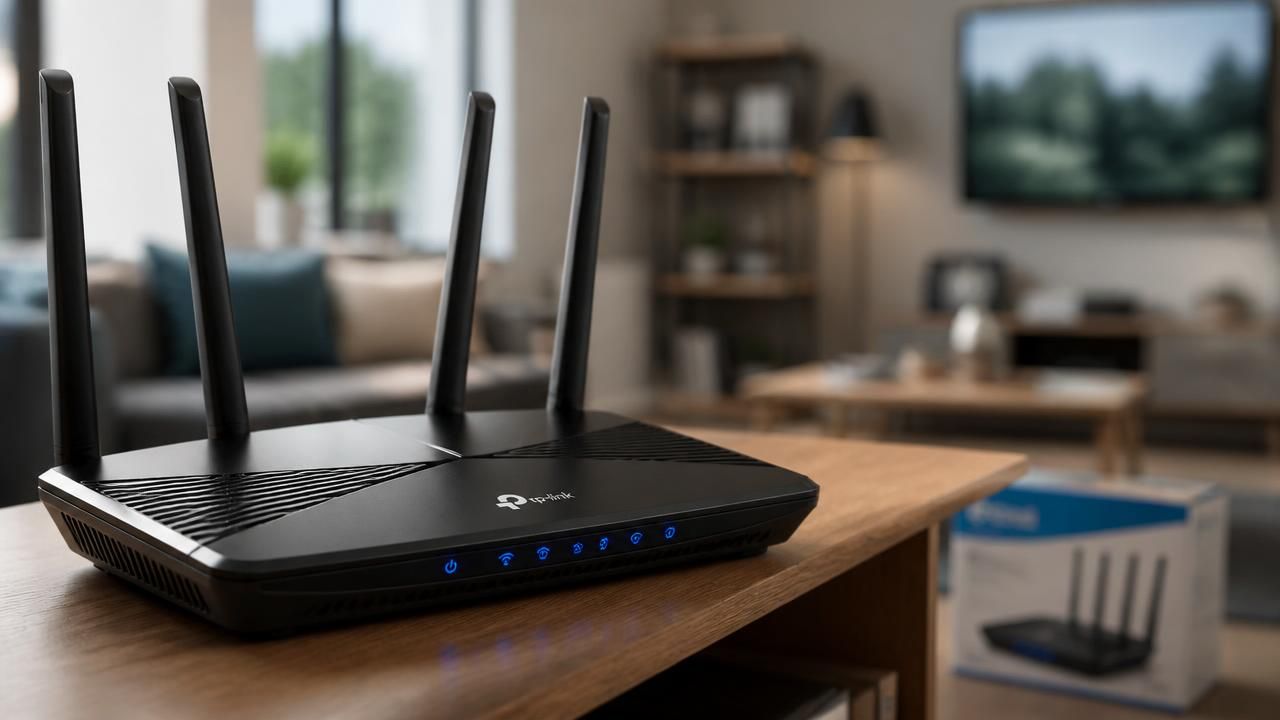
TP-Link's position in the United States deteriorated on two fronts this week, as Florida and three other states filed lawsuits accusing the router maker of deceiving consumers about its ties to China and the security risks posed by its devices, while the company remained shut out of the federal exemption process that has allowed nearly every major competitor to keep selling hardware in the world's largest networking market.
The twin developments leave TP-Link — for years the best-selling brand of consumer routers in America — unable to legally bring its newest products to US shelves, even as it publicly teases preorders for the next generation of Wi-Fi hardware.
Four States Allege Deception About China Ties
The state lawsuits, filed this week, accuse TP-Link of misleading customers about the extent of its connections to China and about the vulnerability of its routers to exploitation by Chinese state-sponsored hackers. The suits echo allegations that have circulated in Washington for more than two years, and they arrive roughly six months after the Federal Communications Commission announced a sweeping ban on consumer-grade routers produced wholly or partly outside the United States.
The suits allege that TP-Link lied to consumers about its connections to China and about the risks of its routers being exploited by Chinese state hackers. — as characterized in the state filings reported by Ars Technica
TP-Link has long maintained that its US business, TP-Link Systems, operates independently of its Chinese counterpart following a corporate restructuring, and that its products meet American security standards. The states' central claim is that those assurances were misleading — a framing that, if it prevails, could expose the company to consumer-protection penalties on top of its regulatory problems.
The FCC Ban and a Lopsided Exemption List
The FCC's restrictions, introduced under the previous administration and sustained by the current one, prohibit the sale of new consumer routers manufactured wholly or partly outside the US. The commission built in an exemption mechanism for vendors that could demonstrate adequate supply-chain and security controls — and a long list of companies has cleared that bar.
- Netgear, one of TP-Link's most direct rivals in the US retail market
- Asus, which TechSpot noted has "escaped" the ban despite manufacturing abroad
- Adtran, Calix and Nokia, which serve carriers and enterprise buyers
- Amazon and its Eero subsidiary
- SpaceX's Starlink division
- Several other vendors approved on a case-by-case basis
TP-Link is conspicuously absent from that list. The Trump administration has so far declined to grant the company an exemption, leaving it in a regulatory limbo that no competitor of comparable size currently faces. Ars Technica reported that the company cannot sell its latest Wi-Fi 8 routers in the US, though models approved before the ban took effect remain legal to sell and are still on shelves.
A Wi-Fi 8 Launch Without a Market
The practical consequence is an unusually awkward product launch. TP-Link has begun teasing preorders for Wi-Fi 8 routers — a new generation of hardware promising higher throughput, lower latency and better handling of dense device environments — but American buyers are effectively locked out, per PCMag's reporting on the preorder announcement.
That gap between marketing and market access has become the defining feature of TP-Link's US moment. The company is selling a future product to a country whose regulator has, for now, barred it from delivering the goods. Presales may be aimed at international markets, or they may be a pressure tactic designed to force the FCC's hand by making the cost of exclusion visible to consumers.
Why Different Outlets Tell Different Stories
The five accounts of this story frame it in markedly different registers. Ars Technica treats it as a regulatory and legal narrative, leading with the state lawsuits and the mechanics of the FCC exemption process. PCMag and MSN approach it as a consumer-tech curiosity: a hotly anticipated router that Americans simply cannot buy. TechSpot frames it competitively, emphasizing the asymmetry between Asus and TP-Link and implicitly asking why one foreign manufacturer gets a green light while another does not.
Together, the coverage points to a single underlying tension: national-security policy designed for a category of hardware, applied to a single company.
Security Fears and a Longer Backstory
The scrutiny of TP-Link is not new. In 2024, security researchers and US officials tied a sprawling botnet of compromised small-office and home-office routers — widely reported as the "KV-botnet" — to Chinese state-linked actors, with TP-Link devices among the hardware implicated. Lawmakers subsequently urged the Commerce Department and other agencies to investigate the company, and reports surfaced that federal authorities had opened probes of their own.
Those concerns sit at the heart of the FCC's foreign-manufactured router rule, which treats home networking gear as critical infrastructure rather than a commodity. A compromised router sits inside a home or small business network, sees unencrypted traffic and can be conscripted into attack infrastructure — which is precisely what makes routers a strategic target for state actors.
What Happens Next
TP-Link's options are narrowing. It can fight the state lawsuits, lobby for an FCC exemption, or restructure its manufacturing and corporate footprint to satisfy US officials — an expensive proposition in a low-margin hardware business. In the meantime, rivals that secured exemptions gain an unearned advantage in a market TP-Link once dominated.
The broader signal for the industry is that American market access increasingly depends less on product quality than on provenance, supply-chain transparency and political acceptability. For a company that built its US business on price and ubiquity, that is a difficult formula to satisfy — and one that no amount of Wi-Fi 8 preorder enthusiasm can resolve.