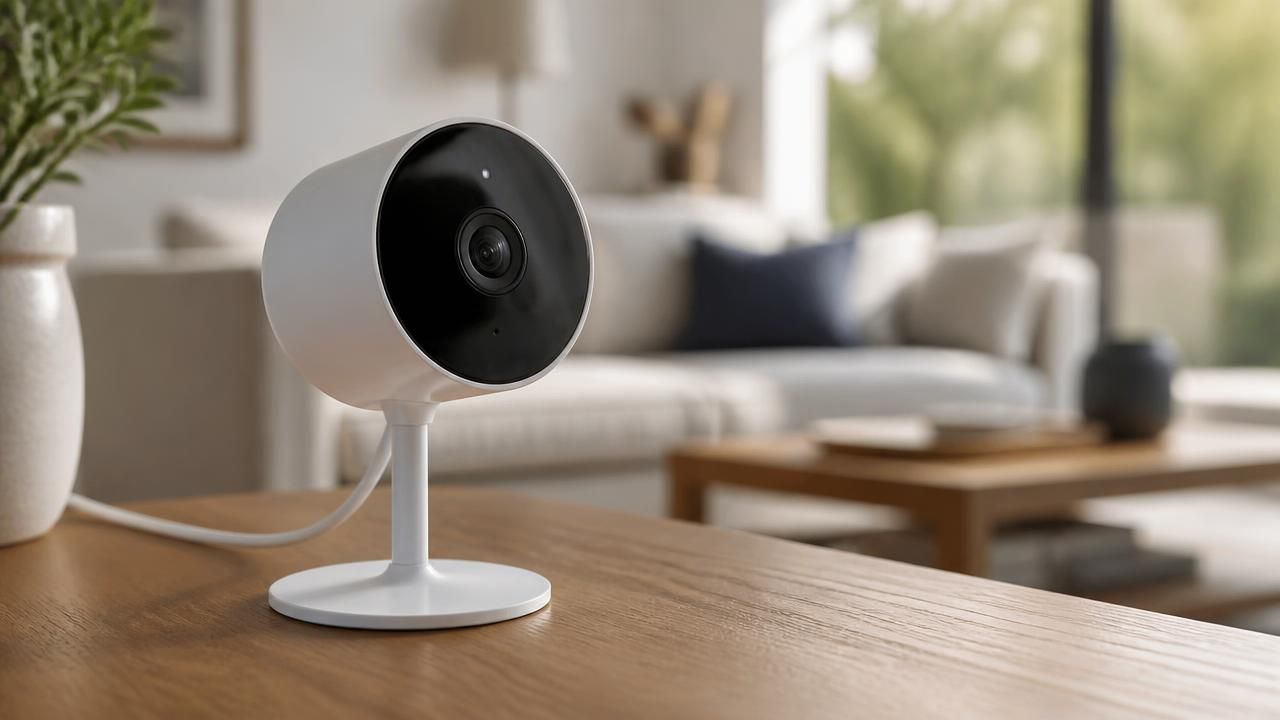
Apple is quietly assembling the pieces of a long-rumored smart home offensive, and at its center may sit a security camera that deliberately refuses to do the thing security cameras are known for: record video.
According to Bloomberg's Mark Gurman, speaking on the first episode of the Power On podcast, Apple is developing a line of small home cameras under an internal program codenamed J450. The devices would be sold both as first-party Apple products and through third-party partners, and would serve as companions to the J490 smart home display that has been the subject of reporting for months.
"They're also building home security products, both first-party and third-party home security products. And the biggest thing is a program called J450. And this is an offshoot and a companion product to the J490 smart home display. And these are little cameras that you can put around your house."
The distinguishing feature, per the report, is a privacy-first architecture: rather than streaming or storing footage, the cameras would generate text descriptions of events — telling a homeowner that a package arrived, that a person walked up the driveway, or that a car pulled away — without retaining video of any of it. Coverage of the claim has been picked up widely, from The Verge to aggregators such as MSN and Japan's GIGAZINE, with Apple-focused outlets like MacDailyNews framing it squarely as a "privacy-focused HomeKit device."
Why a camera that doesn't watch
Apple's framing of home security has always leaned on privacy as a differentiator. HomeKit Secure Video, launched in 2019, already routes footage through end-to-end encryption and counts against a user's iCloud storage rather than being mined by an advertising business — a pointed contrast with Amazon's Ring and Google's Nest ecosystems, both of which have spent years fending off questions about data handling and law-enforcement access.
A camera that produces only text pushes that philosophy further. It also happens to be a natural fit for on-device intelligence: if a model can describe what happened in a frame, there is no reason to keep the frame. That aligns with Apple's broader positioning of Apple Intelligence as processing-heavy on the device, with cloud compute reserved for larger requests and handled under stricter guarantees.
The trade-offs are real. Video is forensic evidence — an insurance company, a prosecutor, or a worried parent may want the clip, not a sentence about it. A text-only camera would be a poor fit for deterrence, and it raises its own accuracy questions: a mislabeled description of a visitor is a different kind of failure than a missed recording.
The wider ecosystem push
The camera is not arriving alone. Reporting across outlets describes a coordinated hardware refresh: the J490 smart home display, expected to act as a central control surface and likely to lean on Siri and a revamped homeOS-style interface; refreshed HomePods; and a slate of accessories from third parties under the Matter standard, which Apple helped develop with Amazon, Google and Samsung to make devices interoperable across platforms.
That interoperability matters. Apple's smart home story has for years been its weakest product category — HomeKit's device catalog trailed rivals, the HomePod was slow to gain traction, and Siri's reliability has been a recurring complaint. A hub-plus-camera-plus-speaker bundle would give Apple something it has never quite had: a coherent, self-contained home platform rather than a set of accessory-friendly APIs.
A crowded, contested market
The competitive field is unforgiving. Amazon owns the low end with Blink and Ring, and has pushed aggressively into AI-generated event summaries through its Alexa and Ring products. Google's Nest line has similar capabilities powered by Gemini. Both companies have far more installed base, and both have already trained consumers to expect video in the app.
Apple's counterargument is trust. Surveys consistently show consumers wary of always-on cameras in the home, and a device whose pitch is essentially "we cannot leak what we never recorded" is a sharp marketing position — particularly in Europe, where regulators have taken a hard line on biometric surveillance and where GIGAZINE's Japanese-language coverage highlighted the privacy angle as the headline.
Caveats and what to watch
- Sourcing: The claims originate from a single well-connected reporter's podcast remarks, not from Apple. Apple has not commented and routinely declines to discuss unreleased products.
- Timing: No launch window has been reported. Supply-chain signals, FCC filings or HomeKit code references would be the next concrete evidence.
- Pricing and positioning: Whether these ship as low-cost accessories or premium hardware will determine whether Apple competes with Ring and Blink or with professional installers.
- Third parties: Gurman's claim that partner cameras are involved suggests Apple may license the text-description capability rather than sell every device itself.
Taken together, the reports sketch a company trying to re-enter the home through a side door — not by out-featuring Ring or Nest, but by offering a narrower, more defensible promise. Whether consumers will trade the video clip for a sentence is the open question, and it is one Apple will have to answer in a market where the incumbent pitch has always been simple: see for yourself.