The Internet’s Latest Digestive Obsession
If you have spent any time online this week, you may have encountered a calm Gen Z voice promising to “explode your butthole” with a pesto recipe. That is not a typo. It is the latest entry in the booming genre of gut-health content, and it has landed in The Verge’s Optimizer newsletter, a weekly dispatch from senior reviewer Victoria Song that dissects gizmos and potions claiming to change your life.
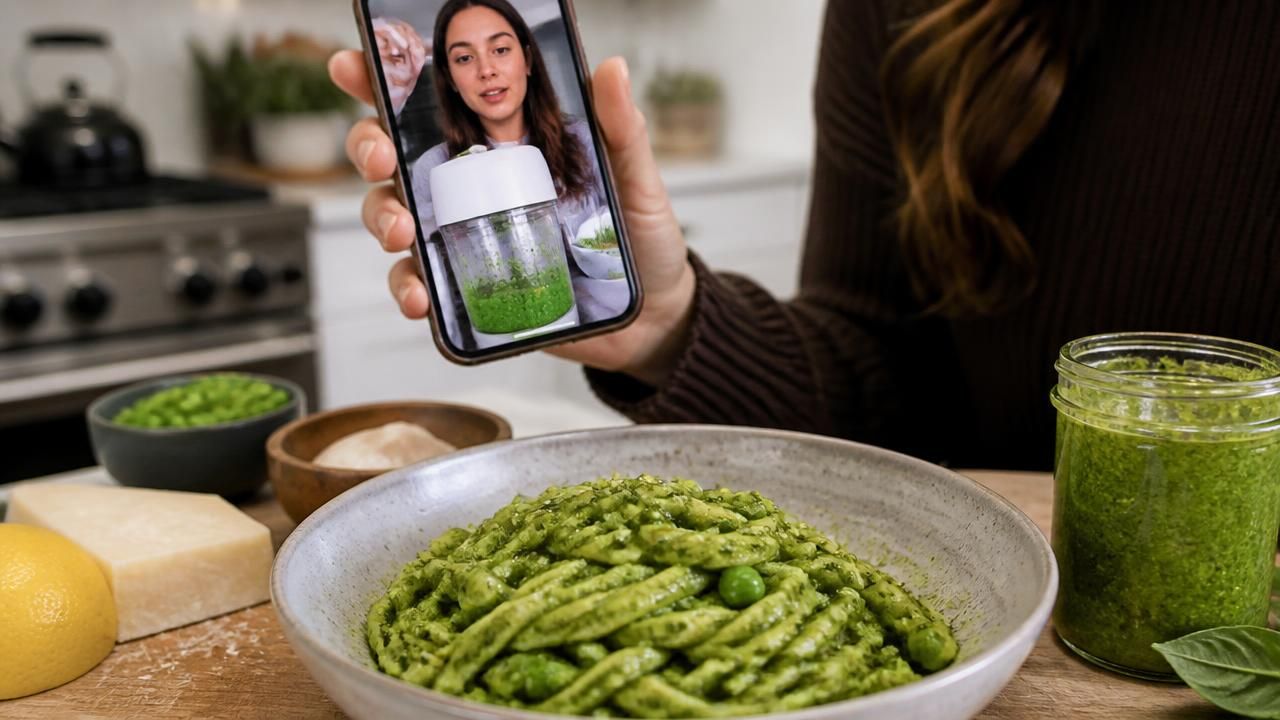
The video in question—a blog post turned viral recipe—blends two cups of blanched peas into a fairly standard pesto, yielding roughly 18 grams of what is presumably fiber per batch. The host’s pitch is deliberately provocative: “I will explode your butthole with this poopmaxxer pesto,” they say, adding, “And don’t worry, it doesn’t taste like poop, unless that’s what you’re into … I don’t know if Italians will approve of this, but it’s for my … a-butt-a-hole-a!”
“I will explode your butthole with this poopmaxxer pesto,” a calm Gen Z voice announced from my phone’s speakers. “And don’t worry, it doesn’t taste like poop, unless that’s what you’re into …”
The Verge treats the recipe as part curiosity, part consumer-tech story. Optimizer’s remit is to separate genuine innovation from snake oil, and the poopmaxxer pesto sits somewhere in between: a high-fiber food hack dressed up in internet shock value. It is also, notably, a pretty good recipe—peas are an excellent source of soluble and insoluble fiber, and pesto is a palatable delivery system for anyone who struggles to eat enough vegetables.
What Gastroenterologists Actually Recommend
While the Verge chronicles the viral spectacle, SELF and MSN have published a more sober counterpoint: advice from gastroenterologists on how to poop better. SELF’s guide, “How to Poop Better, According to GI Doctors,” and two MSN pieces—one on the #1 habit to start and one on the #1 habit to break—converge on a few unglamorous fundamentals.
The #1 habit to start, according to these reports, is not a pesto recipe but a consistent fiber-and-fluid routine. Gastroenterologists typically recommend 25 to 30 grams of fiber daily from sources like beans, peas, whole grains, fruits, and vegetables, paired with adequate water. The #1 habit to break is just as straightforward: ignoring the urge to go. Holding it in, straining, or spending too long on the toilet can worsen constipation, hemorrhoids, and pelvic floor dysfunction.
The Doctor-Backed Checklist
- Fiber first: Aim for 25–30 grams daily. Peas, lentils, oats, and berries are reliable options.
- Hydrate: Fiber without water can make constipation worse.
- Go when you need to: Do not delay the urge. The gut-brain axis is real.
- Improve posture: A footstool that raises knees above hips can relax the puborectalis muscle.
- Move regularly: Physical activity stimulates intestinal motility.
- Limit ultra-processed foods: They often displace fiber and fluid.
MSN’s paired articles frame the issue as a simple behavior swap: start one habit, break another. SELF, meanwhile, emphasizes that occasional constipation is common, but chronic issues warrant a doctor’s visit—especially if there is blood, unexplained weight loss, or severe pain.
Why the Internet Loves a Poop Hack
The Verge’s Optimizer is not an outlier. Wellness content has become a dominant force in tech and lifestyle media because digestion is universal, embarrassing, and ripe for optimization. A viral pesto recipe promises a quick fix; a newsletter promises to cut through the noise. The tension between those two impulses—sensationalism and science—is the story.
Oddly, a Wikinews item offers an unexpected counterpoint. The outlet, better known for hard news, recently published an interview with John Reed on Orwell, God, self-destruction, and the future of writing. On its surface, the piece has nothing to do with digestion. But it speaks to a broader cultural moment: a fascination with self-destruction, optimization, and the limits of the body. Reed’s themes—Orwellian control, spiritual decay, and the writer’s role—echo the way wellness culture turns bodily functions into moral projects. One outlet says poopmaxxer pesto; another says self-destruction. Both are asking how we live in our bodies and what we owe them.
That may be a stretch for a story about peas. But it illustrates how fragmented the conversation has become. The Verge covers the gizmo and the viral quote. MSN distills gastroenterologist advice into clickable habits. SELF provides the clinical context. Wikinews, almost accidentally, supplies the philosophical undercurrent. None of them entirely agrees on what “better” means—better pooping, better writing, better living—but they are all publishing into the same attention economy.
The Bottom Line
If you want to poop better, the doctors’ advice is boring but effective: eat fiber, drink water, move, and don’t ignore your body. The poopmaxxer pesto may be a tasty way to add peas to your diet, but it is not magic. And as John Reed might remind us, the pursuit of self-improvement can tip into self-destruction when we mistake a viral hack for a cure.
For now, The Verge’s Optimizer will keep dissecting the potions. MSN and SELF will keep asking gastroenterologists. And the internet will keep promising to explode your butthole—one pesto recipe at a time. The real optimization is knowing when to laugh, when to chew, and when to see a doctor.