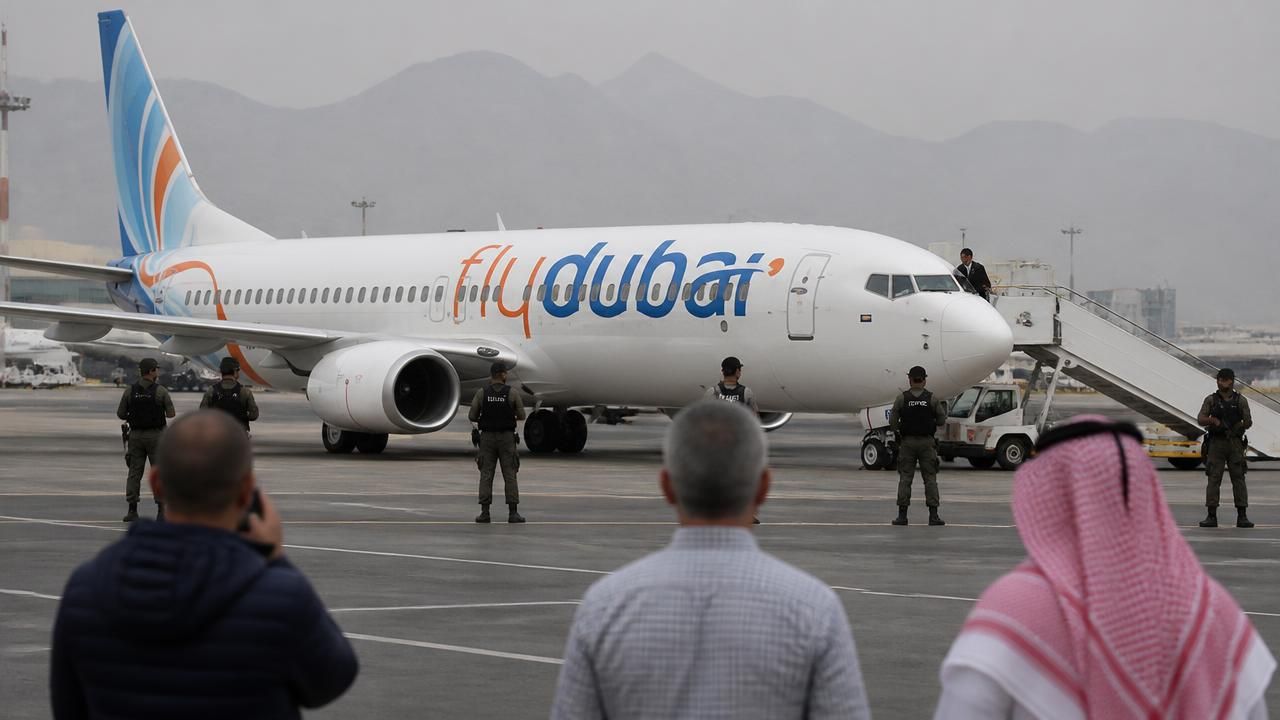
A Flydubai flight from Dubai to Tel Aviv was thrown into chaos when a pilot stabbed the other pilot in the cockpit and attempted to seize control of the aircraft, sending the jet into a steep dive before passengers and crew overpowered him, according to Israeli officials. The plane, which was carrying travelers bound for Israel, was diverted to Saudi Arabia, where it made an emergency landing and the assailant was taken into custody.
The episode — described by Israeli Prime Minister Benjamin Netanyahu's office as a suspected "jihadist terrorist attack" — has triggered investigations in multiple countries and renewed scrutiny of cockpit security on commercial airliners, even as officials cautioned that the inquiry is at an early stage and key details remain disputed.
What Happened in the Cockpit
According to accounts relayed by Israeli authorities, the co-pilot attacked the captain mid-flight, stabbing him and attempting to take the controls. Several outlets, including CBS News and MSN, reported that a passenger described the scene as the "co-pilot tried to murder the pilot." As the struggle unfolded, the aircraft went into a sharp descent. One report cited by MSN placed the plunge at roughly 17,000 feet; Australia's The Chronicle described a drop of about 18,000 feet. Both figures point to a violent loss of altitude before the aircraft was stabilized.
"A passenger and crew got into the cockpit, subdued the pilot and diverted the flight to land in Saudi Arabia," Netanyahu's office said, according to NPR and WFSU.
The BBC reported that a passenger described grabbing the attacker and taking hold of the plane's controls during the melee. British media — including The Sun — credited a British passenger with helping to subdue the assailant, a detail that has circulated widely but has not been formally confirmed by investigators. Photographs circulated on social media and carried by Yahoo News UK appeared to show a passenger in a bloodstained shirt after the ordeal.
A Diversion to Saudi Arabia
The flight crew issued an emergency alert and diverted the aircraft, which ultimately landed in Saudi Arabia rather than continuing to Israel. The destination was notable: Saudi Arabia has no formal diplomatic relations with Israel, and the decision to accept the aircraft reflected a pragmatic emergency response rather than any broader political shift. Israeli officials confirmed the pilot was arrested on arrival, and Saudi authorities have not publicly detailed the charges or the status of the suspect.
The diversion also underscored how quickly an airborne confrontation can become a diplomatic as well as a security matter. The Gulf route between Dubai and Tel Aviv — one of the busiest new corridors opened by the 2020 Abraham Accords normalization between Israel and the United Arab Emirates — had until now been regarded as a symbol of deepening regional ties.
Conflicting Accounts and Competing Frameworks
The story has been framed in sharply different ways depending on the outlet. Israeli and American coverage, led by statements from Netanyahu's office and amplified by Fox News and the New York Post, has leaned toward describing the incident as a deliberate, ideologically motivated attack, with the Post's headline invoking a "jihadist terrorist attack" and The Sun branding the near-disaster "Israel's 9/11 thwarted."
By contrast, The Guardian and BBC have adopted more measured language, emphasizing that Netanyahu said the pilot may have tried to crash the plane, and foregrounding passenger testimony over official characterizations. Some reports described the assailant as the co-pilot, while others referred more generally to "a pilot" stabbing "the other pilot" — a discrepancy that reflects the confusion inherent in the first hours of a fast-moving aviation emergency.
Still other outlets focused narrowly on the operational drama: MSN's live coverage tracked fears of a hijacking, the emergency squawk, and the altitude loss, while aggregators such as the Honolulu Star-Advertiser led with the passengers' role in preventing a catastrophe.
Context and Implications
The incident lands amid heightened regional tensions and follows years of debate over cockpit security. After the September 11 attacks, aviation authorities worldwide hardened cockpit doors and revised protocols, but a threat originating inside the flight deck remains one of the most difficult scenarios to defend against. Two-person crew rules — imposed in some countries after the 2015 Germanwings crash, in which a co-pilot deliberately flew an airliner into a mountain — were designed precisely to prevent a single pilot from acting alone. In this case, officials say, the second pilot's presence was not enough to prevent an attack, but it may have been decisive in allowing the captain to survive and the aircraft to be recovered.
The involvement of Flydubai, a state-linked Emirati carrier, adds a commercial dimension. The airline has not issued a detailed public statement, and questions remain about the assailant's background, motive, and whether any security screening failures occurred before departure from Dubai.
What Comes Next
- Israeli and Saudi authorities are expected to continue a joint or parallel investigation into the attack and the suspect's background.
- Aviation regulators will likely review cockpit protocols on the Dubai–Tel Aviv route and similar short-haul international services.
- The injured captain's condition has not been fully disclosed; his survival is central to the investigation.
- Passengers, some of whom are now witnesses in a criminal case, have begun giving interviews that will shape the public narrative.
For now, the most consequential fact is the outcome: a flight that officials say came within moments of disaster landed safely, and the person accused of attempting to bring it down is in custody. But the competing headlines — "terror attack," "hijacking attempt," "emergency landing" — suggest that the full story of what happened in the cockpit at 17,000 feet is still being written.