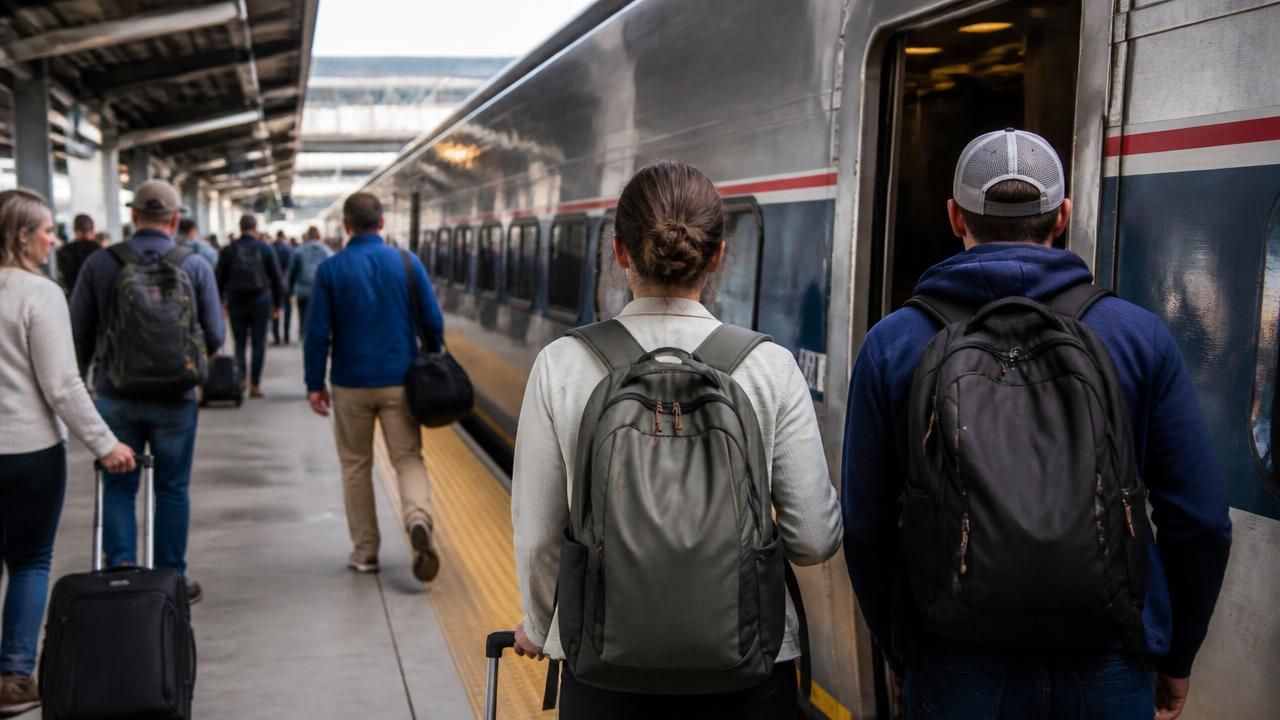
The measles virus, once declared eliminated in the United States, is again moving through airports, train stations and sports venues, prompting health officials in at least five states to issue exposure warnings and urging travelers to verify their vaccination status before boarding planes or trains.
This week, California health officials warned of possible measles exposure across six counties and on six Amtrak routes, while Missouri authorities reported a possible exposure at a train station. The warnings come amid active outbreaks in Pennsylvania, Ohio and New York, according to NPR and WFDD, which reported that exposures have reached transportation networks and sporting events.
A widening trail of exposure
In California, the warnings span six counties and at least six Amtrak routes, according to local MSN reports. The routes have not been fully detailed in early alerts, but health departments are asking anyone who traveled on those trains during specific time windows to check their vaccination records and watch for symptoms. In Missouri, a possible exposure at a train station has triggered similar guidance. The exact station and dates were not immediately released in the aggregated MSN report, but officials are working to identify travelers who may have been in the same space.
The national picture is equally concerning. NPR and WFDD reported outbreaks in Pennsylvania, Ohio and New York, with exposures linked to transportation and sports. That means the virus is no longer confined to households or schools; it is riding public transit, entering terminals, and appearing at games where crowds gather for hours.
Why measles is so hard to contain
Measles is not an ordinary childhood rash. It is airborne and extremely contagious. The virus can linger in the air for up to two hours after an infected person leaves a room. For unvaccinated people, the infection rate can reach 90 percent after exposure. Symptoms typically appear 7 to 14 days after contact, but can take up to 21 days. They begin with fever, cough, runny nose and red eyes, followed by a telltale rash that spreads from the face downward.
Measles is one of the most contagious viruses known to science. If you are not vaccinated, being in the same train car or terminal as an infected person can be enough to contract it.
That is why public health officials treat a single case as a potential cluster. Contact tracing is labor-intensive. In transportation settings, it is even harder: passengers may have moved across county and state lines before symptoms appeared.
What travelers should know
Before getting on a plane or train, health officials say, check your immunization status. Two doses of the MMR vaccine are about 97 percent effective at preventing measles. One dose is about 93 percent effective. Most adults born in 1957 or later are considered protected if they received two doses, though records can be incomplete.
- Verify your MMR vaccination history, especially before international or domestic travel.
- Monitor for fever, cough, runny nose, red eyes or rash for 21 days after potential exposure.
- If symptoms appear, call a doctor or health department before visiting a clinic to avoid exposing others in waiting rooms.
- Infants under 12 months, pregnant people and immunocompromised individuals face higher risk and should consult a physician.
- Check local health department websites for specific dates, routes, stations and venues tied to exposure alerts.
NPR and WFDD framed the story as a practical travel question: What should you know before getting on a plane or train? The answer is not to panic, but to prepare. California reports emphasized county-level warnings, while Missouri coverage focused on a single transit hub. Together, they show how a global virus becomes a local logistical challenge.
How different outlets frame the story
NPR and WFDD took a consumer-oriented approach, asking what travelers need to know as exposures reach trains and games. MSN aggregations of local news focused on geography: six Amtrak routes across California, six counties under warning, and a Missouri train station under scrutiny. The difference in framing matters. National outlets explain the science and vaccine guidance; local outlets provide the precise times and places people need to act on.
Still, the core message is consistent: measles is spreading in communities with low vaccination rates, and public transit is an efficient vector. The virus does not respect state lines or train schedules.
History and context
The United States declared measles eliminated in 2000, meaning the disease was no longer continuously transmitted within the country. But elimination does not mean eradication. Travelers bring measles back from countries where it still circulates, and outbreaks flare when they encounter unvaccinated or under-vaccinated groups. In 2019, the U.S. recorded more than 1,200 cases, the largest outbreak in decades, mostly linked to undervaccinated communities. The current warnings suggest the pattern is repeating.
Health officials say the solution is proven: vaccination. But they also acknowledge that access, misinformation and record-keeping gaps leave pockets of vulnerability. A single exposure on a train can generate hundreds of phone calls, dozens of quarantines and weeks of uncertainty.
What happens next
California, Missouri, Pennsylvania, Ohio and New York health departments are expected to release more detailed timelines as investigations continue. Travelers should check official sources rather than social media rumors. If you were on an affected route or at a listed venue, do not wait for symptoms to call your doctor. Early guidance can protect you and everyone around you.
For now, the advice is simple: before you board, know your MMR status. If you are unsure, ask. If you are exposed, monitor. If you feel sick, call ahead. Measles is preventable, but only if the public acts before the rash appears.