WASHINGTON — The Commodity Futures Trading Commission, the federal agency that polices the nation’s futures and swaps markets, has sharply reduced its enforcement activity under President Donald Trump, a pullback that is unsettling farmers and agricultural businesses that rely on the agency to keep commodity markets honest.
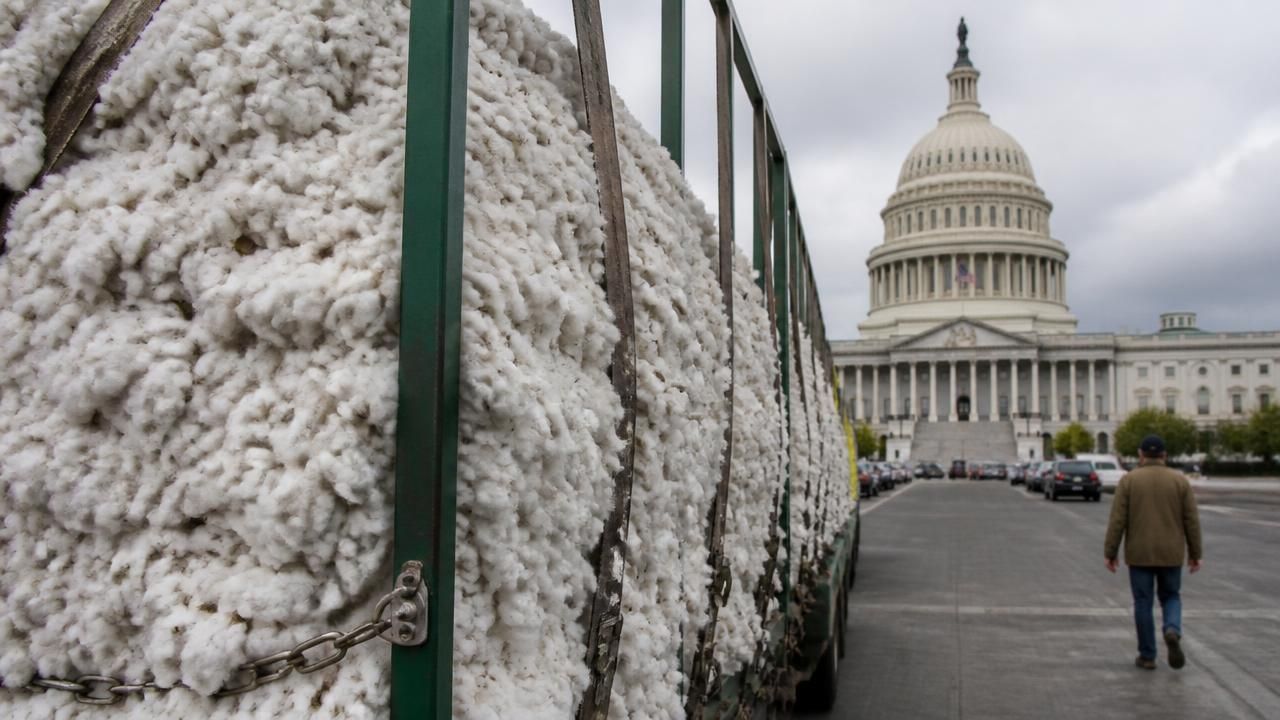
The shift has been most visible in crypto, where the CFTC has paused or settled several high-profile cases and created a task force meant to encourage digital-asset innovation. But the agency’s retreat extends far beyond crypto. The fate of two cotton brokers—whose case once seemed destined for significant enforcement—has become a symbol of how the commission is stepping back from the kinds of agricultural market cases it has long pursued.
A Retreat Beyond Crypto
For decades, the CFTC has been the primary federal cop for futures and options tied to everything from corn and soybeans to cotton, cattle, and crude oil. Its enforcement division investigates fraud, manipulation, wash trading, misappropriation of customer funds, and violations of position limits. Those cases rarely generate the headlines of a crypto crackdown, but they are the backbone of the agency’s mission.
Under Trump, that backbone appears to be thinning. The commission has signaled a lighter regulatory touch across the board, echoing a broader deregulatory agenda in Washington. Enforcement staff have been reassigned, priorities have been rewritten, and several matters involving traditional commodities have been closed with little or no public action, according to people familiar with the agency’s operations.
“The signal to the market is clear: traditional agricultural oversight is no longer a priority,” said one former CFTC enforcement attorney, who requested anonymity to speak candidly. “That is a problem for every farmer who uses these markets to manage risk.”
Why Farmers Rely on the CFTC
Agricultural futures markets exist so that farmers can lock in prices for crops they have not yet harvested. A cotton grower in Texas or Georgia might sell a futures contract to hedge against a price crash before the fall harvest. A grain elevator might use options to manage storage risk. These transactions depend on trust—trust that the broker handling the order is not front-running, that customer funds are segregated, and that no single trader is cornering the market.
The CFTC was created in 1974 to oversee exactly those markets, building on a regulatory tradition that dates to the Cotton Futures Act of 1914 and the Grain Futures Act of 1922. Its mission has always been dual: protect market participants from fraud and ensure that prices are discovered fairly. For farmers, that dual mission is not abstract. A manipulated cotton market can mean the difference between a profitable year and a foreclosure.
When enforcement declines, market participants say, the risks multiply. Fraudulent brokers may operate longer. Manipulative trading may go unchallenged. And farmers may begin to question whether hedging is worth the cost if the rules are not evenly enforced.
The Cotton Brokers Case
The matter involving the two cotton brokers has been closely watched in agricultural circles. While the details remain opaque, the case was seen as a test of whether the CFTC would continue to pursue misconduct in smaller, non-crypto markets that lack the political salience of digital assets. The agency’s muted response—whether through a quiet settlement, a dropped probe, or a decision not to bring charges—has disappointed farmers who hoped for a clear signal that traditional markets still matter.
“If you are a cotton producer and you see the agency backing away from a case like this, you have to wonder who is watching the store,” said a policy analyst at a farm advocacy group, who was not authorized to speak on the record. “The CFTC is not just a crypto regulator. It is the referee for the markets that feed this country.”
The CFTC declined to comment on specific enforcement matters, citing agency policy. But the broader pattern is hard to ignore. In recent years, the commission typically brought dozens of enforcement actions annually, many involving agricultural fraud or market manipulation. Under the new leadership, those numbers are expected to fall, with resources diverted to digital assets and to an explicitly deregulatory posture.
The Crypto Pivot and Its Costs
The Trump administration has made no secret of its desire to reshape financial regulation. At the CFTC, that has meant a new emphasis on crypto, where the agency has sought to provide clearer rules and to end what officials call “regulation by enforcement.” A digital assets task force now occupies a central role in the agency’s work, and several crypto cases have been paused, settled, or dismissed.
Supporters of the approach argue that the CFTC had overreached in the crypto space and that a lighter touch will encourage innovation while still punishing clear fraud. But enforcement resources are finite. Every attorney reassigned to a crypto task force is an attorney not investigating a cotton broker or a grain elevator. Every case closed for policy reasons sends a message about what the agency values.
Farmers and their advocates worry that the message is becoming: not you. Agricultural markets are already under strain from volatile input costs, extreme weather, and global trade disruptions. A weaker cop on the beat could make those markets more expensive and less reliable for the very people the CFTC was created to protect.
What Comes Next
The fate of the two cotton brokers is unlikely to become a national scandal. But it may become a cautionary tale. If the CFTC continues to scale back enforcement in traditional commodities, farmers could turn to Congress for legislative fixes, or to exchanges and private arbitration for relief. Those alternatives have limitations. Self-regulation can be slow, uneven, and vulnerable to conflicts of interest.
Some former regulators predict that the pullback will eventually produce a significant fraud case that forces the agency to re-engage. Others say the shift is structural and could persist for years, leaving a gap in oversight at the moment when agricultural markets are becoming more complex and more globally interconnected.
For now, the clearest consequence is uncertainty. Farmers who use futures to manage risk need to believe the game is fair. The CFTC’s retreat from traditional enforcement—symbolized by the unresolved fate of two cotton brokers—suggests that belief may be harder to sustain.