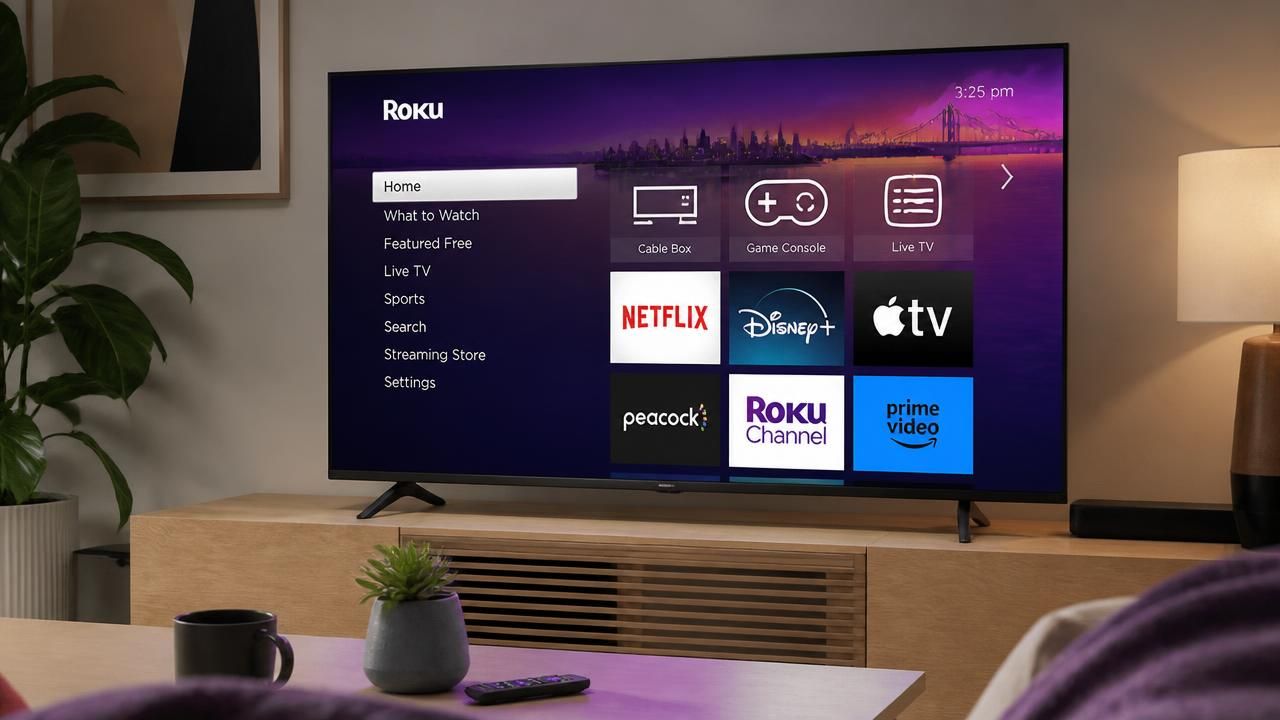
Roku has spent the better part of a decade putting its streaming software inside other companies’ televisions. Now it is selling the panel, too. The company this week launched its first-ever OLED TVs — the Roku Pro Series OLED — with a 55-inch model priced at $999 and a 65-inch model at $1,299, a debut that lands hundreds of dollars below the entry-level OLEDs from LG and Samsung and immediately reshapes the value end of the premium TV market.
The news broke almost simultaneously across the consumer-tech press, with The Verge, Mashable, Forbes, Techlicious, TV Tech and Android Headlines all publishing coverage within hours. The uniformity of the framing was striking: nearly every outlet led with the same word — price. Not panel technology, not picture processing, not design. Price.
A familiar playbook, applied to a premium panel
Roku built its hardware business by licensing an operating system that was cheap, fast and agreeable, then selling it through partners like TCL and Hisense at prices that undercut the establishment. Its move into OLED follows the same logic, only this time Roku is the manufacturer of record and the target is the most prestigious display technology in the consumer market.
The Verge was blunt about what that means for shoppers, calling the discounted 55-inch model “the most affordable modern 55-inch OLED you can get right now.” Mashable framed the launch as two TVs that “ditch the premium price tag of OLED,” while Digital Trends positioned Roku directly against LG and Samsung’s entry-level OLED lines. Forbes went furthest, declaring that Roku “rocks the TV world” with aggressively priced debut models.
“Roku Rocks The TV World With Aggressively Priced Debut OLED Models.”
— Forbes
What you actually get
Despite the budget positioning, Roku has not stripped the Pro Series down to hit its price. According to the specifications outlined at launch, the 55-inch model includes:
- A 120Hz OLED panel with four HDMI 2.1 ports
- Support for Dolby Vision and HDR10 Plus
- Auto low latency mode and variable refresh rate via AMD FreeSync Premium
- A backlit Roku voice remote in the box
- Roku’s streaming OS built in, with no external streaming stick required
The four HDMI 2.1 ports are notable at this price. Variable refresh rate and auto low latency mode are the features console and PC gamers look for first, and their presence signals that Roku is targeting households that use the television for more than streaming. Because the television runs Roku OS natively, owners can skip the dongle — though the ports remain available if they prefer hardware from another brand.
The discounts arrived before the reviews
Perhaps the most aggressive element of the launch is that Roku’s new flagship pricing did not hold for long. Amazon is currently running promotional codes that cut deeper still. Entering code ROKUOLED300 at checkout takes $300 off the 55-inch Pro Series, bringing it to $699. Entering ROKUOLED400 takes $400 off the 65-inch model, dropping it from $1,299 to $799.
That puts a 65-inch OLED — a screen size that commanded well over $2,000 just a few years ago — within reach of a midrange LED budget. Techlicious flagged the discounts ahead of the Prime Day promotional period, suggesting Roku intends to compete on price from day one rather than defending list pricing.
A higher-end model is already coming
The Pro Series is not the ceiling of Roku’s ambitions. A pricier Pro Series LX is scheduled for October, starting at $1,299, which will presumably add brighter panel technology or enhanced processing to justify the premium. That two-tier strategy mirrors the approach taken by established TV makers: a volume-driving entry model followed by a halo product.
The caveats worth noting
No outlet has yet published a full review, and The Verge was explicit that it had not tested either set. That leaves several open questions that will determine whether this is a genuine disruption or a well-timed price cut on middling hardware.
- Peak brightness: OLED’s traditional weakness in bright rooms has been addressed unevenly across price tiers.
- Picture processing: Roku has no track record in motion handling or upscaling, where LG and Samsung invest heavily.
- Panel sourcing and longevity: Roku has not detailed its supply chain or burn-in mitigation.
- Software differentiation: Roku OS is beloved for simplicity but is not known for deep calibration controls.
Why it matters beyond one product launch
OLED has been the television industry’s prestige tier for a decade, protected by manufacturing complexity and limited panel supply. Every meaningful price reduction has come slowly. A streaming-software company with no display-manufacturing heritage suddenly selling a 55-inch OLED for $699 signals that the cost structure behind the technology has loosened considerably.
For LG and Samsung, the immediate risk is less about losing a flagship sale than about losing the upgrade conversation. A shopper who once stretched to $1,500 for an entry-level OLED now has a credible option several hundred dollars cheaper — and Roku’s software ecosystem, which already powers a substantial share of televisions sold in the United States, is a familiar landing spot. Competitors like Amazon’s Fire TV line face the same squeeze from the other direction: they, too, sell software-wrapped hardware, but Roku just beat them to the premium panel.
The strategic logic is straightforward. Roku monetizes viewers through advertising and platform fees, not through television margins. Selling hardware near cost is not a sacrifice for Roku; it is customer acquisition. If that model works on OLED, the premium television market’s pricing floor may fall faster than anyone expected.
For now, the launch remains a promise rather than a verdict. Reviewers will decide whether the Pro Series OLED is a genuinely good television at an astonishing price, or an astonishing price attached to a merely adequate one. Either way, the question the industry is now asking has changed from whether OLED can get cheaper to how quickly everyone else is forced to follow.