Google is about to take its most concrete step yet toward a vision that once sounded like science fiction: running artificial intelligence workloads not in sprawling, power-hungry buildings on Earth, but in a constellation of satellites circling the planet. The company's first experimental spacecraft under Project Suncatcher is scheduled to launch on October 1, carrying four of Google's custom Tensor Processing Units (TPUs) into orbit.
The mission marks a significant acceleration of Google's timeline. When Suncatcher was announced last year, the company's plan called for two purpose-built satellites to fly in 2027. Instead, Google opted to move faster by integrating its AI hardware into a spacecraft that satellite imagery firm Planet Labs had already built for an early test — a pragmatic shortcut that put the project roughly two years ahead of schedule.
A Refrigerator-Sized Testbed in Orbit
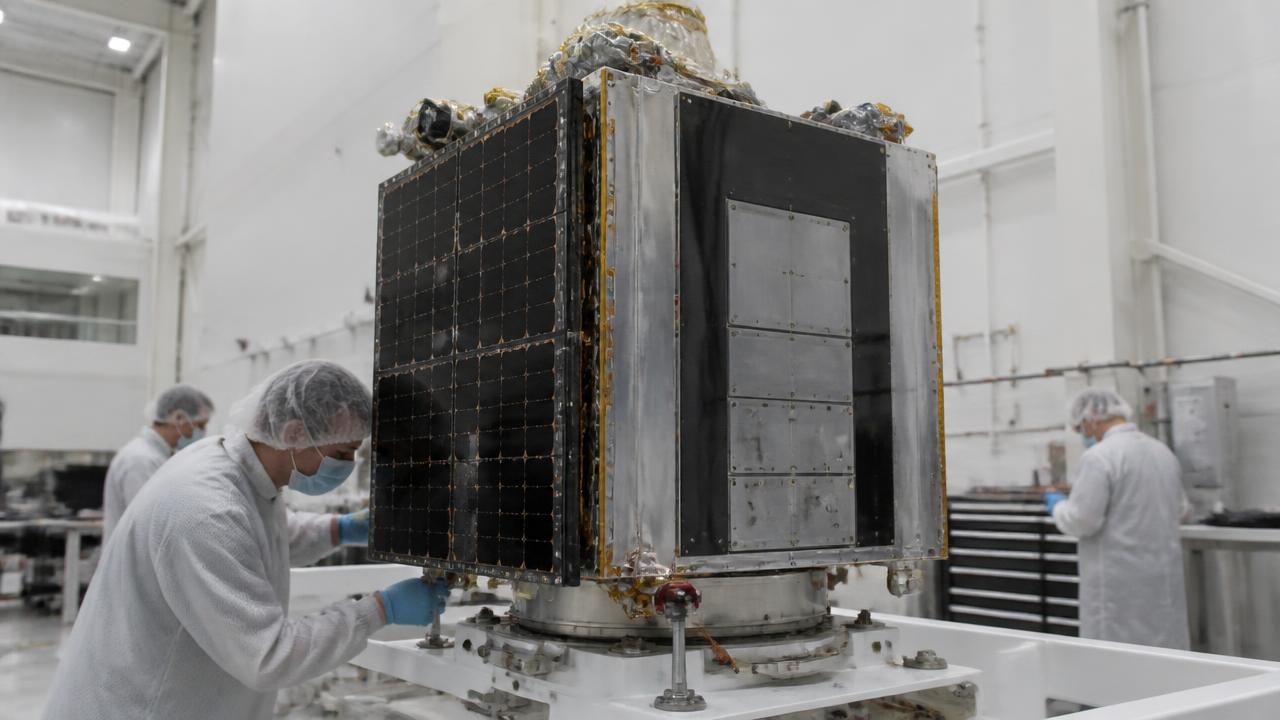
The satellite, dubbed MVP, is roughly the size of a refrigerator. Inside sit four Google TPUs — the same class of silicon the company uses to train AI models and run inference to generate tokens for AI workloads. On the ground, a single data center may run thousands of these chips at once, drawing enormous amounts of electricity. That power demand, and the friction it creates with local communities and grids, is precisely what makes space attractive to Google's engineers.
The spacecraft will be modest in scale. Its solar panels supply only about one kilowatt of power, according to reporting by The New York Times — roughly enough to run a microwave or a hair dryer. But the point of MVP is validation, not production. Google wants to confirm that its chips can survive launch, operate in the vacuum and radiation of low Earth orbit, and communicate reliably with ground stations.
The pitch is straightforward: orbital data centers could draw uninterrupted solar power in space, where there are no clouds, no land-use fights and no neighbors objecting to the hum of cooling systems.
Why Space? The Politics and Physics of AI Compute
Google is not alone in chasing the idea. AI boosters including Elon Musk and Jeff Bezos have publicly floated orbital computing as an alternative to terrestrial data centers, which have become a divisive issue in communities facing water consumption, electricity price pressure and noise complaints. Space offers continuous solar exposure — free of night cycles and weather — and potentially easier thermal management through radiative cooling.
The technical hurdles remain formidable. Satellites require shielding against radiation that can corrupt chips; hardware is difficult and expensive to repair or upgrade once in orbit; and inter-satellite networking must be fast enough that a distributed constellation behaves like a coherent computer rather than a scattered set of isolated nodes. Google has previously published research suggesting that a carefully arranged constellation with high-bandwidth links could support machine learning workloads — but MVP is the first time the company's silicon will face the environment for real.
Market Reaction: Alphabet and Planet Labs in Focus
Financial outlets framed the launch as a catalyst. Coverage from Blockonomi and CoinCentral noted that Alphabet (GOOG, GOOGL) shares ticked upward as the launch date approached, while Planet Labs (PL) stock surged on the news that its bus would carry Google's payload — a notable validation for the Earth-observation company's manufacturing business.
General-interest coverage spanned the ideological spectrum. Business publications such as Inc. framed the mission as "the start of a new era for data centers," while outlets including RedState treated the concept with bemused incredulity — "Yes, Really" — underscoring how the idea straddles the line between credible engineering roadmap and moonshot theater.
What to Watch
- Launch success: Whether MVP reaches its intended orbit intact and begins transmitting telemetry.
- Chip survivability: Whether Google's TPUs withstand radiation and thermal cycling without significant error rates.
- Power and bandwidth economics: Whether one kilowatt today can scale to the megawatts a useful orbital data center would need.
- Next launches: Whether Google returns to its original plan of purpose-built satellites in 2027.
The stakes extend beyond Google. Terrestrial AI infrastructure is colliding with energy constraints, permitting delays and public resistance. If Suncatcher works — even partially — it would give the industry a new answer to the question of where compute goes next. If it fails, it will join a long list of orbital ambitions that proved more durable in press releases than in orbit. For now, Google's argument is simple: the first chips are leaving the ground.