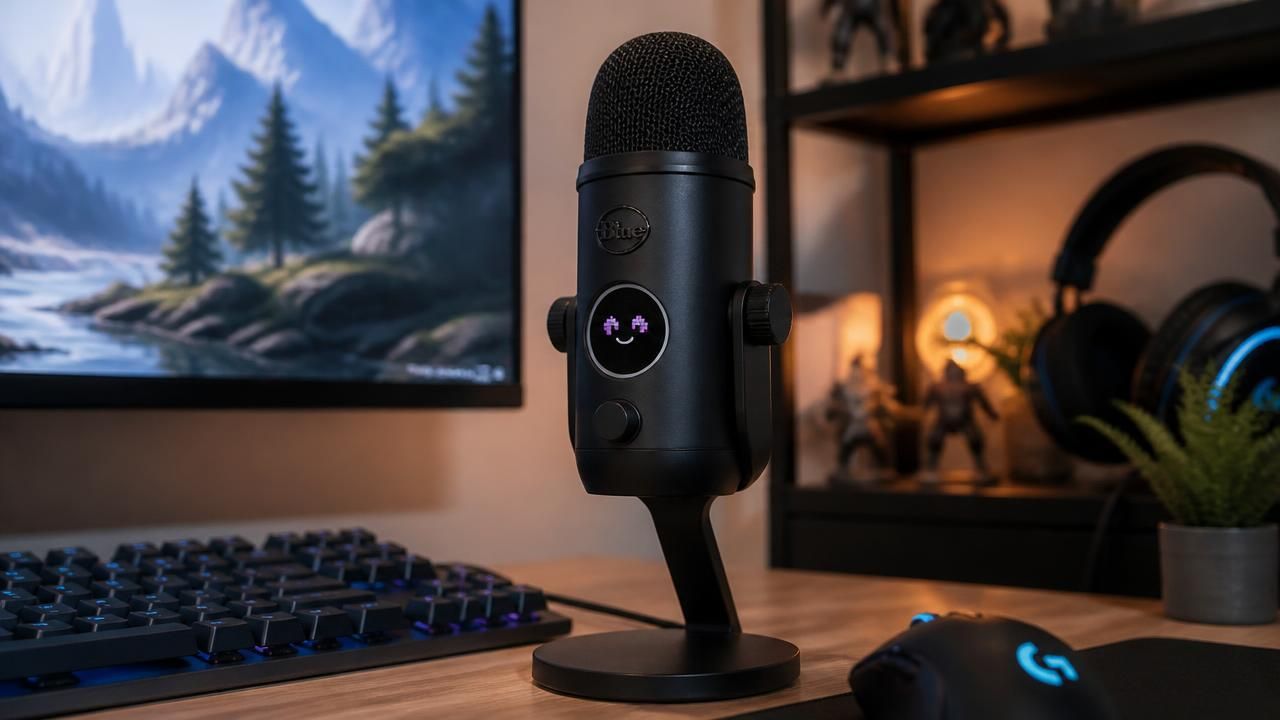
The Blue Yeti has been the default answer to the question "what microphone should I buy?" for roughly as long as YouTube has existed. Now, more than 15 years after the original launched in 2009, Logitech is finally shipping a true successor: the Blue Yeti 2, available today under the Logitech G brand for $159.99 in black or white.
The announcement, first reported by The Verge, marks one of the most significant refreshes in the consumer audio category in years — and it lands in a market where the original Yeti is simultaneously being discounted to its lowest price ever.
A 15-year-old design finally gets a sequel
When the original Blue Yeti arrived in 2009, podcasting was a niche hobby, Twitch did not exist, and USB microphones were largely an afterthought. The Yeti's combination of plug-and-play simplicity, multiple pickup patterns, and a distinctive, vaguely retro silhouette made it the de facto standard for streamers, podcasters, and voice-over artists. It became the rare piece of hardware that non-audio people could name on sight.
That longevity became a liability. Competitors iterated; the Yeti mostly changed colors. The Yeti 2 is Logitech's attempt to close the gap without alienating the installed base — it "resolves a notable flaw with its predecessor's design while still paying homage to it," as The Verge put it.
What's actually new: LEDs, AI, and a mic that follows you
Three upgrades define the Yeti 2:
- An interactive LED control display that shows settings and status information — and, in a piece of branding whimsy that The Verge greeted with a knowing "because of course it does," features a Yeti mascot.
- AI-powered de-noising, which processes incoming audio to strip out room tone, keyboard clatter, and HVAC hum before the signal reaches the recording software.
- A proximity-based voice sensor that adjusts the microphone's behavior based on where the speaker is positioned — addressing the ergonomic friction of the original, which required users to physically reposition themselves or the mic to get a usable take.
Taken together, the feature set points at a specific user: the solo creator working in an untreated room, without an audio engineer, who wants broadcast-grade results with zero setup.
Pricing puts pressure on the premium tier
At $159.99, the Yeti 2 undercuts the microphones that have supplanted the Yeti in professional podcast studios. Shure's MV7 series, widely regarded as the current favorite among serious podcasters, starts at $299. Logitech is effectively arguing that AI processing and automation can buy back the difference in raw hardware quality — a bet that has paid off handsomely elsewhere in consumer tech.
The company is also hedging across price points. PC Games Network's review of the Logitech G Yeti GX — a gaming-oriented sibling model with RGB lighting and a dynamic capsule — carried the headline
"Logitech G Yeti GX review: credit where credit is blue"underscoring that Logitech G now fields an entire family of Yeti-branded microphones rather than a single hero product.
The original is now a bargain — and that's the real story for many buyers
While tech outlets covered the launch, the deal-focused corners of the press framed the news entirely differently. Kotaku's coverage declared the original Yeti the
"gold standard microphone for podcasters,"now discounted by almost 40 percent to a record low. USA Today, meanwhile, highlighted an Amazon Labor Day promotion offering 34 percent off — a savings of $47 — and pointed to nearly 50,000 five-star customer reviews as evidence of the mic's enduring reputation.
The two figures diverge, likely reflecting different listings, colorways, or promotional windows, but the underlying dynamic is the same: the launch of a successor has made the outgoing model dramatically cheaper. For budget-conscious creators, the practical takeaway of this week's news may not be the new microphone at all — it's the old one at its best price ever.
Why it matters
The USB microphone market has quietly become crowded and commoditized. Cheap condensers from no-name brands flood Amazon, while premium players push into $300-plus territory. Logitech's strategy with the Yeti 2 is to defend the middle: brand recognition, a familiar name, and software-defined features like AI de-noising that are cheap to ship and easy to market.
Whether that's enough depends on whether the proximity sensor and noise suppression work as advertised in real rooms, which early coverage has not yet fully tested. But the strategic logic is clear. Logitech isn't selling a microphone to audio engineers — it's selling certainty to people who just want to sound good on the internet, and it's willing to let AI handle the parts they never learned.