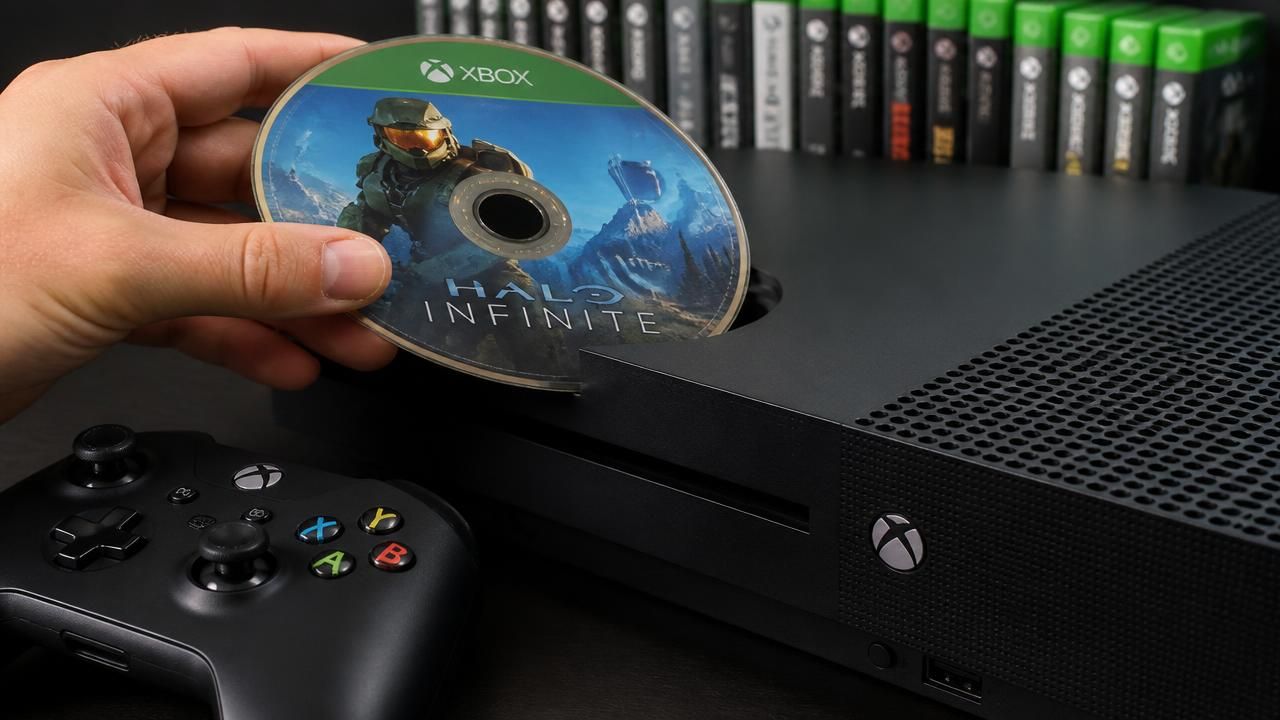
Microsoft has formally announced a disc-to-digital feature for Xbox, a tool that lets players convert the physical game discs already sitting on their shelves into digital entitlements tied to their account. The feature is set to begin rolling out to Xbox Insiders later this month, with a growing list of supported titles — including, as of this week, games published by Ubisoft.
The announcement landed with an unusual amount of coverage for what sounds like a convenience feature, and the reason is history. As multiple outlets covering the news pointed out, this is not a new idea at Microsoft. It is an idea that has been quietly maturing inside the company for roughly fifteen years.
How the feature works
According to coverage from The Verge, TechSpot, and GamesIndustry.biz, the program is designed to let players insert a supported physical disc into their Xbox console and receive a digital license for that title, removing the need to keep the disc in the drive — or in the house. Microsoft has not published an exhaustive technical breakdown of the verification process, and the company is rolling it out in stages rather than as a finished consumer product.
GamesIndustry.biz reported that the first wave is limited to Xbox Insiders, the company's public testing program, with more titles and broader availability expected to follow. Video Games Chronicle reported that Ubisoft titles have now been added to the supported list, a signal that major third-party publishers are willing to participate rather than treating digital conversion as a threat to their retail business.
The Verge framed the launch as part of Xbox's broader, ongoing game preservation efforts — a push to keep older software playable and accessible even as disc drives fade from console hardware.
A plan that predates the Xbox One
The most striking detail in the coverage is how old the underlying technology is. Reporting from The Verge, based on sources familiar with Microsoft's plans, indicates that the company was already exploring true digital ownership concepts as far back as 2011, including digital gifting and reselling. Ahead of the Xbox One's launch in 2013, Microsoft made a key internal decision to uniquely identify individual discs — an engineering choice that is now enabling the disc-to-digital system more than a decade later.
Notebookcheck noted that the original 2011-era vision was, in the outlet's words, considerably "more wholesome" than the version the public ultimately encountered. That earlier concept imagined a world where digital game ownership carried the same flexibility as physical media: you could lend a disc, give a game away, or sell it.
The DRM backlash that made it possible
What the public actually got in 2013 was very different. The Xbox One's launch strategy — an always-online console with heavy restrictions on used games, resale, and disc sharing — triggered one of the most ferocious consumer backlashes in the industry's history. Microsoft reversed the most controversial policies before launch, but the damage to the console's reputation lingered for years.
Kotaku's framing of the news was blunt and, in the view of many observers, accurate:
"Xbox One's catastrophic DRM is the reason it can now offer disc-to-digital."
The infrastructure Microsoft built to enforce that unpopular system — per-disc identification, server-side entitlement tracking, account-bound licensing — is precisely what makes a legitimate disc-to-digital program technically feasible today. The dystopian version of the future never shipped; the plumbing it required did.
Not everyone is convinced players understand what they are getting. Notebookcheck reported that a well-known and reliable industry leaker has cautioned that fans are misreading the scope of the feature, suggesting the program's boundaries may be narrower — or its rollout slower — than the initial excitement implies.
The PlayStation question
The announcement also reframed an ongoing rivalry. Android Headlines argued directly that the feature is something Sony should be copying:
"The Xbox Disc to Digital feature is what PlayStation should be doing."
Sony has been steadily retreating from physical media, and Xbox's move arrives at a moment when disc-based ownership looks increasingly endangered. Microsoft's pitch is essentially that it can have it both ways: sell you a plastic box at retail and still give you a library that survives the death of the disc drive.
Why it matters
- Preservation: Converting discs into account-bound licenses could keep thousands of titles accessible as hardware evolves.
- Consumer trust: Fifteen years after the Xbox One fiasco, Microsoft is trying to reframe digital ownership as a benefit rather than a restriction.
- Competitive pressure: If the program works, it hands Xbox a talking point Sony currently cannot match.
- Publisher buy-in: Ubisoft's participation suggests the industry sees digital conversion as workable rather than cannibalistic.
Plenty remains unresolved. Pricing, eligibility for previously owned titles, regional availability, and whether converted games can ever be re-sold digitally are all open questions Microsoft has not fully answered. The Xbox One era taught the industry a hard lesson: players will reject digital ownership when it is imposed on them, but they may embrace it when they are offered a choice. After fifteen years, Microsoft finally appears to be testing that theory.